

Barriers to HDR production are quickly coming down as the costs of quality HDR monitors decrease, and the hardware and software to advance HDR workflows rapidly evolves.
Behind the scenes, Cromorama is helping to usher in a new era of more accessible HDR production. Its ORION-CONVERT™ technology is easy for any production professional to use, but the color science and math behind it is far from simple.
The company serves high-profile clients around the world with film production, broadcast, and research and development services. This past summer, it helped facilitate production for the Union of European Football Associations (UEFA) EURO 2024 Championship.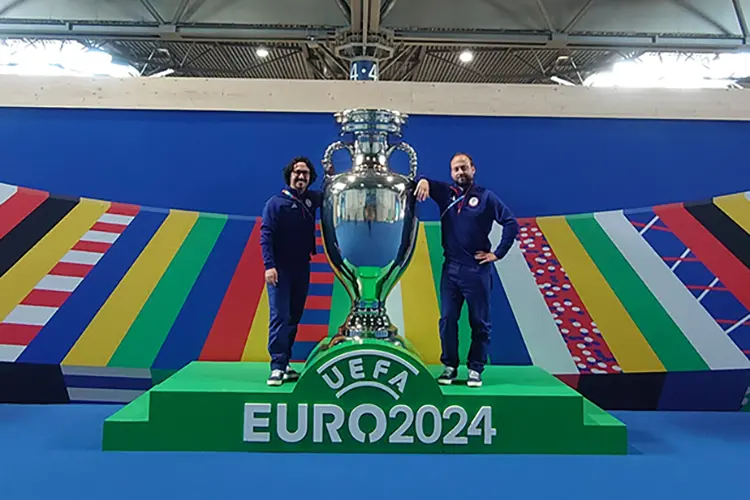
Check out our latest conversation with Cromorama CEO and CTO Pablo Garcia for insight into the company’s efforts to give live event production teams greater control over SDR and HDR transforms and complete quality control (QC) checks. Plus, learn more about Cromorama’s ORION-CONVERT™, one of six integrated color pipelines in AJA’s ColorBox and OG-ColorBox color management and conversion solutions.
Can you tell us what Cromorama is and how the idea of creating ORION-CONVERT™ came about?
We’re a company that’s all about improving color iteration, and we develop color management software with the philosophy that our clients should be able to adapt in the field. It used to be that color management had a steep learning curve, especially in broadcast, but we’ve reached an inflection point with tools like our ORION-CONVERT™ software and AJA ColorBox, and now OG-ColorBox, which is highly targeted at live production environments. These technologies are providing a solid foundation for greater accessibility today and moving forward.
Our ORION-CONVERT™ algorithm originated out of a need that we saw amongst Cromorama clients. I’m part of the team developing ACES (Academy Color and Encoding System), along with one of our engineers, and through that experience, we quickly realized a gap in the market. When we started Cromorama, nothing existed using the ITU conversion recommendations that would give us the ability to parametrically control the look and feel of an HDR standard conversion. It was especially noticeable when we were preparing for a major 2020 international sporting event on behalf of a client.
Together, we created a piece of code and started fine tuning it. That effort eventually became ORION-CONVERT™, which is an intuitive tool with a unique two-stage compression process for full color management from display to display, from SDR to/from HLG, PQ, and so on; it’s also a core technology behind NBCU LUTs. We developed the interface so that you don’t have to be a color scientist or specialist to figure out how to use it. This video from AJA details the technology very well.
What does the most recent project you have carried out at Cromorama consist of?
We’ve been providing HDR and color management consultancy services to UEFA for about two years now. Our team has helped shape their production LUTs, which were recently deployed for the EURO 2024 football championship production. Preparations for the event began in 2022, during which time our team benchmark tested a wide range of HDR production gear to find the right mix of equipment that would achieve the visual outcome we were aiming for. We tested many devices, from AJA ColorBox to the AJA FS-HDR, and kit from other manufacturers, including some graphics solutions. By the end of the process, UEFA had certified ColorBox as an approved production device.
Why was HDR production chosen?
Producing HDR will always ensure that the SDR output looks better than if it originated in SDR. With HDR, you get much more control over highlights and color saturation. Looking at the audience impact, it’s as close to the stadium or experience as you can get without stereoscopic 3D. Pair that visual quality with Dolby Atmos and it’s all about the wow factor. HDR provides a cleaner, more natural look and feel that’s as close to an in-person immersive audio, and it gives audiences this incredible sense of depth. And, as virtual reality technology evolves, combine it with HDR HFR (high frame rate) content and you’ve achieved a look even more true to life. That will certainly be a game changer.
Why did you choose ColorBox for this project, and what role did it play?
ColorBox is an intuitive device that’s making color management workflows simpler and more accessible. With ColorBox, you can see your SDR and HDR transforms and make adjustments. It also has a very fast protocol when combined with tools like Ennio. You can see it running in near-real time as it processes video in less than half of a video line. The dynamic LUT mode in ColorBox is bonkers fast! I’m also looking forward to testing out the ColorBox ACES implementation and can’t wait to get in the field and test out OG-ColorBox, which I could see being really beneficial in environments like the UEFA production.
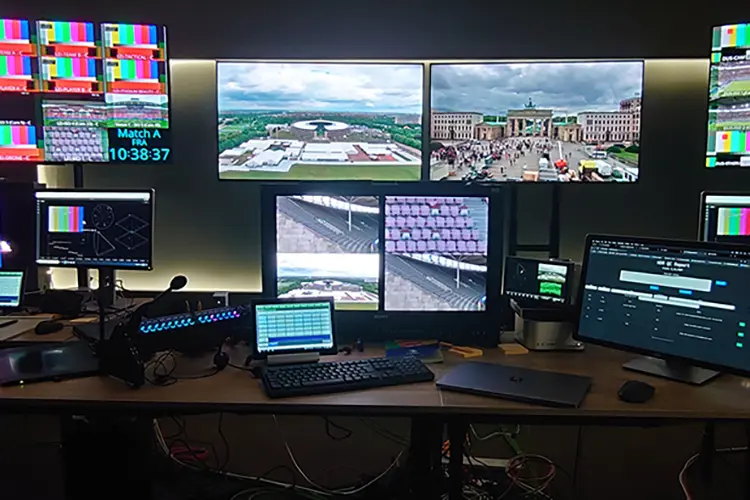
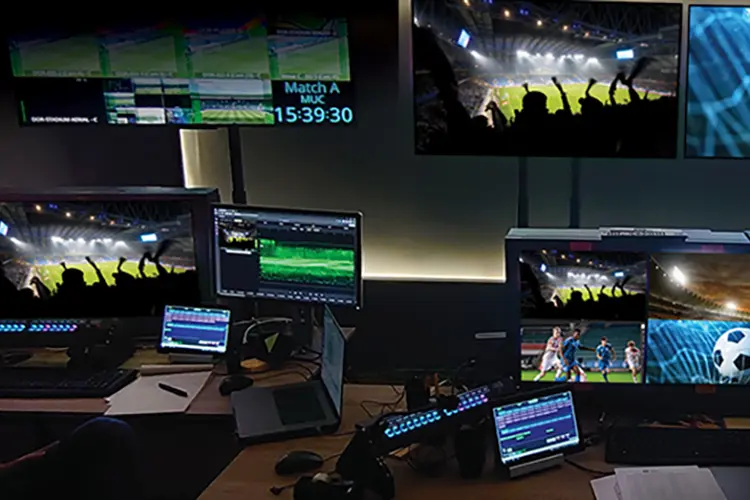
We extensively leveraged the ColorBox and the ORION-CONVERT pipeline throughout the tournament venues for color conversion, QC, and testing needs. As QC Supervisor, I oversaw two QC operators and the whole tournament production. That meant I was quickly notified if any broadcasters encountered signal issues, such as picture quality or artifacts, and troubleshooted to figure out the issue. I’d pass their signal through a ColorBox on my desk, identify and analyze their approved conversion path, determine whether there were artifacts, and pinpoint the source of the problem.
Looking ahead, what projects or plans does Cromorama have?
Our goal is to continue developing ORION-CONVERT™ and enabling professionals to better fine tune color management capabilities across pipelines.
We’ve been developing some really cool technology that we were excited to debut at the IBC Show in Amsterdam, including an ORION-CONVERT™ plugin for a popular creative app that’s used for nonlinear editing in television production and Ennio, a cutting-edge color management orchestration desktop application designed to provide unparalleled control over dozens of devices, including FS-HDR, ColorBoxes, OG-ColorBoxes, and more.