


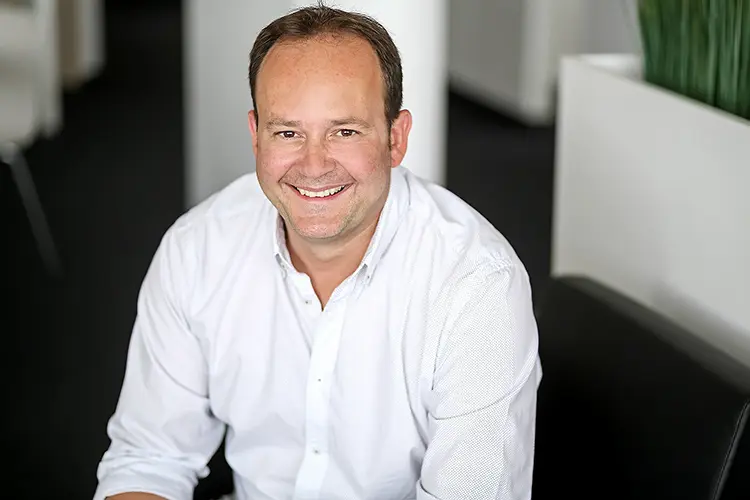
KLOTZ AIS has more than four decades of experience in professional cabling for the audiovisual sector. We spoke with Frederic Kromberg, International Sales Director, about the evolution of the market, today’s challenges, and the trends transforming signal distribution.
Your company has a long history in the professional cable industry. Could you briefly describe how it all began and how the company has evolved over the years?
It all started in 1979, when Thomas Klotz founded KLOTZ Electronik together with his brothers Dieter and Peter. In those early years, the company focused on manufacturing sound equipment such as speaker cabinets, amplifiers, and cabling solutions for the touring and rental market in Germany and Europe—a sector that was growing rapidly at the time and had very few specialized manufacturers.
In 1996, following a management buyout led by Dieter and Peter Klotz together with Stefan Brenner, the current KLOTZ AIS was established, focusing on the development, manufacturing, and marketing of professional cables and cabling solutions.
Since then, the company has specialized in cabling systems and signal distribution for audiovisual applications, and over time it has become one of the leading providers in the sector, with a presence in more than 120 countries.
What are the main product families and cable solutions that you manufacture today?
In addition to offering a wide range of bulk cables—by the meter or on reels—for professional audio applications (analog and digital), DMX, speakers, CAT networks, video, coaxial, camera, fiber optics, hybrid cables, and power, KLOTZ AIS has established itself as a highly specialized manufacturer of top-quality cabling solutions.
We also develop complete signal distribution systems, such as our MIS splitters and stageboxes (Modular Interface System), as well as CAT network solutions and fiber optic systems, among many other products.
Which markets and professional segments do you currently serve, and which ones are showing the strongest growth?
Traditionally, KLOTZ AIS operates in two main areas: on the one hand, the musical instruments retail market, and on the other, the ProAVM sector (professional audio, video, and multimedia). The latter includes touring, rental, and event production companies, television and radio broadcasters, as well as audiovisual system integrators and installers.
In recent years, the strongest growth has come from the live events and entertainment sector, as well as the fixed installation market, since more and more spaces are incorporating audiovisual technology into everyday use. In all these environments, professional cabling remains an essential element.
What innovative products or developments has your company introduced in recent years within the field of cables and passive components?
One of the most important advances for KLOTZ has been the development of our modular splitter systems for stage use. These solutions allow customized signal distribution boxes, adapting the number of channels, inputs, and returns to each customer’s specific needs.
This system is known as KLOTZ MIS (Modular Interface System) and is ideal for both permanent installations and touring or rental companies. It is a comprehensive “plug & play” solution that enables fast and flexible setup.
As a specialized manufacturer, what are the main challenges you are facing today in terms of design, production, or supply-chain management?
One of the main challenges involves cables intended for fixed installations in public spaces, as they must comply with numerous regulations and technical specifications that are becoming increasingly complex internationally. Adapting to global standards while also meeting the specific regulations of each country can be difficult, since there is still limited coordination and harmonization between different rules.
As for the supply chain, fortunately the situation has stabilized and is now functioning quite normally again after the end of the Covid pandemic.
What key factors differentiate your cable solutions in terms of materials, performance, durability, and overall reliability compared to other brands?
KLOTZ AIS has one fundamental principle in product development: maximum quality above all.
From the selection of raw materials (high-performance plastics and metals, shielding materials, and components) to the development of each new cable model, as well as the design of terminated cables and box products, we take a highly detailed approach to ensure the product meets customers’ typical needs and technical requirements.
This is essential, since products for different uses (for example, mobile touring use versus fixed installation) require completely different technical and quality features.
In short, we listen to the demands of the market and our customers and strive to develop the best possible product based on that.
What trends or customer demands are shaping the future of the professional cable market?
In the professional audiovisual market, we have seen a strong trend over the past decade toward network and fiber optic cabling solutions. However, traditional copper cabling remains widely used, with strong everyday demand.
What upcoming developments, new product lines, or strategic steps is your company planning to introduce in the coming months?
KLOTZ AIS is currently expanding into new power cabling solutions, such as electrical distribution boxes and systems designed for professional lighting and DMX control applications, among other uses. In addition, video and camera cables—both for fixed infrastructure and mobile productions—have become a priority, driven by the growing demand for higher image resolutions. From a distribution perspective, the company has taken an important step to directly serve the professional audiovisual market in Spain through the incorporation of nRider Systems S.L., with Jordi Buscá as the official representative of KLOTZ AIS in the country.