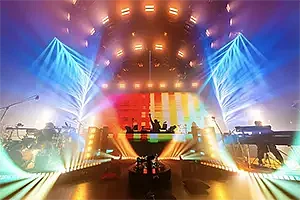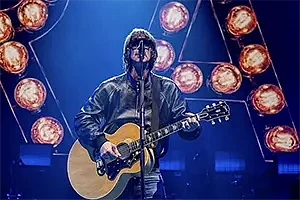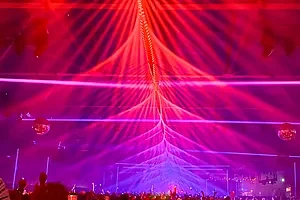
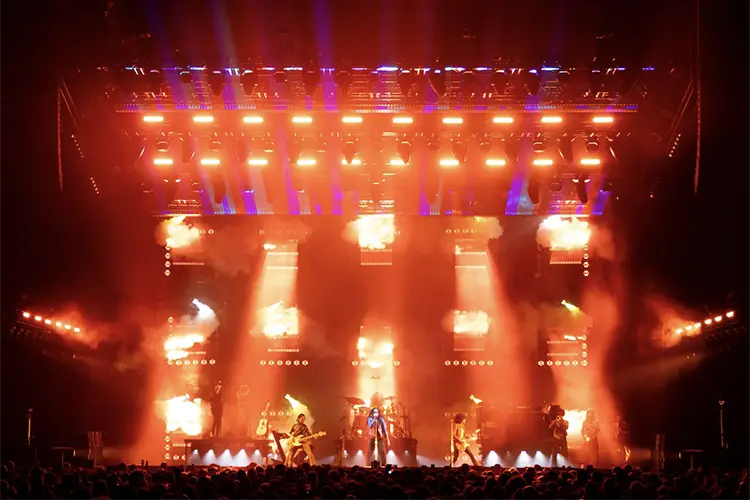
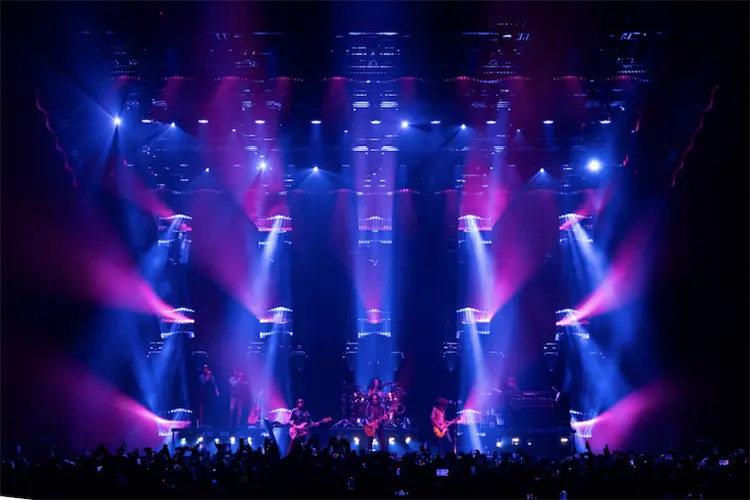
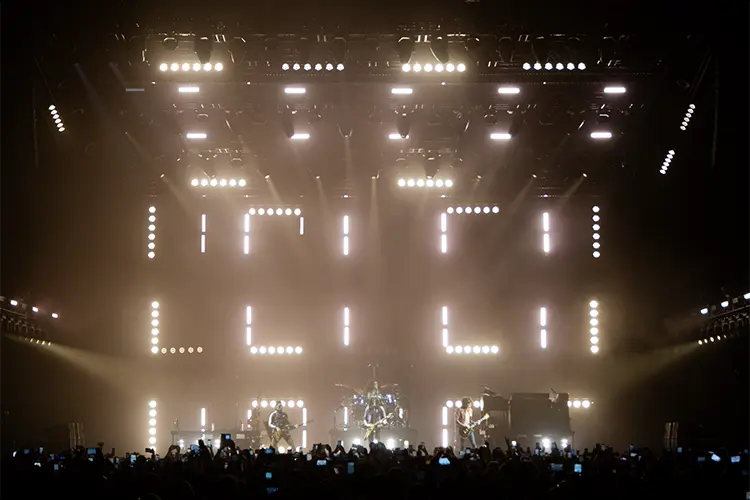
Lighting designer Bryan Barancik has created a stage design for the Lenny Kravitz Live 2026 Tour based on light, shadows and smoke, with 87 COLORado PXL Curve 12 fixtures from CHAUVET Professional forming a central part of the production.
Barancik and Lenny Kravitz share a particular interest in architecture, an influence reflected in the geometric arrangement of the fixtures and stage pods. The result is a visual environment that supports the band’s performance without relying heavily on video content.
Lenny loves architecture. We both wanted to move away from video and focus on the feelings created by light, shadows and smoke, as well as the ability of a physical scenic structure to influence the atmosphere and the emotional response of the artist, the band and the audience, Barancik explains.
 |
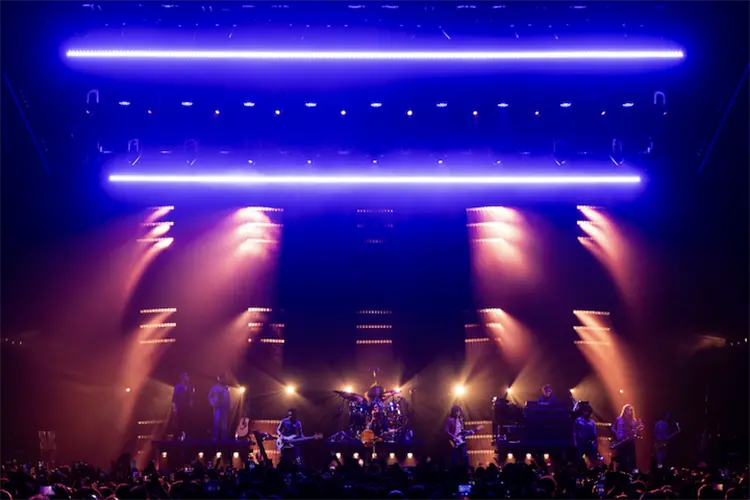 |
The tour includes both indoor arena shows and outdoor festivals, so the team sought a design that could adapt to venues of different sizes. To achieve this, a modular system was developed that can be expanded or reduced without altering the show’s visual identity.
"We felt this was the best solution from both a logistical and creative perspective. It allows us to adapt to medium-sized festivals as well as stadiums without losing the visual and emotional coherence of the design. The linear structure was an aesthetic decision, but also a practical one", says the designer.
The COLORado PXL Curve 12 fixtures at the heart of the production
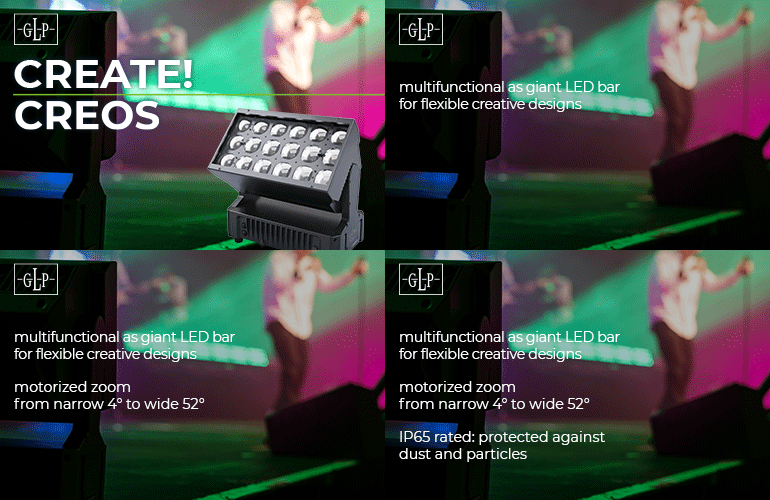
The design incorporates 87 COLORado PXL Curve 12 fixtures from CHAUVET Professional, supplied by 4Wall UK. Most of these motorized battens are positioned inside the pods and installed horizontally at a 90-degree angle.
During the show, they are used to illuminate the structures themselves, provide backlighting for the band, create visual compositions through the smoke and produce a range of effects. Their intensity is adjusted according to their angle to the audience and, at certain moments, they form part of the stage design even when switched off.
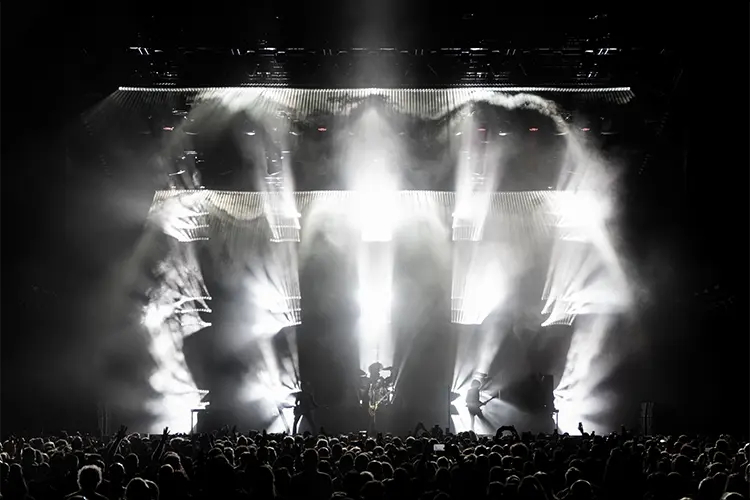
They become architectural elements through both the light they produce and their physical structure. In the overhead system, we sometimes create a snake-like shape and use them without switching them on. Their appearance alone adds another visual layer, Barancik comments.
Contrast as a narrative device
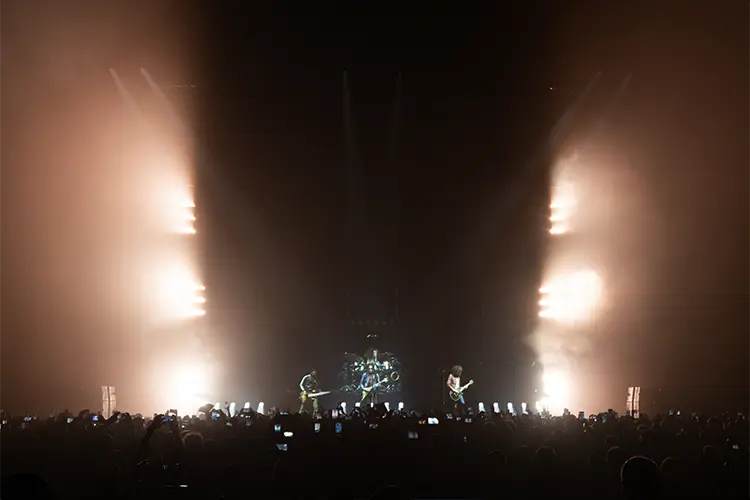
Darkness plays a prominent role in the design. Working alongside production manager Dave Bruster, lighting programmers Joe Bay and Chris Fernandez, and lighting designer Mike Gionfriddo, Barancik combines black spaces with columns of light, monochromatic scenes and subtle white patterns.
These contrasts help direct attention towards the musicians and adapt the lighting to the rhythm of each song. The scenes build, recede or disappear in line with the progression of the music.
"Musical lighting works better with contrasts because it helps maintain focus. Music flows, builds in intensity, pulls back and even disappears at certain moments. Our job is to translate that dynamic into light and support the musical narrative", he adds.
 |
 |
A stage production focused on the band
The production does not feature a large central screen. Video is limited to the side screens used for IMAG, while aerial effects and fixture movements are employed selectively.
The band, the stage and the smoke were our canvas. The screens were used solely for IMAG, sometimes with treated images, sometimes raw and, at certain moments, not at all. We also included aerial effects, but used them sparingly because we wanted to keep the focus on the stage, Barancik explains.
Although the movement effects become more intense during certain songs, the musicians and the physical environment created around them remain the main focus. "This is a live band and they play everything. We wanted the audience to be able to see them. Overall, the show revolves around the environment created on stage", the designer concludes.