


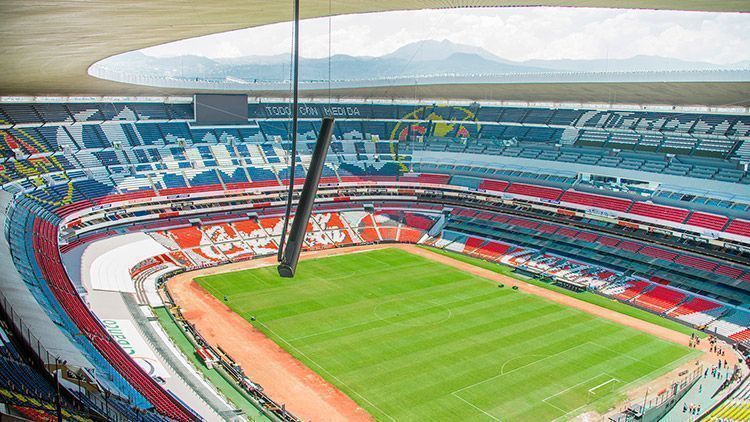
Mexico City’s Estadio Azteca, commercially renamed Estadio Banorte, hosted the World Cup opening match between Mexico and South Africa on 11 June 2026, becoming the first stadium in the world to stage three World Cup opening matches: 1970, 1986 and 2026.
To get there, the “Colossus of Santa Úrsula” underwent a complete refurbishment in which audiovisual technology has played a leading role.
More than 2,000 m² of LED screens
Before the works, the stadium had only two large screens, installed in 2015. The refurbishment has added more than 2,000 square metres of LED screens inside and outside the venue, two giant video scoreboards and light rings around the structure.
A new sound system
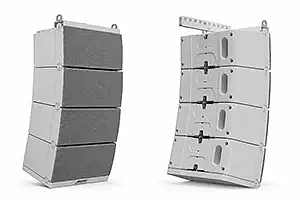
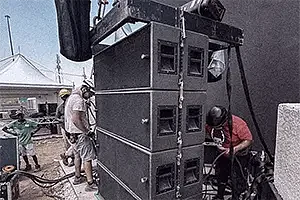
The stadium also debuts a completely new audio system, with more than 300 loudspeakers according to figures released by the stadium itself and the Mexican media (340 were mentioned when the project was presented). We have not yet been able to confirm the manufacturer and will update this information as soon as we have it.
This is not the first time the Azteca has made our pages for its sound. It was the first stadium to use Meyer Sound’s CAL column loudspeakers with AVB network technology, in a distributed system of 69 loudspeakers.
Connectivity and security
The refurbishment also includes free WiFi 6 connectivity with 1,200 antennas, cashless services and a new CCTV system with more than 200 cameras. Capacity stands at around 87,000 spectators.
A historic stadium that, sixty years after its inauguration, has been brought up to date with the technology demanded by a global event such as the World Cup.