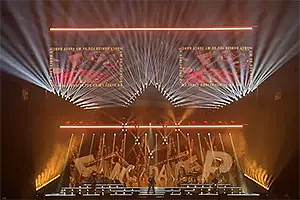
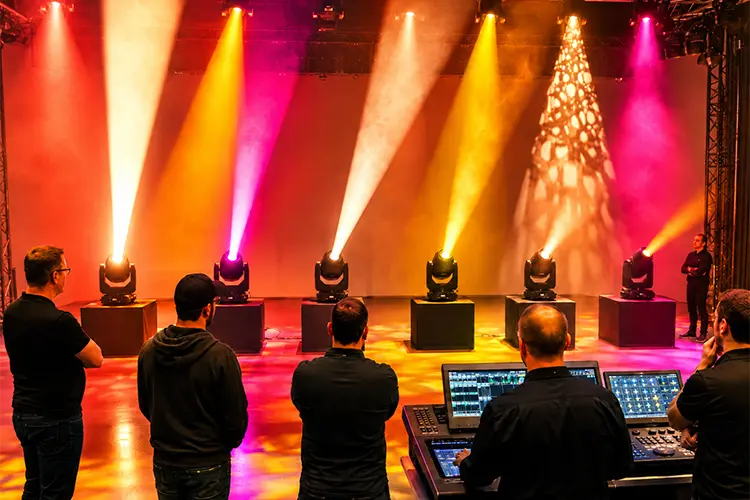
PLASA Show introduced a new format at Olympia London based on comparing lighting fixtures in a controlled environment. The brand of each fixture remained hidden during the tests so that attendees could assess aspects such as light output, colour, beam, movement and performance before learning its manufacturer and model.
The PLASA Lab sought to temporarily separate technical evaluation from the commercial information presented on the stands. Lighting professionals, production technicians, rental companies, venue managers and students were able to observe different fixtures operating under the same conditions. Their identities were revealed at the end of each demonstration.
The tests also involved RED Digital Cinema, which used cinematic and Cine-Broadcast configurations to record the sessions. This made it possible to assess how the lighting performed when integrated into an on-camera production.
Same scene, different lighting fixtures
The sessions were led by lighting professional James Simpson and lasted approximately one hour.
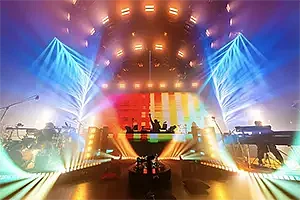
The participating fixtures were put through a sequence of pre-programmed states. This allowed visitors to compare characteristics such as light output, colour reproduction and mixing, beam quality and uniformity, movement and optical performance under equivalent conditions.
The identity of each fixture remained hidden during the test. This system makes it possible to analyse differences that are not always apparent from technical specifications alone. Two fixtures with similar specifications on paper can deliver different results in areas such as colour, optics, dimmer transitions, field uniformity, movement or interaction with a camera.
Five categories for comparison
The PLASA Lab divided the tests into five common categories within the technical production and equipment rental sectors:
- High Output Spot
- Low Output Spot
- Beam
- Big Wash
- Small Wash
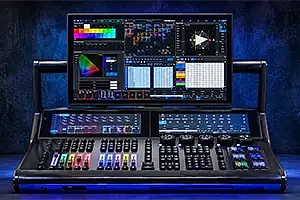
Once the manufacturer and model had been revealed, attendees were able to access the consoles and test the lighting fixtures individually.
In addition to observing a programmed demonstration, technicians and operators were therefore able to assess specific parameters for themselves and subsequently discuss their conclusions with the manufacturers.
What a camera captures that the eye may not perceive
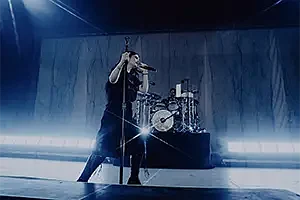
RED's involvement addresses an important issue for lighting designers and production companies: a lighting fixture may deliver a suitable result for an in-person audience but perform differently on camera.
Recorded concerts, broadcast festivals, streaming, television, social media content and hybrid productions are bringing the fields of entertainment lighting and broadcast closer together.
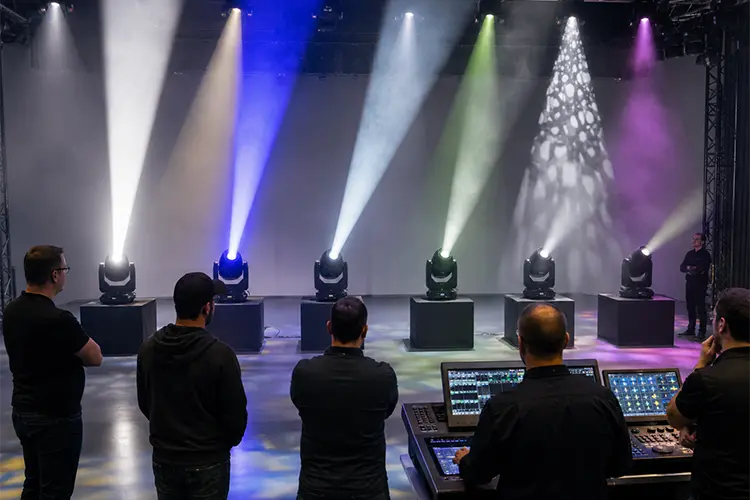
The RED cameras used during the demonstrations made it possible to observe how colours, highlights, rapid transitions and dynamic effects were captured.
Cameras with a global shutter were also used. This technology captures the entire image simultaneously and can reduce certain artefacts associated with rolling shutters when working with flashes, strobes, fast movements, stage effects or pyrotechnics.
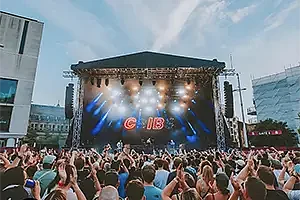
Lighting designers working on tours and large-scale shows must therefore consider both the view from inside the venue and the final result delivered to viewers through screens.
The relationship between lighting, video and broadcast
Live productions currently combine lighting, video, cameras, media servers, networks and control systems within a single show. This evolution makes it necessary for departments that traditionally worked separately to better understand each other's operation and technical limitations.
The PLASA Lab analysed this relationship through one common element: light.
RED used both a conventional cinematic configuration and a Cine-Broadcast solution. This made it possible to compare approaches designed for film production and live broadcasting.
Information for international visitors
PLASA Show 2026 brought together more than 250 brands related to professional lighting, audio, audiovisual technology, rigging and stage technology at Olympia London. The programme also included educational sessions, seminars and technical demonstrations.
The concentration of manufacturers and disciplines made it possible to compare equipment, ask technical questions and observe different technologies in operation during a single visit.
The PLASA Lab joined this programme as a space dedicated to the technical comparison of lighting fixtures under controlled conditions.