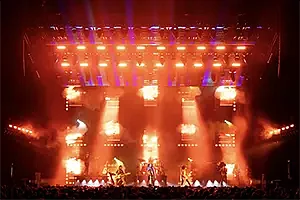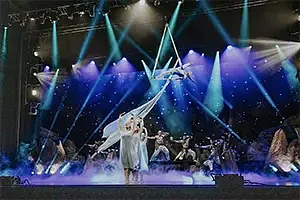
The multiple Grammy Award winner, Lenny Kravitz, is currently on the U.S. leg of his Blue Electric Light tour, which began in Europe in June 2024 to promote his twelfth studio album.
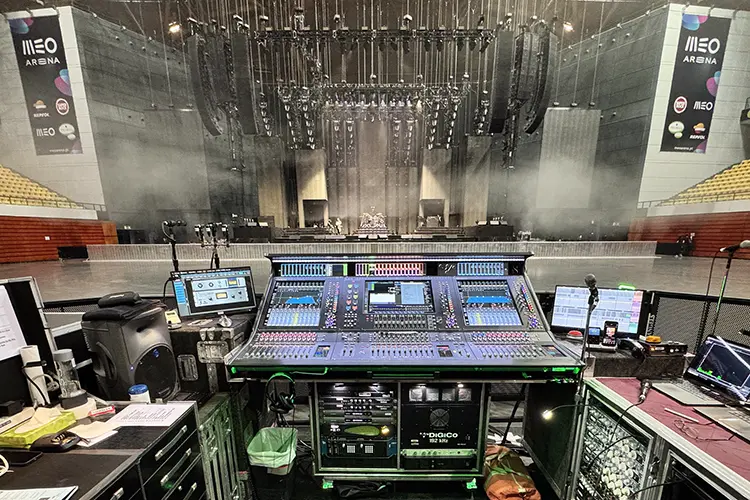
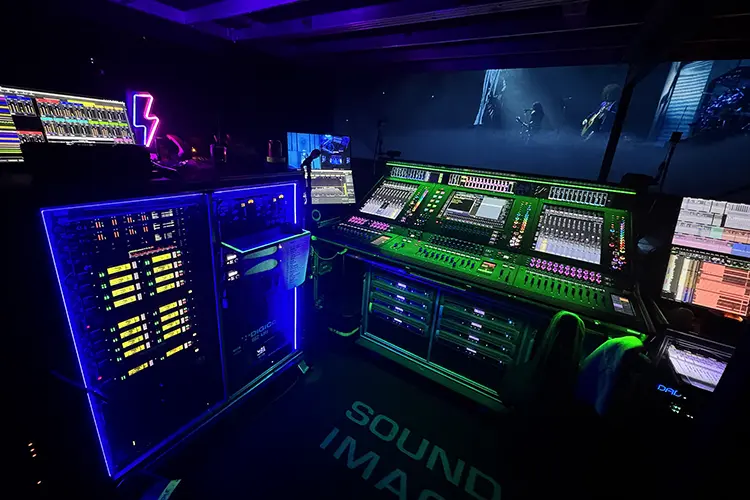
The control system for the tour includes two DiGiCo Quantum852 consoles for veteran FOH engineer Laurie Quigley and monitor engineer Josh Mellott, two SD-Racks, six SD-MiNi Racks, and three Fourier Audio transform.engine platforms.
Experienced engineers rely on DiGiCo
Josh Mellott, who has worked with Kravitz for 14 years (initially as a monitor tech and later as a mix engineer on an SD7), knows DiGiCo consoles inside and out. Over the years, he and Quigley—who has worked with Kravitz for over two decades and also with bands like KISS and Aerosmith—have used virtually every DiGiCo console model.
Smooth transition to Quantum852
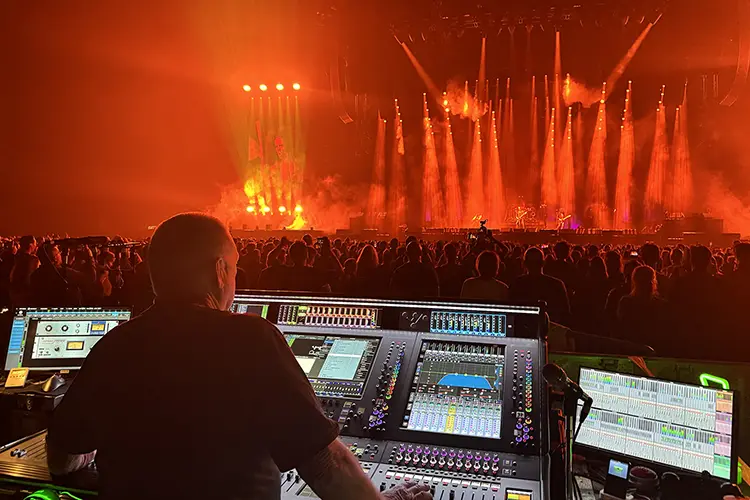
Quigley started the 2024 tour with an SD7 but switched to the new Quantum852 in early 2025. Mellott, who has also worked with Tom Petty and Bob Dylan, handled the programming of the new console. "I know the system better, so I’m faster. I converted Laurie’s file to Quantum during a two-week break and set up the desk layout to mirror the SD7. He powers up the console and everything is exactly where he expects it".
After years of upgrading his SD7 monitor rig, Mellott chose to start from scratch with the Quantum852 in 2025. He copied every setting from the SD7 before connecting Pro Tools for a virtual soundcheck.
I spent three or four days working through everyone’s monitor mixes, checking every snapshot, every song, every mix, and rebalancing everything. We kept the same 32-bit cards and fiber system, but now it sounded the way I wanted. I was even able to remove some EQ cuts and keep the dynamics. I didn’t need as much compression or EQ anymore because the sound was exactly where I wanted it, he explains.
Close collaboration with the artists
Lenny Kravitz and Craig Ross, his longtime guitarist and collaborator, have deep knowledge of audio, songwriting, performance, recording, and mixing for all of Kravitz’s studio projects. On the road, both are also actively involved in shaping the live sound. "Lenny and Craig go to FOH, listen to the band with Laurie, and make adjustments. Craig comes to the monitor console, listens to his mix, and tweaks it. We all talk to each other and work together to make this whole collective click, because audio is a huge part of Lenny’s show", says Mellott.
The Quantum difference, noticed by the artist
The switch to the new Quantum852 consoles didn’t go unnoticed by Lenny Kravitz himself.
Lenny’s always been happy with what Laurie and I have done over the years. He’s never complained. But toward the end of this leg, he pulled me aside and said, ‘I don’t know what’s different between last year and this year. We obviously have the same band, the same mics, same setup—but this year sounds better. Everything’s clearer. There seems to be more space in the mix’. I told him we upgraded to the Quantum, and he said, ‘You know, that might be it!’, Mellott recalls.
Touring audio infrastructure
At front-of-house, Quigley uses an SD-Rack for his I/O, while Mellott has one at monitors for the wireless mics and IEM outputs. "We also have six SD-MiNi Racks around the stage, and I have an Orange Box interface to manage playback and backing tracks", Mellott explains. All the DiGiCo gear is connected via a fiber loop.
Managing a large number of channels
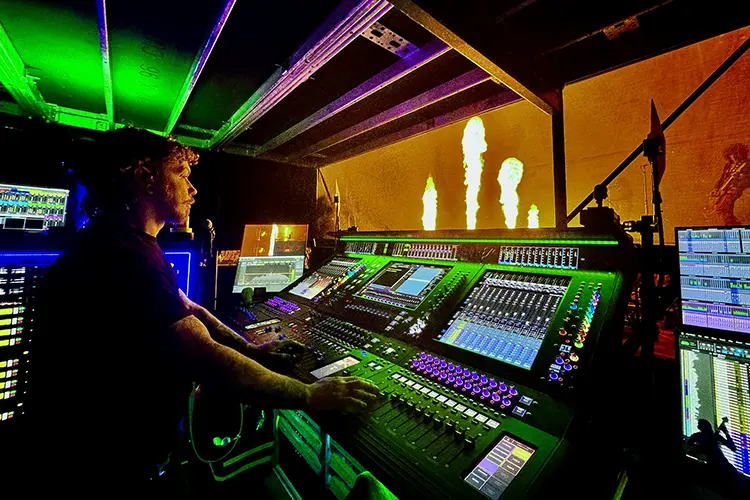
While the core band consists of two guitars, bass, drums, and keyboards, they still take up a huge channel count. Beyond the 24 guitar channels, Mellott notes: "There are 20 keyboard channels and 20 drum channels. We record every night, and the most I can capture is 128 channels. That’s not everything, so I had to group things, like the 12 audience mics into one stereo channel".
Replicating studio sound on stage
Both engineers have worked hard over the years to deliver studio-quality sound both on stage and to the audience. During rehearsals in the Bahamas for this tour, Mellott and Ross regularly visited the studio to document every delay and reverb used on the Blue Electric Light album, and then reviewed the plugins inside the Fourier transform.engine to replicate the devices used in the recordings.
"I made a list of eight different reverbs and eight or ten delays just for Lenny’s vocal", says Mellott. He programmed those effects into Quigley’s FOH transform.engine, but rather than duplicating everything for monitors, he simply taps into the effect Laurie is using via the Optocore loop. Mellott can then route that effect to anyone who wants it in their monitor mix.
Fine-tuning the artist’s monitor mix
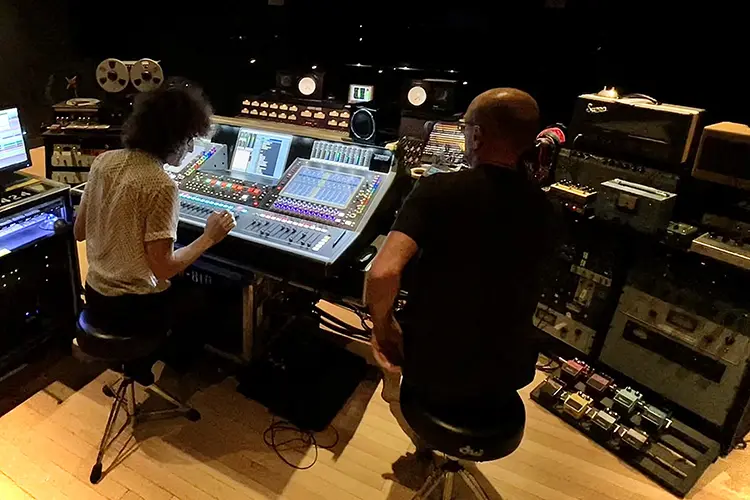
Regarding monitors, Mellott explains: "Lenny likes a specific vocal space in his in-ears, so I use my own reverbs for his vocal. His mix also goes through a dbx 160, because that’s how he does it in the Bahamas. The 160 keeps the band in check but keeps his vocal on top and present without coloring the band or his voice". Mellott uses a single computer with two transform.engines for redundancy, using a Dante patch for seamless backup switching if needed.
Broadcast-quality sound guaranteed
Since 2019, the team has also produced a broadcast mix when needed by inserting a third DiGiCo console into the fiber network.
Quality control is something very, very important in this operation, and we don’t leave anything to chance. We carry our own Quantum5, and our systems engineer, Frank Müller, provides a stereo mix whenever we broadcast. We load the FOH file onto it and programmed it with Craig over the past year or two during rehearsals. All of Laurie’s plugins are sent to Frank, and he can also add delays and reverbs as needed. With DiGiCo, it’s a whole ecosystem—and one that really works for us, Mellott emphasizes.