

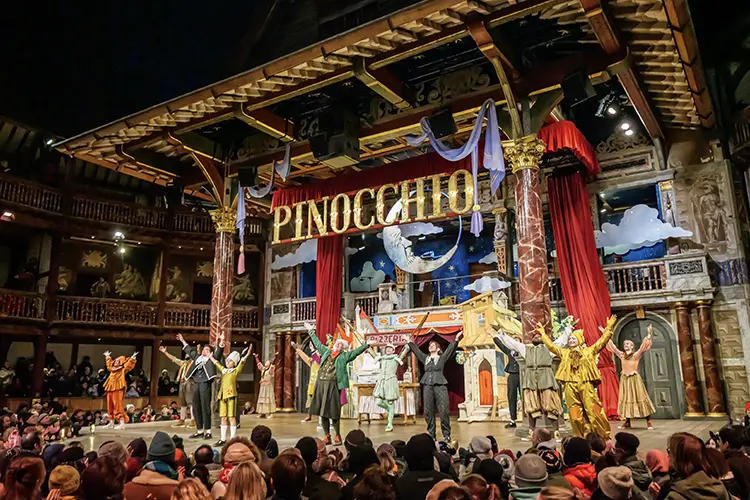
Shakespeare’s Globe is one of the most acoustically and architecturally unique performance spaces in the world. It is a meticulous reconstruction of the open-air Elizabethan playhouse where Shakespeare premiered Hamlet, Julius Caesar and King Lear, built from English oak using 16th-century mortise and tenon joinery.
It also holds the distinction of being the only building in London permitted to have a thatched roof since the Great Fire of 1666. Its circular structure wraps the audience on three sides around a wide thrust stage, with 600 standing spectators in the open pit (groundlings) and 1,000 seated across three tiers of galleries rising steeply above them, with the closest boxes just metres from the actors. It is a space designed from the outset for the unaided human voice. The intimacy and acoustic clarity of the design are considered fundamental to the Shakespearean theatre experience.
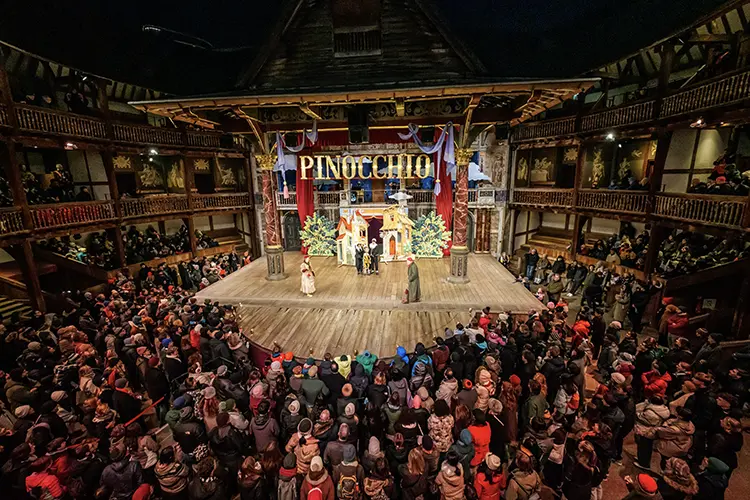
In December 2025, the Globe staged a new musical, Pinocchio, as part of its festive season in the open-air theatre. This successful new production was aimed at families, and the creative team behind Pinocchio recognised that the presence of a live band, songs and a young audience required temporary sound reinforcement—without altering the structure or aesthetics of the theatre, and while respecting the unique Globe experience. Over the years, amplification has been used at the venue, particularly for special events such as concerts, comedy shows and poetry readings. Even so, as one of the few remaining unamplified theatres, the Globe takes pride in championing the power of the natural human voice throughout its annual programme. However, staging a musical outdoors in winter presented real challenges in delivering a world-class experience for family audiences.
 |
 |
The goal was therefore clear: the solution had to be transparent, with sound that audiences would feel rather than notice. L-ISA Hyperreal’s object-based spatial audio, which distributes individual sound sources across a multi-array configuration to align what audiences hear with what they see on stage, made that level of naturalness achievable.
The producer of Pinocchio, Shakespeare’s Globe, approached Olivier Award-winning sound designer Tony Gayle after hearing his work on My Neighbour Totoro, a production that earned him the award for Best Sound Design. “The team were looking for something similar for Pinocchio. It needed to be transparent and natural, particularly for the vocals”. explains Toby Chester, Global Application Lead for Musicals at L-Acoustics. “Gayle’s expertise was a welcome addition”.
The Globe as an acoustic space, and why L-ISA was the exception
The decision to amplify this production at the Globe was not taken lightly. Since reopening in 1997, the theatre has championed an unamplified acoustic space. Audiences come expecting an experience akin to Shakespeare’s time—acoustic, lively and focused on storytelling. We knew that any sound design would need to justify its presence without drawing attention to itself. The goal was to achieve intelligibility and musical clarity for a family audience while remaining completely invisible, says Will McGonagle, Hire Manager at Autograph.
An open-air wooden theatre: modelling the space with Soundvision
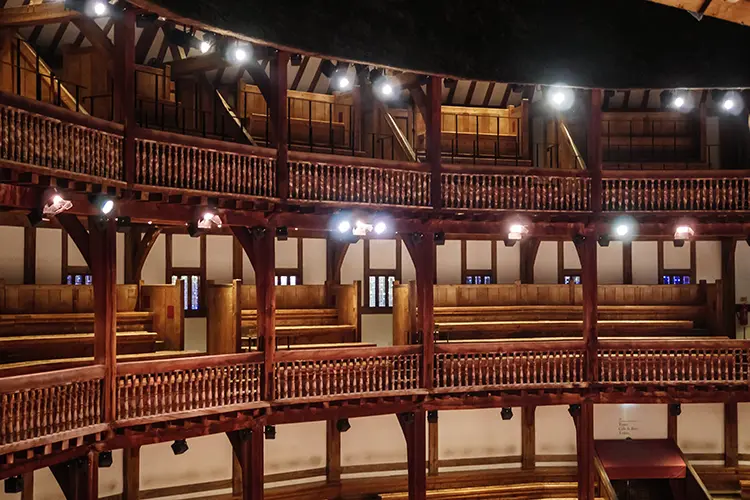
The Globe presented a unique set of challenges for Gayle, Chester and Autograph. Its open-air, circular auditorium means sound behaves differently than in a conventional enclosed theatre, contending with wind, weather and the natural reverberation of the space. Achieving consistent coverage across the pit and the three gallery tiers was also a challenge.
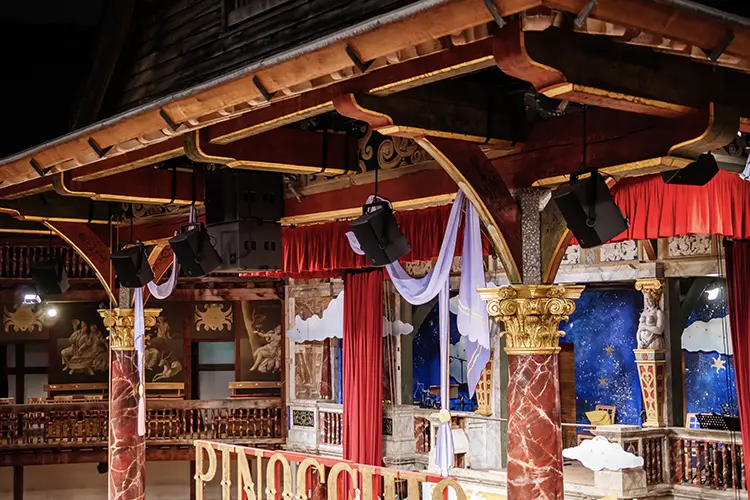
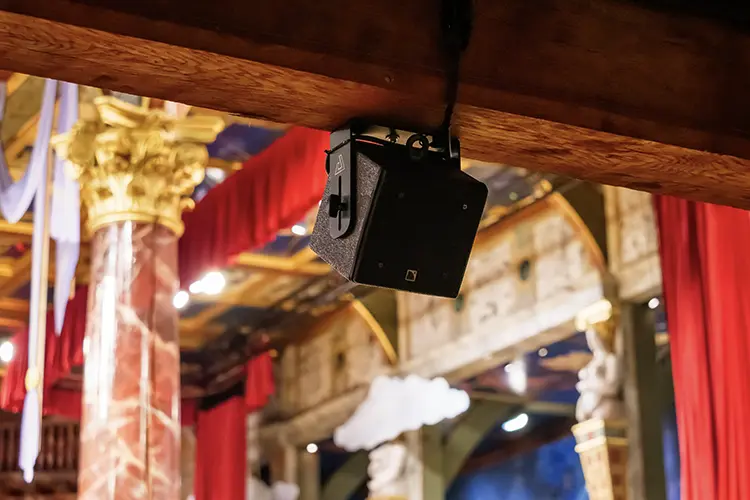
“The biggest issue was the visual aspect”, says Chester. “The technology couldn’t appear too industrial. It’s a historic wooden building, and the production team didn’t want to see a lot of equipment”.
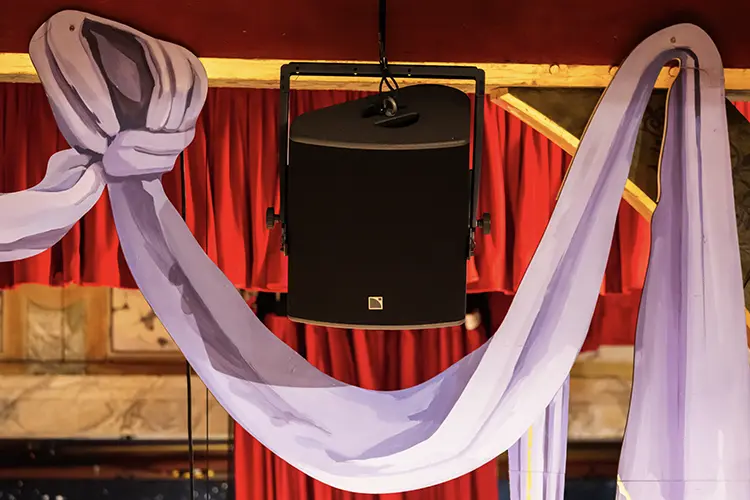
To find the right solution, L-Acoustics and Autograph used Soundvision software in collaboration with Gayle to model the space and present multiple configuration options to the Globe and Pinocchio teams. They even brought physical speakers to the venue so the theatre could assess their size and visual impact before making any decision. The selected speakers, in L-Acoustics’ distinctive dark brown colour, ultimately blended into the architecture.
 |
 |
Five X12 for the stage and 113 5XT for the galleries
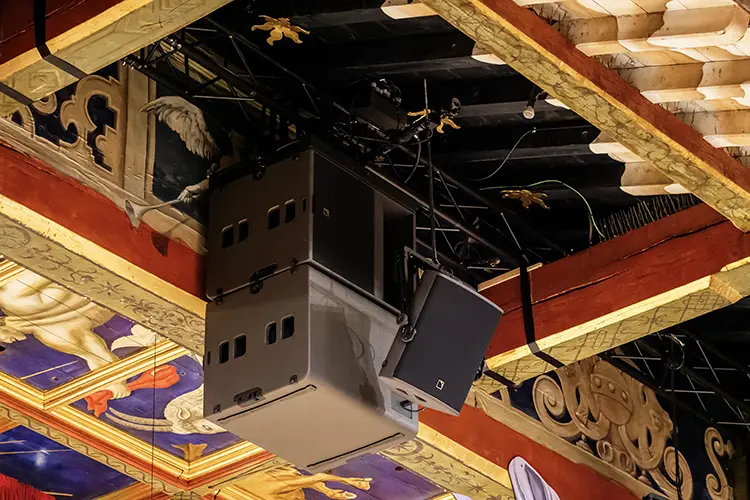
The final system was supplied by Autograph and prepared and installed by a team of audio professionals working with Gayle. Five X12 loudspeakers formed the main Scene system, flown across the front of the stage. Two KS21 subwoofers reinforced the low end, maintaining tight and controlled bass in the open-air environment.
The most distinctive element of the design was the spatial fill system deployed in the gallery boxes. With speakers arranged across the three tiers surrounding the auditorium, each individual box was equipped with three 5XT units—113 in total—making it the largest L-Acoustics spatial fill system of its kind installed to date. For audience members seated in the upper tiers, where the main stage system is obscured, these fills delivered the full audio experience.
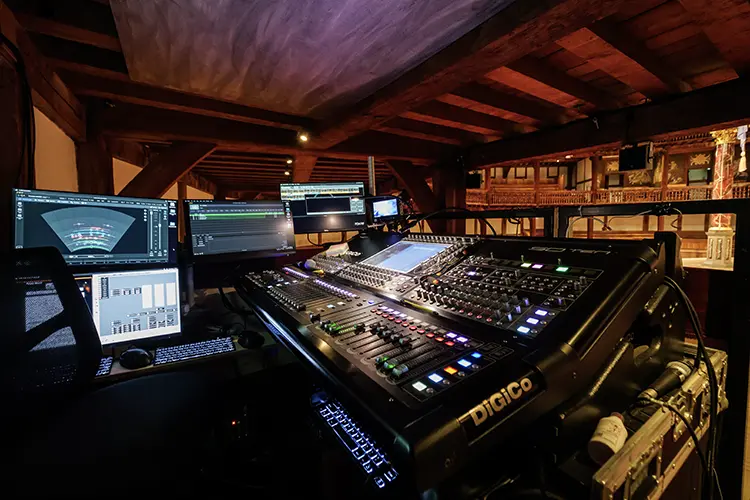
To manage this complexity, the system was built around an L-ISA Processor II, with LA7.16 amplified controllers and LS10 switches handling signal distribution via a redundant Milan-AVB network.

The use of LA7.16 amplifiers significantly reduced overall power consumption and cut the technical footprint by more than half compared to traditional amplifiers. The amplifiers were housed in L-Acoustics LARAKIII racks with redundant AVB connectivity via LS10 switches, along with additional AES/analogue fallback, reducing preparation and programming time in the warehouse, adds Chester.
Four discrete Sound Spaces were configured within L-ISA: a main space for the Scene system and one dedicated to each central box area. Combined with the Source Trims feature, which adjusts the mix depending on audience position—especially for those hearing more acoustic sound from the band—this allowed the team to deliver a tailored mix to every area of the venue. This feature proved essential.
 |
 |
Audiences heard the story, not the system, and Pinocchio returns in 2026
The result met the creative team’s expectations. Audience response was positive, with praise from both the musical director and creative director. Most importantly, the sound design achieved its goal: audiences were immersed in the story of Pinocchio without being distracted by the technology.
For Chester, the project demonstrated something fundamental about the relationship between L-ISA’s spatial distribution and perceived naturalness:
The 5XT is a compact speaker, small enough to integrate into a gallery box without altering the architecture. That physical discretion is what made the system possible at the Globe from the outset. Together with Autograph, we delivered subtlety through a professional sound system that served the production without compromising the Globe’s identity or the audience experience, he explains.
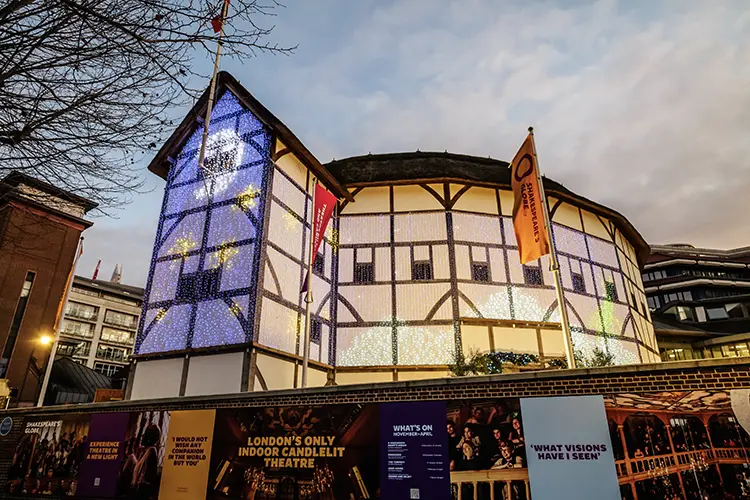
Image captions:
- LA_Globe_Pinocchio_1 - Shakespeare’s Globe takes a new direction with L-ISA sound by L-Acoustics for the musical Pinocchio
- LA_Globe_Pinocchio_2 - In December 2025, the Globe staged the musical Pinocchio as part of its festive open-air season
- LA_Globe_Pinocchio_3 - Two KS21 subwoofers reinforced the low end, keeping bass tight and controlled
- LA_Globe_Pinocchio_4 - Five X12 loudspeakers formed the main system
- LA_Globe_Pinocchio_5 - The spatial fill system included 113 5XT speakers, three per box
- LA_Globe_Pinocchio_6 - The Globe’s open-air circular auditorium affects sound behaviour
- LA_Globe_Pinocchio_7 - The musical Pinocchio premiered in December 2025 at the Globe
- LA_Globe_Pinocchio_8 - The Globe featured the largest L-Acoustics spatial fill system of its kind to date
- LA_Globe_Pinocchio_9 - LA7.16 amplifiers significantly reduced power consumption and technical footprint
- LA_Globe_Pinocchio_10 - The system was built around an L-ISA Processor II with redundant Milan-AVB networking
- LA_Globe_Pinocchio_11 - Shakespeare’s Globe, one of the most unique performance spaces in the world