
39 million pixels over the audience at CadenceLIVE Silicon Valley
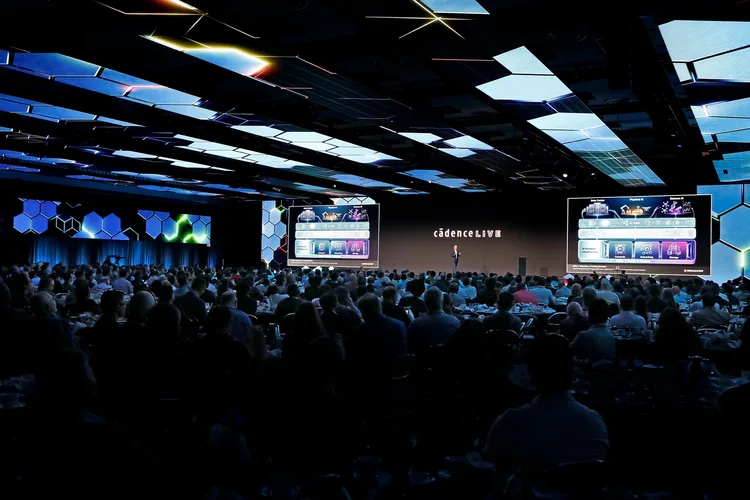
Brompton Tessera SX40 processors and XD 10G distribution drove a 12-surface LED installation stretching from the stage to the ceiling of the tech conference’s general session, with redundancy keeping the show safe through fibre issues.
Brompton Technology powered a 39-million-pixel LED installation for the general session at CadenceLIVE Silicon Valley 2026, with screens extending from the stage to the space above the audience. The system used Tessera SX40 LED processors and Tessera XD 10G data distribution units.
Richard Herrera, creative director at AVT Productions, led the design. AVT managed the overall production and creative direction and brought in MeyerPro for Brompton processors, PIXERA media servers, Analog Way screen switching, additional LED, programming, engineering and technical labour.
One canvas, 12 surfaces
The installation combined 12 primary LED surfaces, including the main wall and stage fascia, plus eight suspended ‘finger’ elements over the audience and two more at the sides. Content moved seamlessly from the main wall across the fascia and into the overhead screens, so everything had to work as a single system.
MeyerPro supplied the main wall, 106 ft 7 in wide by 20 ft high (approx. 32.5 x 6.1 m), and a 48 ft by 3 ft 3 in fascia (approx. 14.6 x 1 m), both built with ROE Visual Graphite 2.6 panels. The main wall ran at 13,056 x 2,304 pixels, with the fascia adding 8,640 x 384. Matrix Visual handled the ceiling and side elements with 600 ROE Vanish V8T panels in 10 runs of 60 tiles.
Seven Tessera SX40 processors and 20 Tessera XD 10G units for 39 million pixels across 12 LED surfaces.
Seven Tessera SX40 processors were used, five on MeyerPro’s elements and two on Matrix Visual’s, alongside 20 Tessera XD 10G units. Signals travelled from PIXERA through a Lightware MX2 matrix and redundant Analog Way Aquilon RS4 presentation switchers before reaching the processors.
Tools that made the difference
OSCA allowed precise seam corrections across the screens; Stacking saved setup time by controlling settings across several processors at once; and the Tessera XD architecture provided redundant signal paths. The team also routed the processor GUIs into the multiview, keeping errors visible without opening each processor – especially useful when troubleshooting fibre paths during rehearsals.
Rigging and fibre distribution were the toughest challenges on site. The elements were assembled at ground level and then raised, leaving limited windows between rehearsals for testing. Some fibre issues had to be diagnosed during breaks, but the processors’ built-in redundancy kept them from interrupting the show.
With the SX40 processors, their redundancy, and the ability to see the system topology and identify errors quickly, our team could troubleshoot without disrupting rehearsals or the show, says Ryan Hargis, lead LED technician at MeyerPro.
“CadenceLIVE is a great example of why LED processing has to do far more than drive pixels,” concludes Webster Moyle, technical sales manager (Western US) at Brompton Technology. “When content moves from the main wall across the fascia and into the overhead screens, every processor and signal path has to perform as one system.”
Products used: Brompton Tessera SX40, Brompton Tessera XD 10G
Photos: © Tony Contini
 Instagram
 LinkedIn
Latest
Home →
ETC takes Halcyon outdoors with Carbon, Graphite and Diamond
ChamSys and MediaMaster light up Y Llais, the Welsh version of The Voice
Martin Audio Wavefront Precision conquers a 13-second reverb at Liverpool Cathedral
GLP: almost 500 JDC Burst 1s for Swedish House Mafia at Ullevi
Marshall: a single CV228 camera powers Mochakk's visuals at Coachella
Robe takes Carnegie Hall all the way to the Moon for a PBS special


L-Acoustics: Kurhaus Wiesbaden doubles up with two systems in one hall
Genelec Smart IP sets the tone at London’s Black Rabbit restaurant
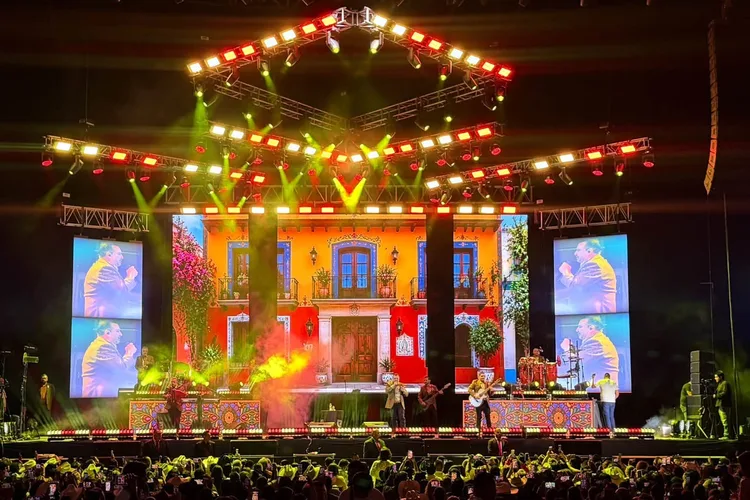
70 CHAUVET Maverick Storm fixtures in a V for Conjunto Primavera’s La Terapia Tour