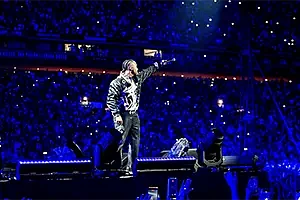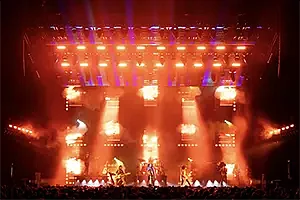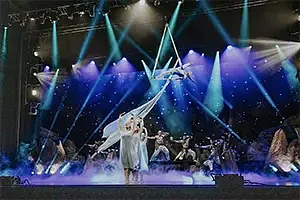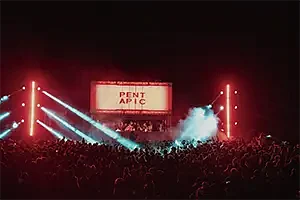
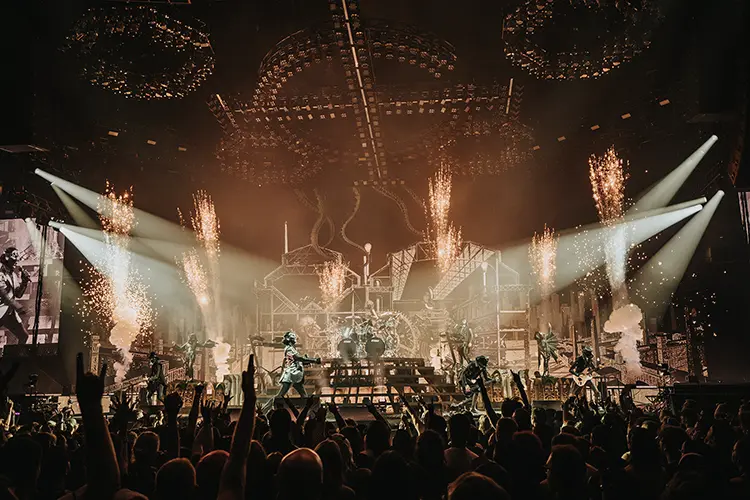
Ghost’s Skeletour 2025–26 world tour —their largest to date— concluded last month with its final shows in the United States. The Grammy Award-winning Swedish rock band delivers a live performance that combines a refined aesthetic, original repertoire, and a stage production with a strong theatrical component.
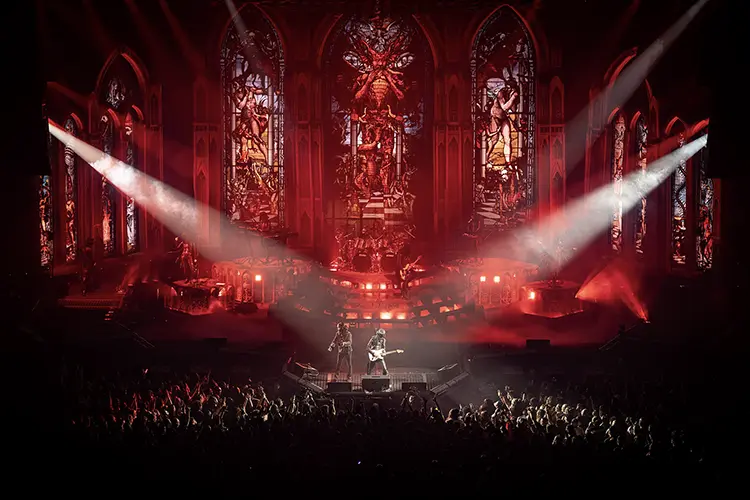
The lighting design for Skeletour was created by Tobias Rylander, while direction and operation on the road —for most of the tour— were handled by Ishai Mika of Swedish company Green Wall Designs. Precise spotlight tracking was a key element of the show, leading to the use of a zactrack PRO system to manage this aspect of the production.
The zactrack PRO system was supplied with main and backup servers by Berlin-based tracking specialist Tracking Pro, under the direction of the tour’s global lighting and video provider, PRG.
 |
 |
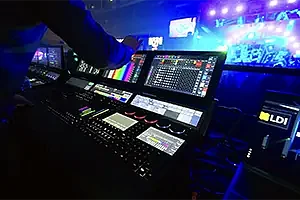
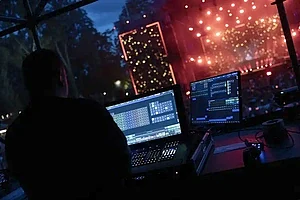
The zactrack system was operated on tour by lighting crew chief Dom McClory and ran in 3D mode due to the different stage levels. Dom also programmed the system with positional data, which was then input, stored and played back via Ishai’s grandMA3 full-size lighting console.
Both Tobias and Dom had previous experience with zactrack, and Tobias considered it the most suitable system to support the design, which required precise tracking with numerous blackout, pickup and cut-to-black effects with no margin for error.
A total of 19 fixtures —Vari-Lite VL3600— were used under zactrack control. This gave Ishai and his team great flexibility in deciding which units functioned as follow spots and which performers they tracked. Any assigned fixture could also be repurposed at any time from follow spot duties to general stage lighting.
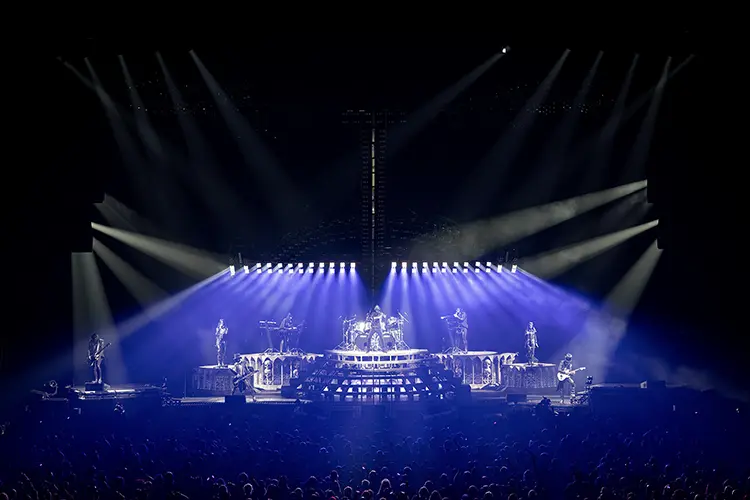
A total of 17 zactrack Anchors were deployed around the performance space, triangulated to define a tracking area of approximately 21 metres wide by 20 metres deep. Each of the five performers moving across the stage wore two zactrack Trackers, positioned at the front and back of their costumes, ensuring full redundancy and maintaining line-of-sight between Trackers and Anchors at all times.
It was Ishai’s first time using zactrack, and he highlighted its flexibility: “It proved reliable and a good solution for handling the level of precision required for this show”.
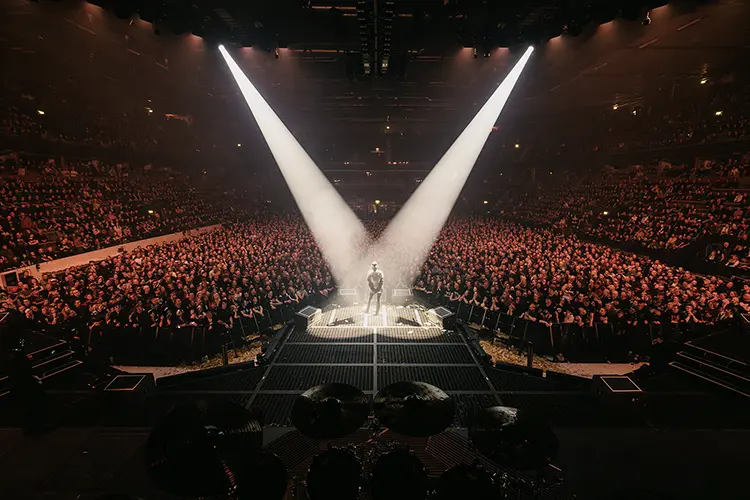
The placement of the Trackers in the costumes was critical, so Ishai and Dom worked closely with Ghost’s wardrobe team to determine the most suitable positions. Both emphasised the importance of addressing these technical aspects from the early stages of production. During the show, each of the five mobile musicians was followed by three moving lights, with up to seven fixtures at times focused on Ghost’s enigmatic frontman, Papa V Perpetua.
All fixture parameters —intensity, colour, iris, gobos, etc.— were controlled from the console, while positional data from the zactrack servers was integrated into the grandMA3 and stored in the corresponding lighting cues, synchronised via timecode to ensure absolute precision at every show.
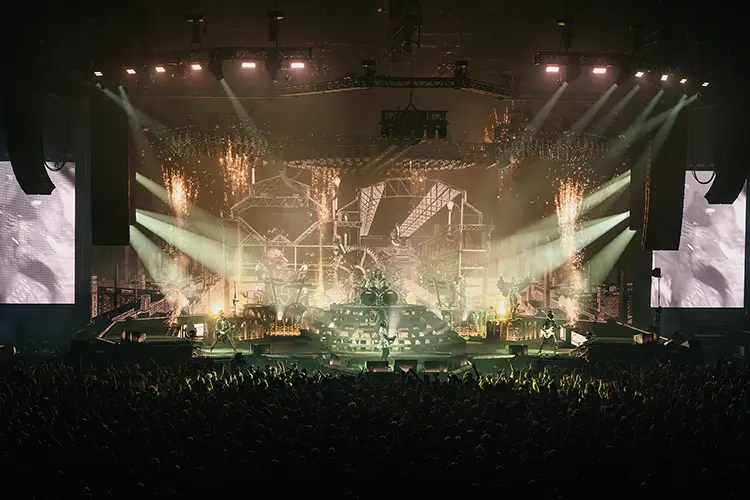
The ability to track multiple performers accurately and reliably without manually operating follow spots represents a major advantage in an already complex and demanding lighting show.
Ishai used advanced zactrack features such as Height Offset, ensuring the light always stays on the performer’s face, and Smart Beam, which automatically adjusts beam size according to movement to maintain proportion.
Dom noted that once the initial zactrack setup is completed, daily calibrations are quick and straightforward. As lighting crew chief, he already had a demanding daily schedule, but once the tour was underway, he was able to integrate this task smoothly with his other responsibilities.
The zactrack system was set up during production rehearsals at Production Park in Wakefield (UK), with the support of Tracking Pro technicians Jaro Brinkmann and Raphael Doelle, who also worked on the first two shows as backup technician.
PRG UK handled lighting and video coordination for the European and UK legs of the tour, while its US team managed operations in North and South America. In the final leg, lighting direction and operation were handled by Vada Briceño, while Tom Bider served as lighting crew chief during the first two legs.
Photos: Ryan Chang