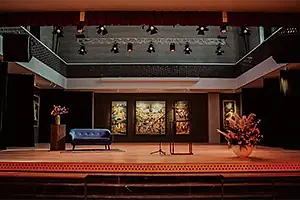


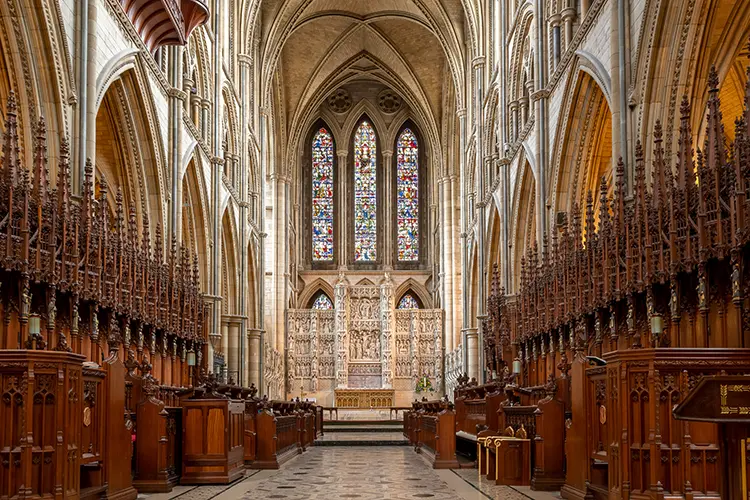
Worship centers, due to their architecture and the diversity of their activities, present unique acoustic challenges that require specific and advanced engineering solutions to ensure optimal sound coverage.
These spaces often feature high ceilings, multiple seating levels, and reflective surfaces, complicating sound dispersion control and low-frequency management.
This type of installation demands particular attention in the design and implementation of sound systems to guarantee a uniform and distortion-free experience for the entire congregation, from the front rows to the most distant balconies.
Analysis of acoustic needs
The sound systems in these spaces must address a series of key factors, such as:
- Uniform vertical and horizontal coverage: Worship centers often present hard-to-cover areas, such as seating under balconies or in side loges. These zones require careful design to ensure that sound pressure is distributed evenly without creating phase cancellations or dead spots.
- Minimization of reflections: Large, reflective surfaces, common in these buildings, increase the risk of echoes and uncontrolled reflections. These generate destructive interference that affects speech intelligibility and music clarity.
- Management of low frequencies: Low frequencies tend to accumulate in enclosed spaces and areas with high ceilings, which can create an exaggerated response in certain zones. It is essential to use specific low-frequency drivers that allow precise control of these sound bands.
Proposed technical solutions
The most effective technical solution in this type of installation is based on the use of line array systems combined with point sources, allowing for uniform coverage both horizontally and vertically. The key stages and considerations for a successful installation are as follows:
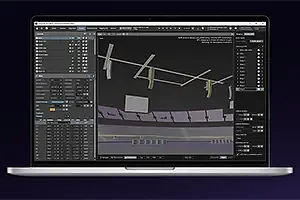
- Acoustic simulation and 3D modeling: Before physical installation, it is imperative to conduct acoustic simulation using prediction software. This process allows for forecasting how sound will behave in the space, taking into account the venue's architecture and construction materials. Through 3D modeling of the space and simulation of the sound response, the position and angle of the speakers can be optimized, as well as anticipating the behavior of low frequencies in the space.
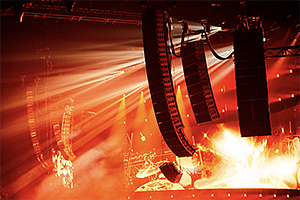
- Line array design: For coverage of the main hall, line arrays allow for controlled and directional sound dispersion, adapting to the geometry of the space. This type of system minimizes lateral interference and unwanted reflections, ensuring that sound is projected directly to the areas where the audience is located. The angle and quantity of modules are determined based on prior acoustic modeling.
- Use of point sources for reinforcement: In areas under balconies or in side loges, point source speakers provide essential sound reinforcement, as they allow for greater directivity and control in confined spaces. These speakers, typically compact in size, must be precisely integrated into the overall system to avoid phase mismatches or inconsistencies in frequency response.
- Control of low frequencies: The use of subwoofers or low-frequency drivers is essential to ensure a balanced response in the bass range, avoiding overload in certain areas of the space. The use of directivity control devices is recommended to limit the dispersion of low frequencies, directing them only to the necessary areas.
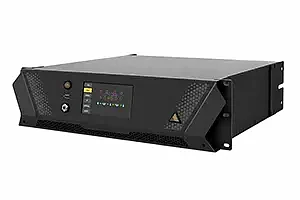
- System management with digital signal processing (DSP): The system must be managed through an advanced DSP platform that allows for remote control and dynamic optimization of acoustic parameters. These systems offer the possibility to adjust equalization, delay, crossover filters, and compression in real-time, adapting to the acoustic conditions of the environment during the event.
- Real-time monitoring and maintenance: To ensure continuous performance, modern systems allow for remote monitoring via AVB networks or similar, providing information on the health of each system component. Integrators can detect problems before they affect performance and make adjustments remotely, minimizing interruptions.
Benefits after installation
Once this type of system is implemented, the benefits are evident. Sound coverage is uniform, improving speech intelligibility and music clarity at all points in the venue. At the same time, the integration of DSP systems and monitoring networks allows operators to make real-time adjustments without the need for physical access to system components, which is crucial in spaces where speakers are suspended or difficult to reach.
Additionally, the weight and structural specifications of the equipment used are taken into account in the initial design to ensure that the system meets the structural load requirements, minimizing the need for additional reinforcements.