
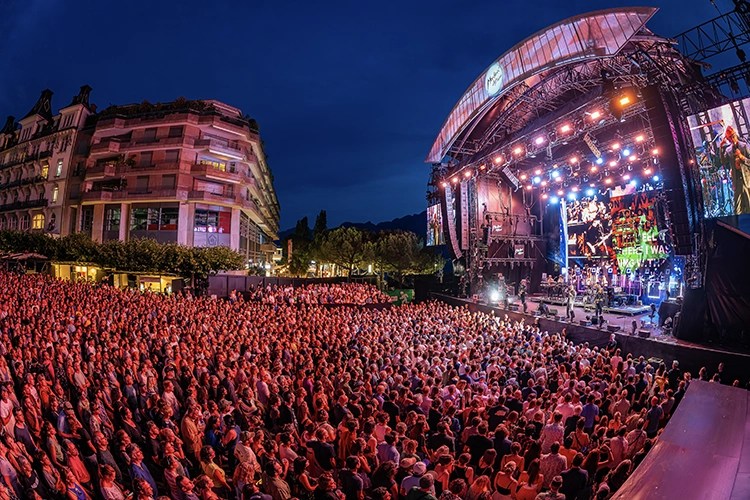
The 58th edition of the Montreux Jazz Festival returned to the dazzling shores of Lake Geneva in Switzerland from July 5th to 20th. Since its inception in 1967, the festival has become a must-visit destination for the world’s most respected musicians. Soul, jazz, and blues, as well as rock stars, rappers, and emerging artists.
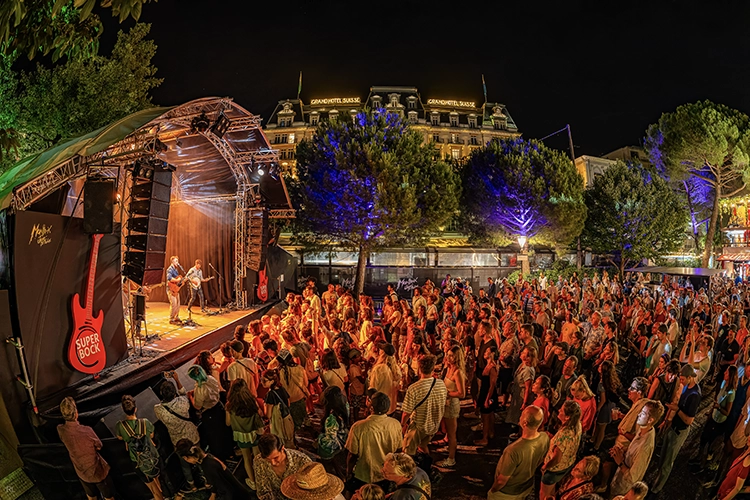
For the first time, events were held entirely outside the Montreux Music & Convention Centre, home to the iconic Miles Davis and Stravinski Halls, due to construction work. This closure provided the opportunity to reinvent the festival, expanding to 17 stages along two kilometers of the Montreux lakeside promenade, as well as a venue located on the mountain above the city, anchored by the impressive new Lake Stage and the transformed Casino.
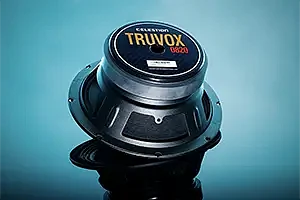
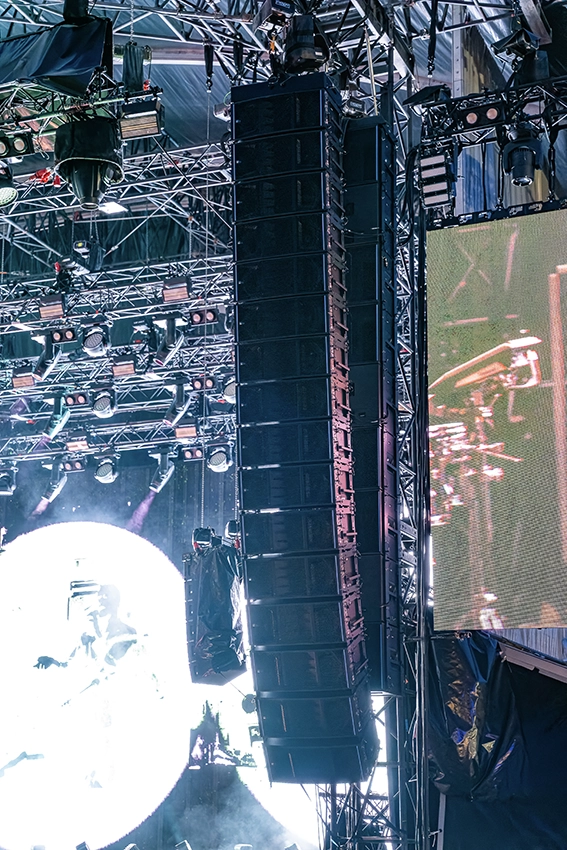
More than 400 speakers powered the performances of dozens of artists, from Janelle Monáe to Rag’n’Bone Man, Raye, Justice, Duran Duran, and Diana Krall. The systems ranged from large-format line arrays and low-frequency control elements on the Lake Stage, to compact line array systems, point-source speakers, smart DC power products, and studio monitors in the Library’s listening room.
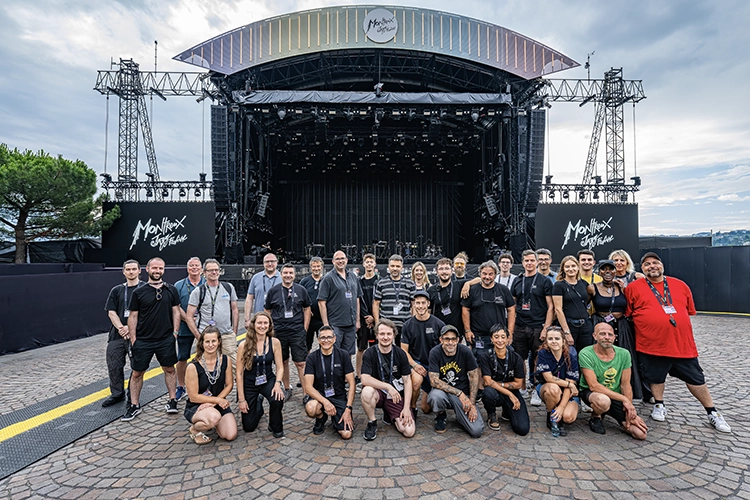
 The technologies used spanned generations, from vintage speakers making their twentieth appearance at the festival to a state-of-the-art immersive system. The systems were designed by José Gaudin, who worked on the festival for the 21st time. The systems were calibrated on-site with the support of the technical team. All audio, lighting, and video equipment was once again supplied by the Swiss rental and integration company Skynight.
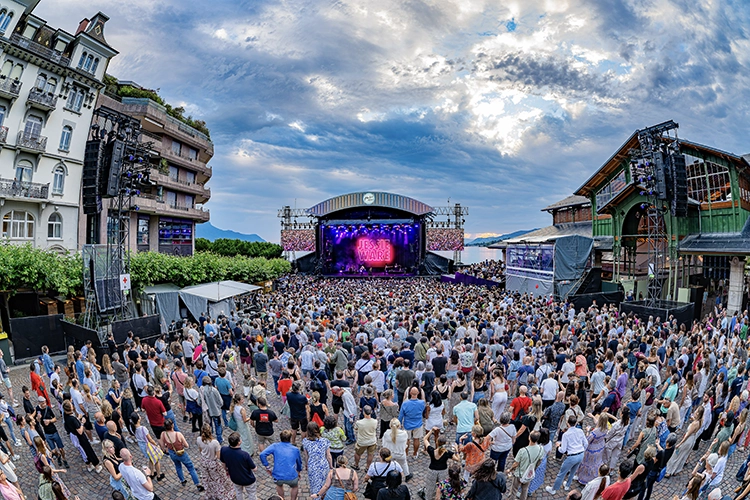
The Lake Stage, a 5,500-capacity venue located on the lakeshore against a stunning alpine backdrop, showcased the perfect blend of advanced technology, anchoring the main flown arrays and delay systems, supported by compact speakers and low-frequency control elements.
The system was controlled by advanced network platforms, operating on a MILAN infrastructure. The platform’s monitoring and management software controlled the MILAN-equipped speakers, along with other RMS-equipped systems.
"The system is like a giant studio monitor. The precision and transparency of this system are incredible," says Martin Reich, Head of Sound at the Montreux Jazz Festival. "And the subwoofers add this precision down to 30 Hz. Now that we are outside and can hear the system without room reflections, it’s even more impressive how precise it is."
Alex Bolis, Martin Reich’s assistant for this expanded edition of the festival, highlighted the exceptionally consistent coverage on the Lake Stage. "The system was very impressive," he says. "I could sit in the seats at the back and still feel the same low-end and mid-low pressure as in the front row."
"During the first few days, I was walking around a lot with my XL2 meter, just to measure the coverage across the entire audience area," adds Bolis. "I was surprised at how in every spot I measured, the level and sound were the same. After a few days, I stopped carrying the XL2."
Visiting engineers appreciated the precision of the system. "I thoroughly enjoyed mixing PJ Harvey’s show at the Montreux Jazz Festival," says FOH engineer Howard 'Head' Bullivant. "I could hear the most subtle changes in EQ and level I was making… it was really interesting to hear how the broadcast mix translated from my console; I was happy to hear how faithfully it was replicated from the concert arena."
 |
 |
 |
 |
Clive Alcock, FOH engineer for Diana Krall, praised the system’s precision and detail. "Mixing my artist on the Lake Stage, I found the fidelity of the mid and high-frequency sections to be spectacular, especially in the 5 to 15 kHz region, where many other products have significant distortion," he says. "Although there is more bass in the array than I need to use, it seems very linear and blends with the subwoofer section very smoothly. That really helps maintain the integrity of the double bass passages because the tone remains clearly defined down to the fundamentals."
Montreux celebrated the return of the iconic Casino, the current building replacing the original, which burned down in 1971 during a concert by Frank Zappa, inspiring Deep Purple’s hit "Smoke on the Water." With a capacity of 1,300 people, the reinvented venue offers a half-seated, half-standing configuration that evokes memories of its glory days.
The Casino’s main system, designed to minimize variation in a low-ceiling venue, relied on compact line speakers and compact low-frequency control elements, supported by additional compact speakers and large speakers, controlled by advanced network platforms.
Spatial sound debuted in Montreux with the introduction of an immersive sound program at the Memphis venue. Visiting engineers had the opportunity to experience the system and attend an immersive workshop hosted by the University of Geneva, with presentations by a spatial audio specialist.
The system centered on compact speakers and low-frequency elements allowed engineers to comfortably mix in traditional stereo with perfect coverage throughout the room. For those wishing to move to an immersive soundstage, additional sources were integrated into the main system through the immersive program. Control was handled via advanced network platforms, linked to the venue’s console via MILAN.
Max Brocard, FOH engineer at Memphis, who mixed workshops and daytime events at the venue, took an atmospheric approach. "With acoustic music, you can’t do crazy things because it needs to stay true to the artist you’re mixing. But it enhances the performance, even if it’s jazz, because you can put reverb on the sides and the whole place feels more alive, like you’re inside the music and not just watching the music in front of you."
This is just one way the Montreux Jazz Festival continues to elevate the experience for both engineers and attendees, something that’s top of mind as the festival approaches its 60th anniversary.