
For decades, Meyer Sound has set a benchmark in the industry with the introduction of self-powered loudspeakers, integrating amplification within the enclosure itself and forever changing sound system design.
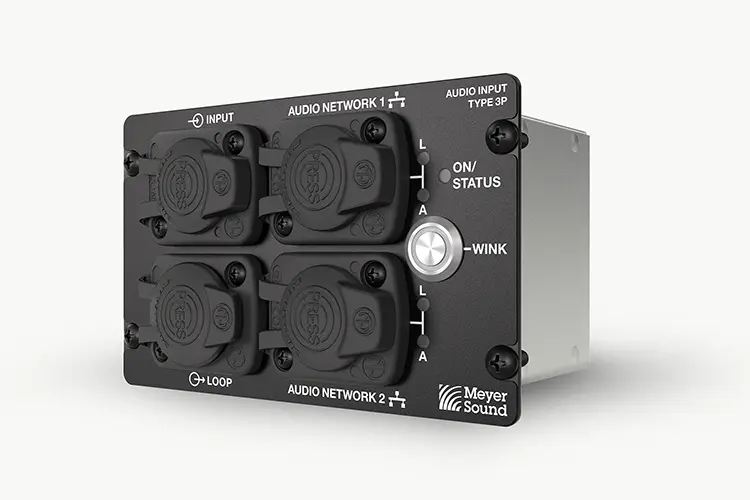
Now, with the arrival of GEN-1 technology (Galileo Extended Networking), the company takes another step forward: bringing digital processing directly into the loudspeaker.
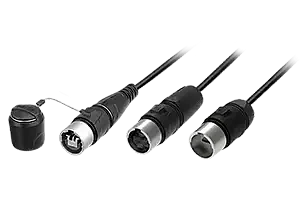
GEN-1 combines network connectivity and internal processing in each unit, featuring AES67 compatibility and design optimized for Milan. This innovation establishes a new foundation for scalable, adaptable, and future-oriented system architectures.
From centralized DSP to loudspeaker processing
Traditional sound systems rely on centralized DSP processors that manage the signal before distributing it to the loudspeakers. GEN-1 breaks this model by placing the processing inside each cabinet. This reduces cabling, decreases rack requirements, and minimizes potential points of failure. The result is a simpler, more robust, and flexible infrastructure, especially valuable for complex or large-scale installations.
This is an evolution of the GALAXY system, transferring that processing capability directly to the loudspeaker. We are moving from self-powered to self-processing, opening a new level of efficiency and flexibility, explains Brian Smith, Product Manager of Digital Systems at Meyer Sound.
Debut in the new ASTRYA-140
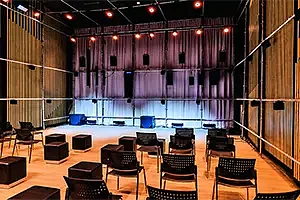
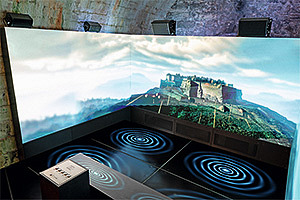
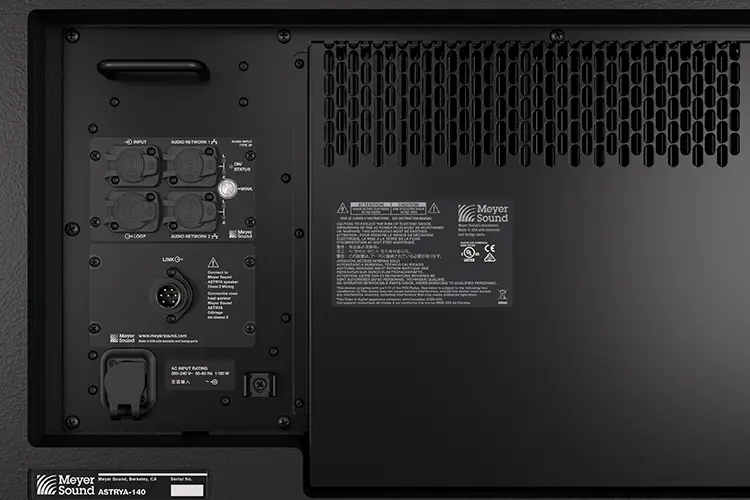
The first application of this technology is found in the ASTRYA-140™, a loudspeaker specialized for large-format cinema screens. With GEN-1, system designers gain greater freedom to tailor each project to specific performance, budget, and configuration needs, whether in immersive cinema halls, themed entertainment spaces, or multi-zone installations.
By incorporating processing power equivalent to one channel of the Galileo® GALAXY into each loudspeaker, GEN-1 turns every unit into an intelligent node within the network.
Advanced processing and precise scalability
GEN-1 can receive an AES67 audio stream and apply all necessary processing directly within the loudspeaker: delay, equalization, U-Shaping, and Product Integration. This decentralized approach enables faster implementation, more consistent system performance, and easy reconfiguration if project requirements change.
“This allows for much more precise scalability, specifying exactly the number of loudspeakers required without oversizing the system,” adds Smith. “It’s a more efficient and resilient way to approach sound design”.
Monitoring with Nebra and future evolution
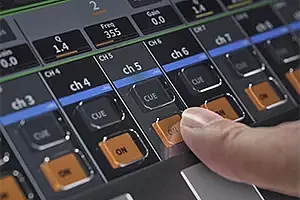
GEN-1 control and monitoring are handled through the Nebra™ software, which provides real-time information on signal presence, clip status, and limiter activity — all via the network. As the platform evolves, Nebra will incorporate new control options and user-defined logic for network redundancy and failover switching.
The module has been designed with a long-term vision. Future versions will include redundant Milan AVB connectivity to ensure greater reliability in critical installations.
An evolution within the Meyer Sound ecosystem
GEN-1 is not limited to the ASTRYA-140. Future implementations will expand this technology across the entire Meyer Sound loudspeaker ecosystem, bringing the speaker-centered processing model to a wider range of installation market solutions.
GEN-1 is part of a broader evolution shaped by the needs we receive from designers and integrators. It is another example of how we develop products that connect more intelligently, scale more precisely, and meet the demands of modern systems, concludes Andy Davies, Senior Director of Product Management at Meyer Sound.