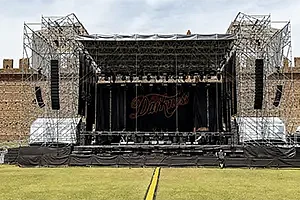


The Petronio Álvarez Pacific Music Festival, held every year in Cali, is one of Colombia’s most important cultural events and the greatest showcase of the Pacific region’s musical traditions.
Conceived as a space to highlight and preserve Afro-Colombian roots, the event brings together groups, composers, and performers who compete in different traditional categories such as marimba, chirimía, and Cauca violins, all evaluated by a specialized jury.
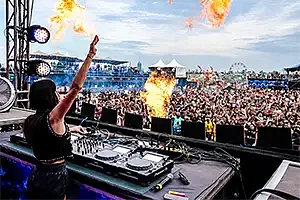
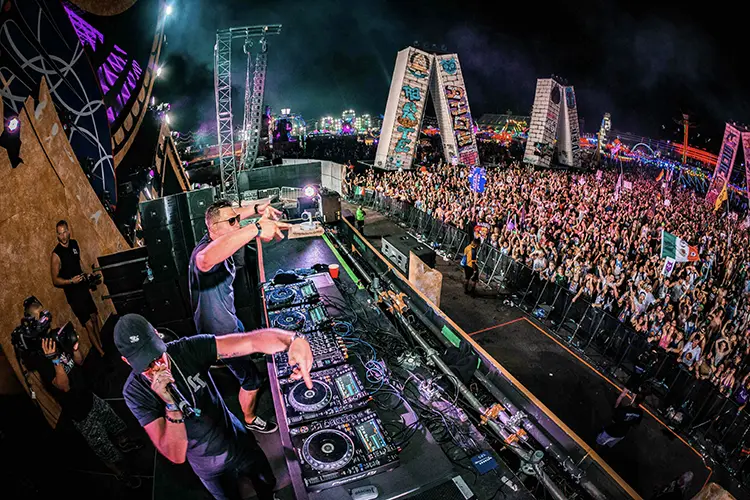
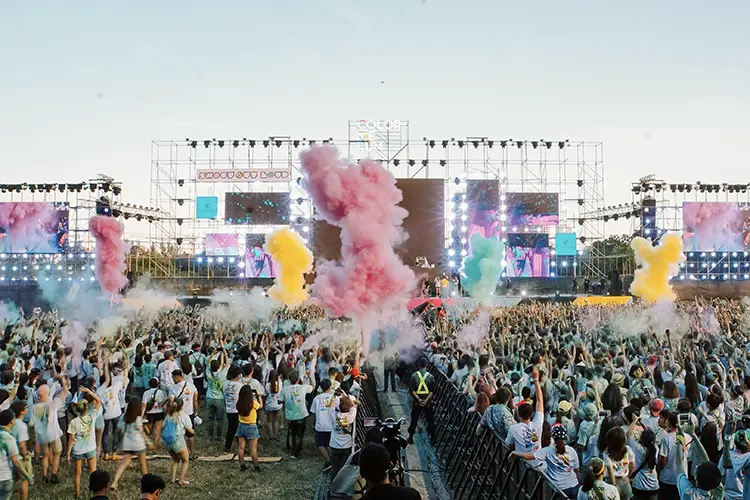
The twenty-ninth edition took place from August 13 to 18, 2025, at the Unidad Deportiva Alberto Galindo, known as the Petronio Citadel. For six days, the city of Cali became the epicenter of Pacific culture, with the participation of more than 2,000 artists and an attendance of over 800,000 people. The festival was consolidated not only as a musical event but as a comprehensive showcase of the region’s cultural identity.
 |
 |
For this edition, the companies Stage Entertainment and Dussan Iluminaciones were in charge of the technical production, using ARA systems that delivered clear and powerful sound for the artists, the jury, and the audience.
A demanding urban environment and unprecedented musical diversity
The twenty-ninth edition of the Petronio Álvarez Festival was held at the Unidad Deportiva Alberto Galindo, a complex located in a densely populated area of Cali and surrounded by several residential units. This location presented an obvious challenge: ensuring a high-quality sound experience for thousands of attendees without disturbing nearby residents, in a context where even environmental authorities conducted continuous noise measurements to ensure compliance with permitted levels.
 Additionally, it was necessary to achieve uniform sound coverage across an open and crowded venue, where the audience was spread over various areas extending more than 70 meters from the stage. The system had to maintain consistent frequency response, avoiding sound pressure drops or loss of definition in distant points.
The festival is also characterized by the great diversity of genres that converge on its stages, from symphony orchestras to traditional Pacific ensembles, as well as urban and salsa performances. This variety required precise frequency response capable of adapting to very different styles without losing clarity or tonal balance.
In short, the challenge was to deliver a powerful and balanced sound while respecting environmental regulations and ensuring that both the audience and the artists enjoyed the experience without generating conflicts with the immediate urban surroundings.
A precise sound design with ARA systems
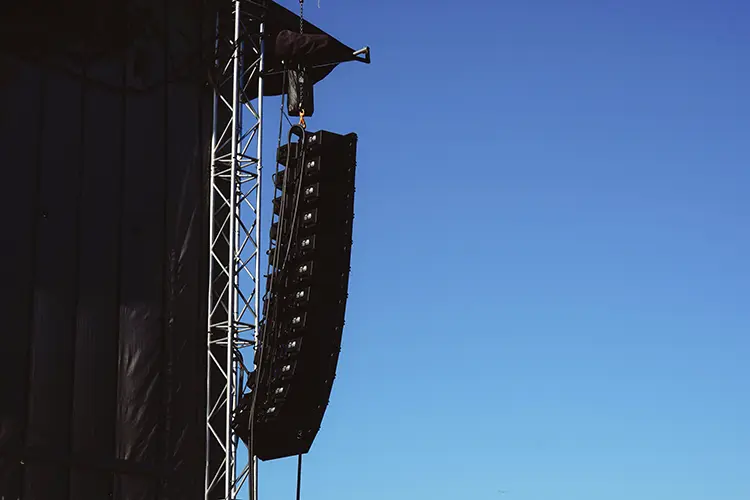
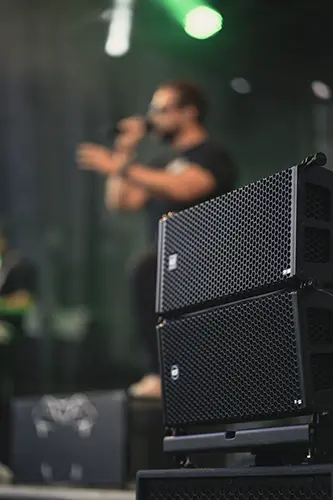
To meet the challenges posed by the urban environment and the scale of the festival, a complete configuration based on ARA systems was implemented. The main setup consisted of 36 LARA-80 units distributed in two L/R arrays of 18 systems each, providing the main coverage for the venue. This setup was complemented by 8 LARA-80 units as outfill to reinforce one of the side areas, as well as 16 additional LARA-80 units used as delay systems to ensure uniformity in the most distant points.
In the front area, 6 LARA-100 units were installed as frontfill, guaranteeing clarity in the first rows. For low-frequency management, 44 LARA-SUB units were deployed: 28 in an electronic arc configuration distributed across the front of the stage and 8 more per side in end-fire configuration, ensuring the necessary power to fully meet the event’s demands.
One of the project’s most notable aspects was that all the systems were cardioid, allowing very stable control of sound dispersion and significantly reducing the impact on the surrounding residential areas.
Here we had a very specific challenge — we have neighbors. It was very important to find a solution that would not affect them as much, emphasized FOH engineer Juan Murillo.
 |
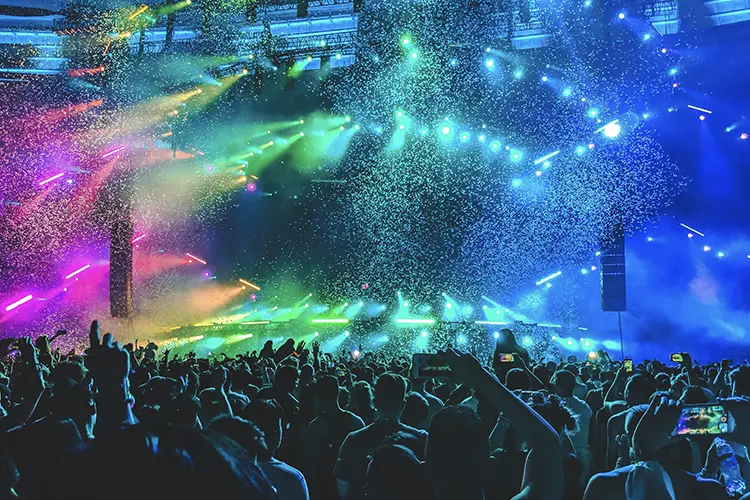 |
Moreover, the system’s ability to maintain consistency across the full frequency range proved essential given the wide musical diversity that defines the Petronio. As Murillo highlighted: “More than ten engineers have worked here; we’ve handled symphony orchestras, urban acts, traditional groups, salsa, and many other formats, and it’s definitely a brand and an option that will influence my riders”.
Conclusion: ‘The sound has performed incredibly’
The success of the ARA systems deployment was reflected not only in the sound quality perceived by the audience but also in the satisfaction of the technical teams and the festival’s own jury members.
The system has dynamics, strength, headroom, and power; it’s defined, and honestly, the challenge was huge, but the system has performed incredibly. We’re very happy, summarized Juan Camilo Fernández, system tech at Stage Entertainment.
The impact was also evident in the development of the musical competition. Claudia Patricia Prado Lemos, from the jury coordination team, stated: “The sound this year has been excellent, with great improvement. It has allowed both the jury and the coordination team to better evaluate the groups. It was important for them to be heard ideally in their performances. We’ve been able to appreciate all the effort, the work, and the musical preparation they’ve done—hearing each instrument, every nuance, the bass lines, the compositions, the lyrics, and the vocal interpretation”.