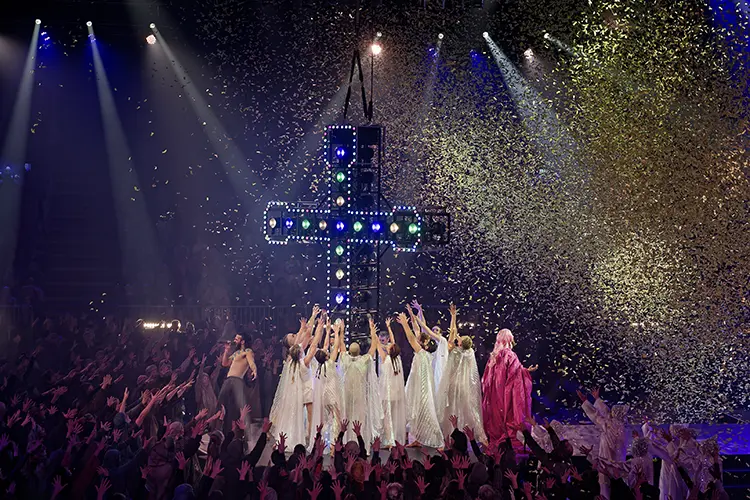
In September and October 2025, the Komische Oper Berlin amazed audiences with a staging of almost biblical proportions.
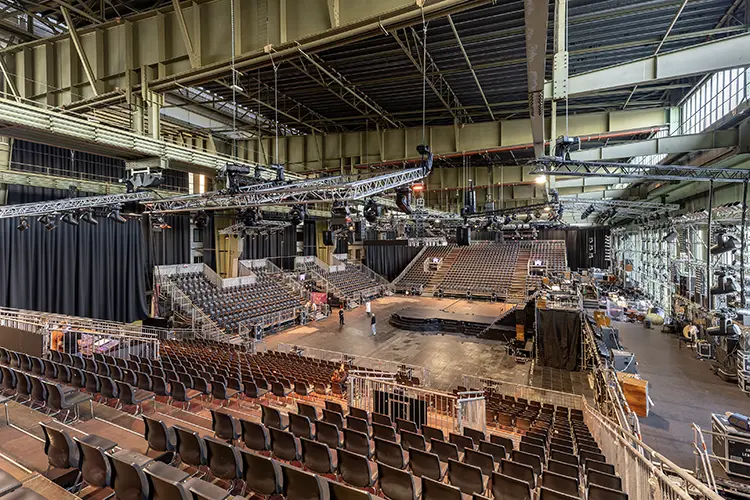
Over 14 nights, the rock oratorio Jesus Christ Superstar came to life in the imposing Hangar 4 of the former Tempelhof airport—an extraordinary setting where the power of the work unfolded in all its splendour thanks to a truly spectacular production. And the result was impressive. Hundreds of performers filled the vast stage, accompanied by an orchestra, a rock band and a large choir. The stage design in the aircraft hangar—an iconic listed building in itself—created an exciting environment in which the action shifted between intoxicating collective euphoria and serene contemplation.
This multifaceted rock opera, which combines music, theatre and dance with great effectiveness, set new standards not only visually but also in terms of electroacoustics—and did so in a venue far from ideal for PA equipment.
A key role in ensuring the best sound quality was played by the new Sennheiser Spectera wideband ecosystem. Two Spectera base stations, 32 SEK bodypacks and eight DAD antennas delivered outstanding performance.
High-tech meets hallelujah
There are two main reasons why Sennheiser Spectera systems were the preferred choice for ‘Jesus Christ Superstar’. First, Spectera is immune to the interference typically found in such demanding environments with heavy RF reflections. Second, performers enjoy the high level of comfort it provides, as they only need a single beltpack instead of the usual two devices: the special feature of the SEK bodypacks is that they function simultaneously as a transmitter and an in-ear receiver. This advantage is highly appreciated, of course, even though ‘Jesus Christ Superstar’ does not involve many costume changes, explained tonmeister Holger Schwark, responsible for the sound design of the rock oratorio.
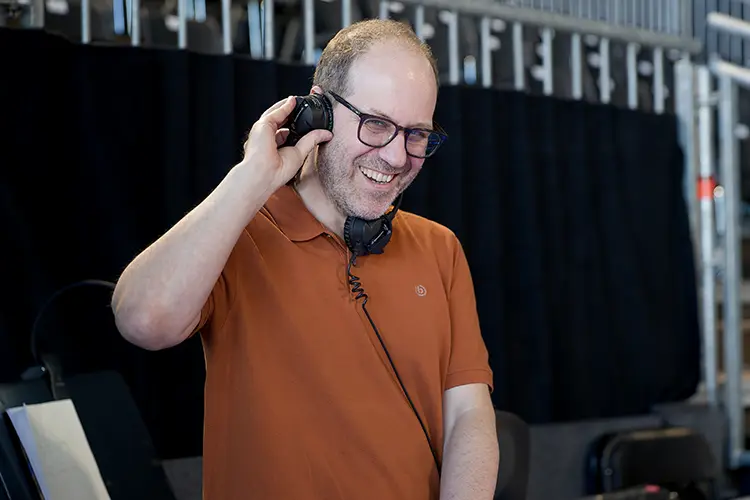
Schwark pointed to the hangar’s huge metal doors, the metal ceiling and the multitude of steel beams. “Many of the challenges that come with conventional wireless systems disappear with Spectera thanks to its innovative transmission principle. Even RF reflections—which are usually annoying—become beneficial! Compared directly with the adjustments required in previous years, operating the wireless system for ‘Jesus Christ Superstar’ in Hangar 4 was surprisingly stress-free”.
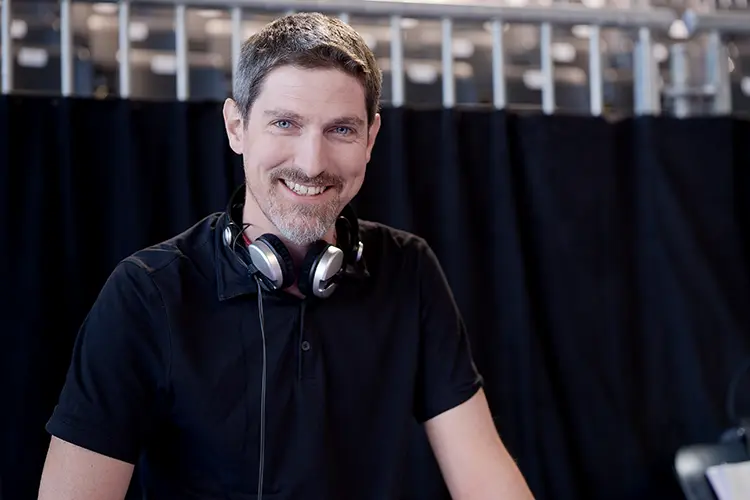
A similar opinion was expressed by Simon Böttler, sound engineer at the Komische Oper Berlin, who alternated with his colleague Andrea Jetter at the FOH console during the shows. “Before ‘Jesus Christ Superstar’ I had no practical experience with the Spectera system. But now I can confirm that this relatively new system works perfectly for us. I haven’t noticed any dropouts or interference of any kind at the FOH console. My colleagues from the wireless team also told me how convenient it is to equip performers with just one bodypack instead of two before the show”.
Schwark emphasised that many performers appreciate seeing their own name on the always-visible e-ink displays of the SEK bodypacks. “It may seem like a small detail, but it brings a great deal of satisfaction to many performers”, said Böttler, who has successfully carried out numerous classical music projects of all kinds and who also works regularly with rock and pop artists such as the Pet Shop Boys.
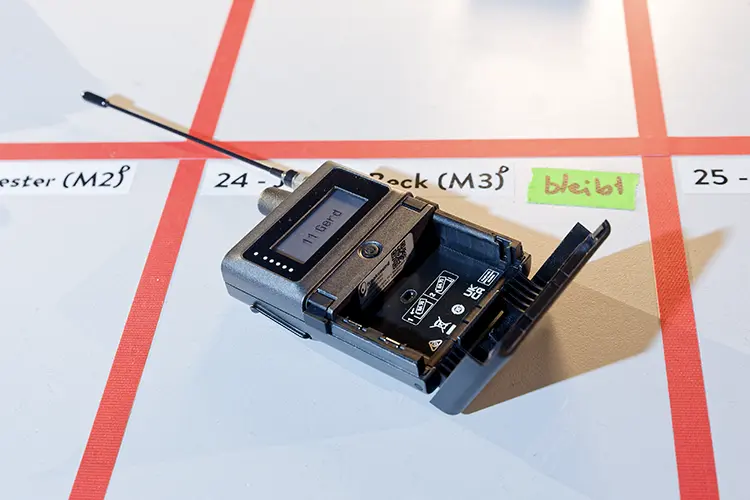
SEK bodypack: one for all
During the performances of Jesus Christ Superstar, 27 out of a total of 32 Sennheiser Spectera SEK bodypacks were used in their dual function as transmitter and receiver. The nine main actors, as well as another 18 ensemble members, benefited from this bidirectional operation. The saxophonist of the live rock band also used an SEK bodypack as a transmitter, allowing him to move freely across the stage during the show. His instrument was equipped with a Neumann Miniature Clip Mic MCM system with a KK 14 cardioid capsule. Two additional SEK bodypacks were used as in-ear solutions at the monitoring console. During rehearsals, the assistant directors also used two SEK bodypacks, which were later available as backup units for the performances.
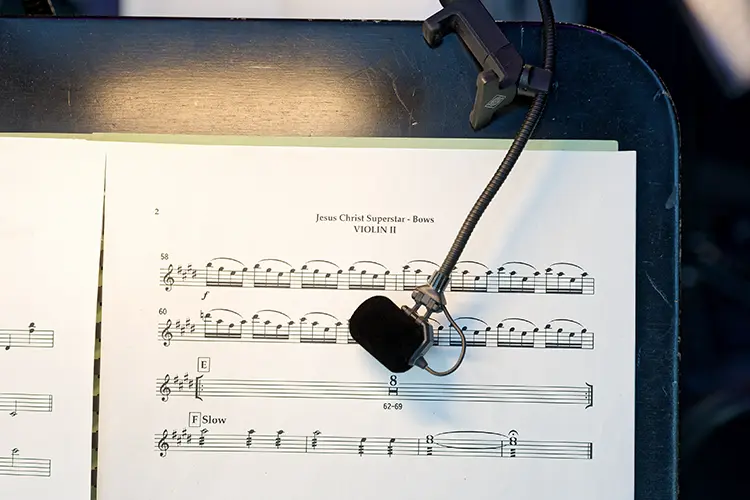
Böttler noted that not only the saxophone but the entire string section of the orchestra was miked with Neumann MCM systems. Schwark confirmed that Neumann solutions offer excellent sound characteristics and very user-friendly handling. Neumann KM 184 small-diaphragm condenser microphones were used as overheads and for various percussion instruments.
“It can definitely be said that the Spectera wireless system is faster to set up than a conventional wireless system”, said Schwark with satisfaction. “It is extremely convenient to manage all components in a central system and no longer have to deal with many individual devices, for example to synchronise bodypack transmitters and in-ear receivers”. Böttler added: “When you use Spectera for the first time, it requires a bit of rethinking due to its innovative approach, but the advantages are clear”.
Scalability and optimum balance
Spectera is a scalable system, and when I was preparing the shows in Hangar 4, it quickly became clear that the project could not be implemented properly with just one base station. My goal was to keep latency as low as possible while ensuring a stable wireless connection with good range and providing all performers with excellent sound quality. During the performances, we used the ‘Live’ audio link mode for microphones and ‘Live Low Latency’ for the IEM channels. Both offer a balanced relationship between sound quality, range, latency and energy/resource consumption, explained Schwark.
This project, commissioned by the Komische Oper Berlin in 2025, was the third time Schwark had worked in a hangar at the former Tempelhof airport. “It was already decided last year that ‘Jesus Christ Superstar’ would be included in the 2025 programme”, he said. “Detailed planning began at the beginning of this year. The contract to supply the sound equipment was awarded to Neumann & Müller GmbH & Co. KG. As usual, additional material was rented from external providers. For the new Sennheiser Spectera systems, the provider was FREAKSOUND GmbH. Currently, there are still few rental companies in Germany capable of supplying Spectera systems”. Before the Hangar 4 performances, Schwark had already used Spectera for The World of Hans Zimmer – An Immersive Symphony in Oberhausen.
Maximum operational efficiency
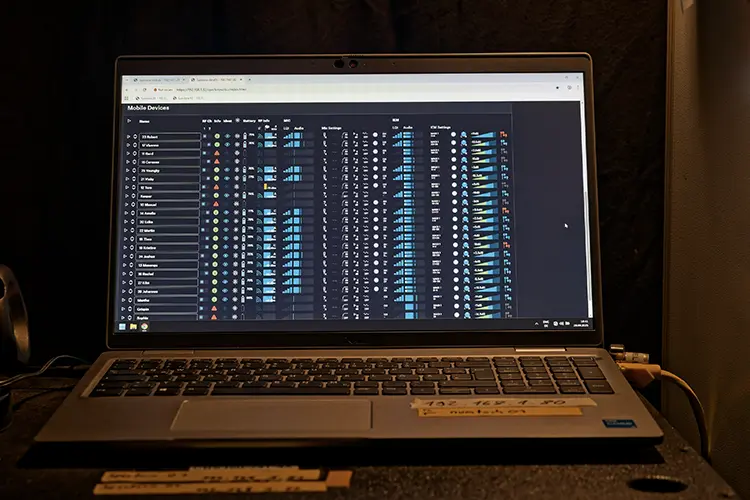
To configure the Sennheiser Spectera systems efficiently, Schwark used the brand-independent RF planning software SoundBase Sennheiser Spectera Mode Planner. In Hangar 4, the Spectera WebUI interface was shown on a screen in the wireless area, and the specialists from Neumann & Müller highlighted its excellent clarity.
The SEK bodypacks, equipped with Sennheiser BA 70 lithium-ion batteries, can reach up to seven hours of operating time, easily meeting the requirements of Jesus Christ Superstar. The batteries were recharged in five L 6000 charging stations and then conveniently stored in a small cardboard box labelled “full”, ready for the performance.
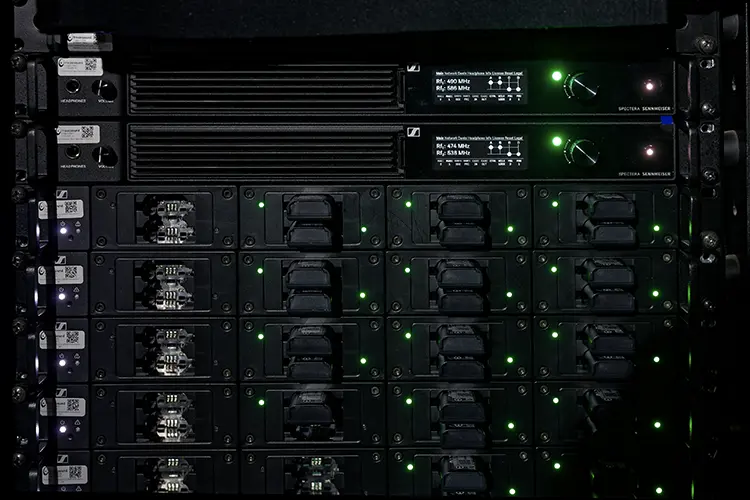
In Hangar 4, each of the two Spectera base stations used two 8 MHz TV channels in the UHF band, corresponding to a total bandwidth of 32 MHz (4 × 8 MHz). The centre frequencies were 474, 490, 538 and 586 MHz. The redundant power supplies of the Spectera base stations were connected both to a UPS and the mains supply. The compact 19” mainframes were integrated via MADI into the PA system, which operated in a fibre-optic ring with a word length of 24 bits and a sampling rate of 96 kHz.
“Using Spectera pays off when you need a high number of wireless channels”, said Schwark. “I’m sure no one would seriously consider using such a system for only two or three headworn microphones. It wouldn’t make sense from a cost perspective either. But for our setup in Hangar 4, Spectera is actually more cost-effective than other systems with a comparable number of microphone and in-ear channels. In fact, we calculated the costs in detail for ‘Jesus Christ Superstar’”.
Cat instead of coaxial
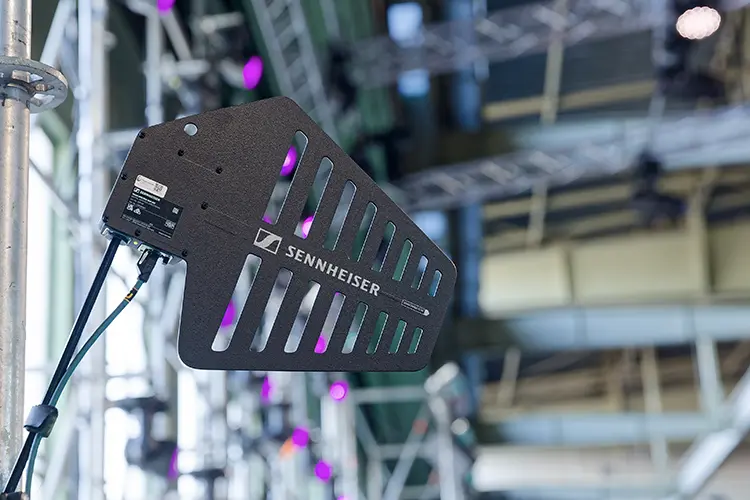
A total of eight Spectera DAD antennas were distributed throughout Hangar 4 in strategic positions and connected to the two Spectera base stations via long Cat cables. Spectera does not require conventional coaxial cables and eliminates the need for combiners, splitters and boosters. “Flexible Ethernet cables are a huge advantage, especially when long cables must be run high up beneath the rigging”, Böttler noted. “Wireless connections between the SEK bodypacks and the DAD antennas work reliably, and the signal is not lost even when performers move from the performance area to the canteen, separated by a door”. The Sennheiser DAD antennas serve as both receiving and transmitting antennas for IEM/IFB signals, mic/line signals and control data.
In addition to the sound crew of the Komische Oper Berlin, those involved in setting up Spectera included Stefan Ickert (Project Manager, Neumann & Müller) and, on behalf of Sennheiser, Per Witte (Business Development Manager), Volker Schmitt (Manager Technical Application Engineering) and Gerhard Spyra (Technical Application Engineer).
Clearly superior sound quality
Kaspar Schwabe, from the Komische Oper Berlin, was in charge of the monitoring console for Jesus Christ Superstar. He had already worked at the former Tempelhof airport in The Raft of the Medusa (2023) by Hans-Werner Henze and in Messiah (2024) by Georg Friedrich Händel. “Using Spectera has been a first for me”, explained this experienced audio professional.
About a year ago I attended a Sennheiser presentation about the new WMAS technology, so I already knew the theoretical fundamentals. The excellent first impression I had then has now been fully confirmed in practice. The sound provided by Spectera is far superior to that of analogue in-ear channels, and the transmission of microphone signals also works perfectly. For ‘Jesus Christ Superstar’ we didn’t even use PCM mode, but the data-reduced audio link modes ‘Live’ for microphone signals and ‘Live Low Latency’ for in-ear channels. The ‘Live’ mode provides clear, detailed audio comparable to other digital Sennheiser wireless systems, but in terms of reception and range, the Spectera system sets new standards, especially in such a demanding environment as Hangar 4.
Schwabe added: “Many performers are pleased to need only one device for both microphone and monitoring during the shows. And in terms of sound, I have received only positive feedback from several people involved; in other words, not only experts notice the difference compared with analogue in-ear transmission using a compander. However, some performers initially found it unusual that the control button on the SEK bodypack does not have a fixed end position. I showed them that the current volume level appears when the button is pressed twice. Once explained, there were no further questions. And in any case, most performers do not touch their bodypack again once they are in costume. We set a reasonable limit for the maximum listening volume, which cannot be exceeded; the maximum output level of the SEK bodypacks is very high. We also set a minimum volume to ensure the sound is always audible, so that no one might think their bodypack is defective or deactivated”.
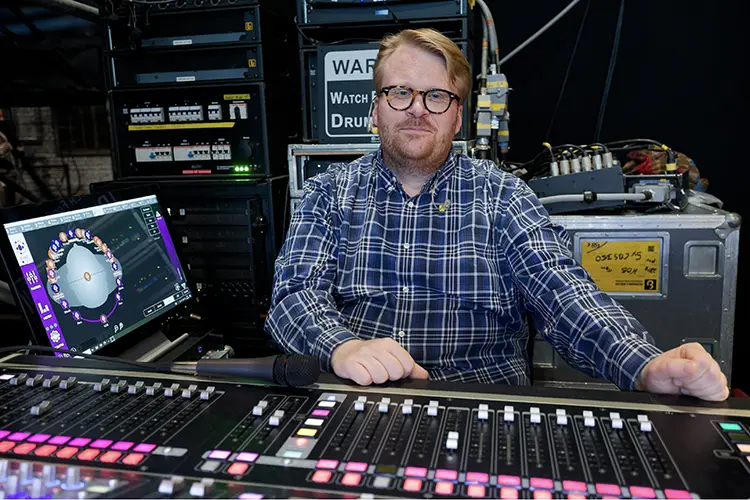
Spectera: flawless performance
Schwabe summed up: “I believe that this combination of a bodypack transmitter and an in-ear receiver in a single device is, without a doubt, a groundbreaking solution for our application. As an additional feature for the monitoring console, I would also like to have a Cue input to listen to channels one after another at the press of a button. Right now I manage with the Solo function on the console channels, but of course I would prefer to listen to the wireless channels individually on my SEK bodypack. From what I’ve heard, this will be resolved in a future update, and I expect more very interesting new features for the Spectera wireless system”.
Schwark added: “I am also curious to see what new functions Spectera will incorporate in the coming years. For example, a future update could add the option for SEK bodypacks to emit an acoustic signal when a preset level is reached, something that would be very useful for performers on a dark stage. Additionally, I would like multiple Spectera base stations in a single installation to operate in an integrated way rather than as independent units. The cascade ports are already there, but they are not operational yet”.
Finally, when asked if he had noticed anything special about the new Sennheiser Spectera systems during Jesus Christ Superstar, Schwark replied: “The best thing, in my opinion, is that I didn’t have to worry about anything at the FOH console: Spectera worked flawlessly and sounds excellent. Perhaps I can borrow a well-known phrase from a Californian tech company and apply it to Spectera: ‘It just works!’”