


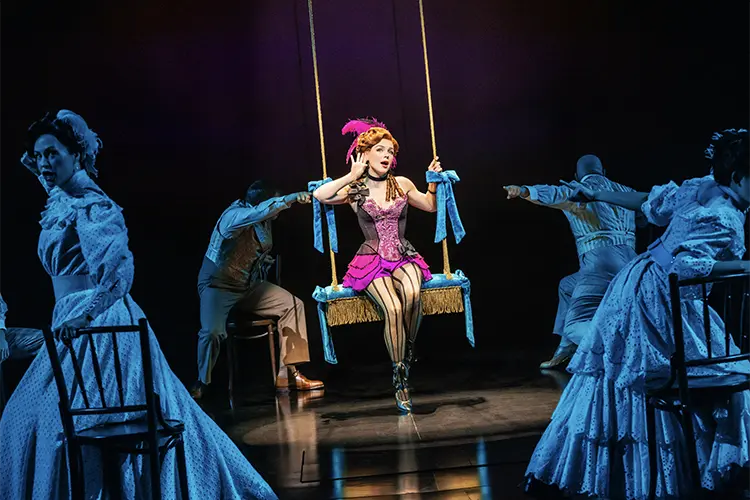
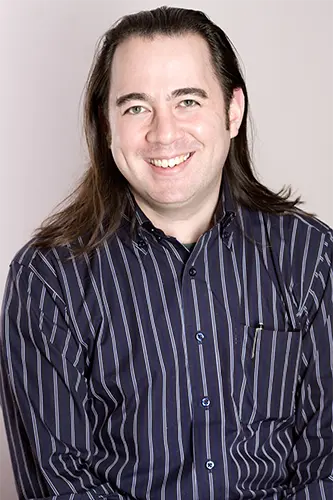
At the 79th Annual Tony Awards, Kai Harada arrived at the ceremony in an unusual position: he was nominated twice in the category of Best Sound Design of a Musical, for Ragtime and Cats: The Jellicle Ball, two productions supported by Meyer Sound systems.
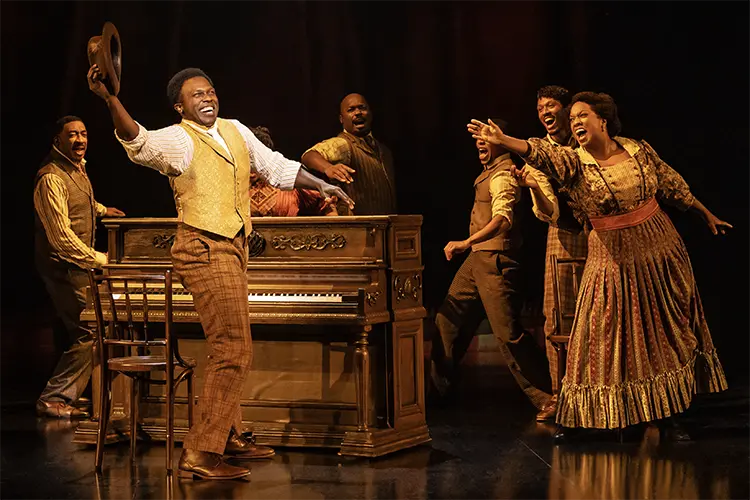
When it was announced that he had won for Ragtime, the Lincoln Center Theater production currently running at the Vivian Beaumont Theater, Harada was so surprised that for a few moments he was not entirely sure which of his two nominations had earned him the award. With only 90 seconds for his acceptance speech and already standing on stage, he decided to ask before beginning to speak.
The moment became one of the most talked-about highlights of the evening: spontaneous, endearing and highly characteristic of a designer who prefers to let his work speak for itself. It marked Harada’s second Tony Award, following his win for The Band’s Visit in 2018, and capped an extraordinary season in which he received two nominations, for Ragtime and Cats: The Jellicle Ball, both productions built on Meyer Sound systems.
 |
 |
In a conversation with Meyer Sound, Harada reflected on his work on Ragtime, the acoustic challenges of the Vivian Beaumont Theater and the solutions used to bring his sonic vision to life.
When accepting the award, you admitted that it took you a few seconds to process what was happening. What do you remember about that moment?
I was worried it might come across as pretentious, but the truth is that I genuinely wasn't sure which of the two productions I had won for. Later, Daniel Radcliffe told me he thought it was a charming moment, so I figured it probably hadn't gone too badly.
Both Ragtime and Cats: The Jellicle Ball, built on Meyer Sound systems, are very different productions. How do you adapt your design approach to such contrasting shows?
 In the early stages, a large part of the job involves defining loudspeaker coverage and placement. While that may sound like a purely technical task, it also requires creative decision-making and constant coordination with other departments.
The Vivian Beaumont is a three-quarter thrust theatre, which has a major impact on system design. Before Ragtime, the only production I had worked on there was a Mike Birbiglia show with a much simpler audio setup: a headset microphone and some playback. This project was very different, as I needed to anticipate how the room would respond to a cast of 30 performers and a 28-piece orchestra in the pit.
To design the system, I drew on the experience gained from that previous production, consulted with the theatre’s technical team and developed a configuration that would allow for sound localisation and delay matrix processing based on the actors’ positions. I also knew that the room sounded good, which is always a crucial factor. If you don't have to fight the acoustics of the space, you're already starting from a position of strength.
How was the Meyer Sound system configured?
From the outset, I knew the system would be built around ULTRA-X40 loudspeakers. Their greatest strength is their transparency and sonic accuracy, to the point where it can sometimes be difficult to tell that the sound is being amplified at all.
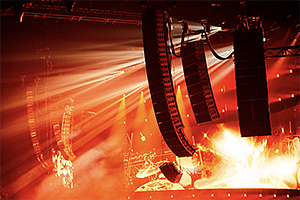
The final configuration included 16 ULTRA-X40 units: ten covering the orchestra seating area in two rings, two reinforcing the orchestra and two positioned at the sides to improve spatial imaging for audience members seated at the far left and right of the theatre.
Balcony coverage was provided by six UPA-2P loudspeakers at the front and 14 UPM-1P units covering the rear sections, which also served as onstage monitoring.
Low-frequency reinforcement consisted of two 750-LFC units flown above the stage, two 600-HP subwoofers dedicated to specific sound effects and two 500-HP units positioned near the orchestra pit. The system was completed by 14 MM-4 loudspeakers distributed along the edge of the pit to reinforce the front rows.
System alignment and optimisation were carried out using Meyer SIM3 measurement tools and six Galileo GALAXY 816 processors, with five in operation and one serving as a backup.
The Galileo GALAXY platform played a key role in the project. How did you use it in this production?
We created different sound zones based on the actors’ positions on stage, and the GALAXY processors were essential in making that possible.
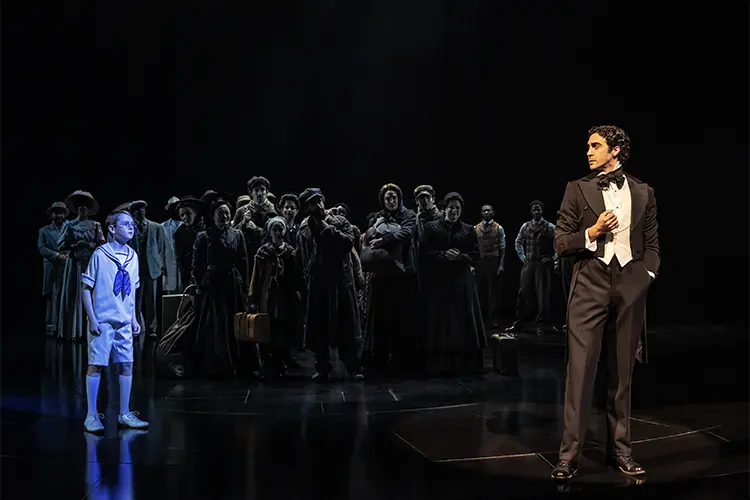
There is one particular song where one character is positioned on the left side of the stage, another in the centre and another on the right. In these types of contrapuntal passages, maintaining clarity and separation between the voices is one of the biggest sonic challenges.
 |
 |
To address this, I assigned each performer to a specific console subgroup and applied delays tailored to their position on stage. This allows the audience to perceive more clearly where each voice is coming from, while also creating a more natural sense of depth and space.
In fact, one of the reasons I chose GALAXY processors over standard Galileo units was their ability to manage integrated delay matrices.
Intelligibility is one of the foundations of your designs. In a production that opens with 30 performers singing alongside a 28-piece orchestra, how do you maintain that level of clarity?
A great deal of it comes down to microphone placement. My philosophy is quite simple: first, the sound system must be properly tuned and provide even coverage throughout the venue. Once that is achieved, if the microphone is positioned correctly on the performer—typically along the centre hairline—very little additional EQ should be required at the console.
The goal is for the audience to hear the performer’s voice as naturally as possible, without the reinforcement system altering its character. And that's something I can achieve with Meyer Sound.
Ragtime will run through August 16, 2026, at the Vivian Beaumont Theater at Lincoln Center. The Meyer Sound system was supplied by Masque Sound. Harada’s team included associate designer Owen Meadows, A1 mixer Lukas Guilbeau and sound technicians Charles Shell, Jack O’Brien, Colin Braeger and Liam Coyle, all members of the Lincoln Center Theater sound department.