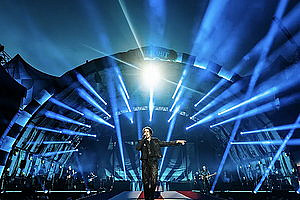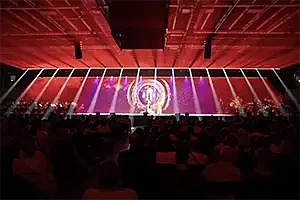

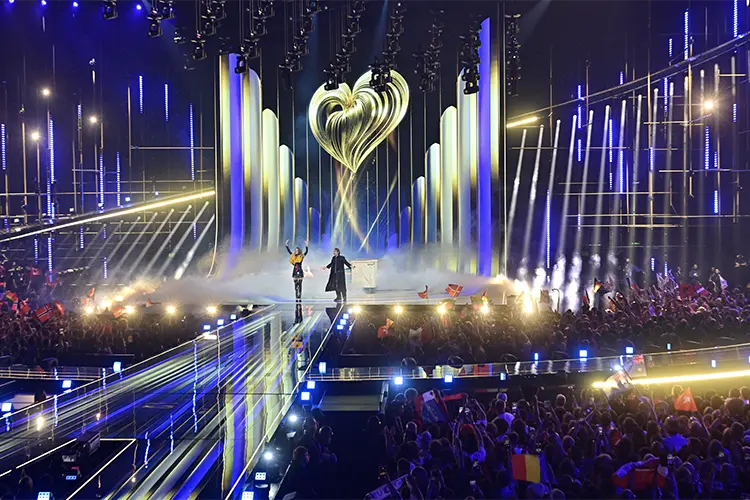
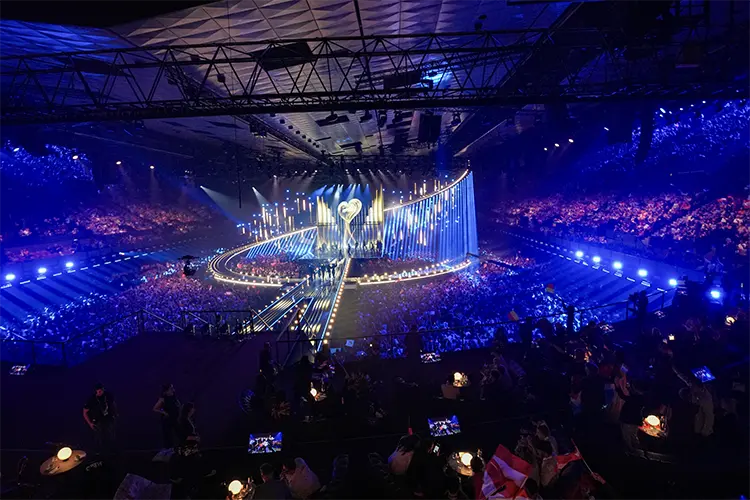
Hailed as one of the world's largest live broadcast events, the 70th edition of the Eurovision Song Contest transformed Vienna's Wiener Stadthalle into a highly complex production environment during its two semi-finals and the Grand Final, held on May 16.
The indoor arena welcomed approximately 10,500 attendees and 35 competing acts, while the contest reached a global audience of 131 million viewers across Europe and beyond.
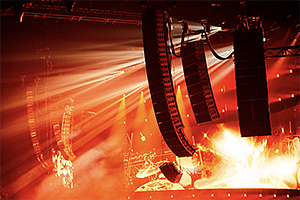
The 2026 production introduced several innovations designed to enhance the audio experience for both audiences and performers. Among them were Eurovision's first-ever cardioid PA system, built around L-Acoustics K3 loudspeaker clusters, and the use of Sennheiser Spectera for microphones and in-ear monitors. The audio team, led by sound engineer Richard Redl and mixing engineer Johannes Minichmayr, also faced an even greater challenge: ensuring that the sound followed the visual focus of the show as the action moved between two locations—the main stage and the green room.
Amadeus Acoustics provided the spatial control required to make this shift in perspective feel completely natural to the live audience.
Amadeus ART Immersive: A creative solution for reverse PA
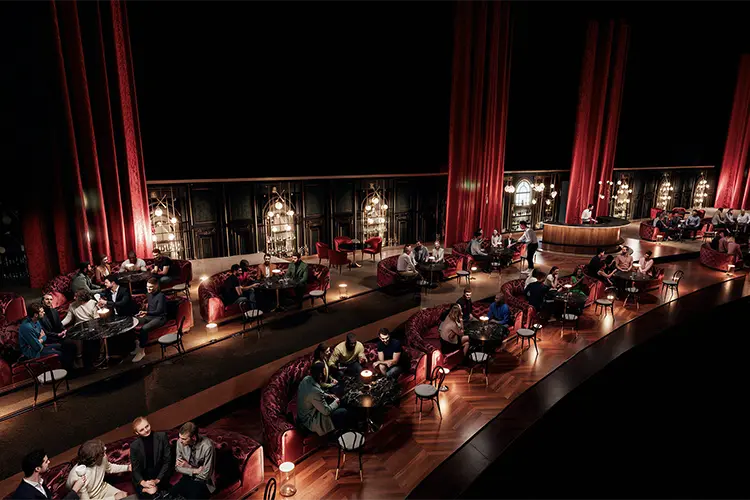
Located at the opposite end of the arena, the green room was where the competing artists gathered before their performances and where the presenters visited between segments to speak with them. The audio team wanted the audience to perceive those voices as naturally coming from that area of the venue, rather than from the main stage PA system.
This led to the concept of reversing the perceived direction of the PA system, shifting the audience's sonic focus from the front of the arena to the rear. The objective was to ensure that this transition felt smooth rather than abrupt, allowing the audience to follow the visual action without becoming aware of the technology behind it.
The implementation of Amadeus ART Immersive made it possible to reposition the sound image in real time, maintaining perfect synchronisation between what the audience saw and heard. Rather than using continuously moving sound objects, the system was employed to create controlled transitions between two fixed spatial positions: the main stage and the green room.
The setup
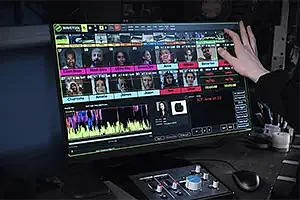
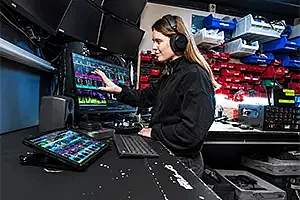
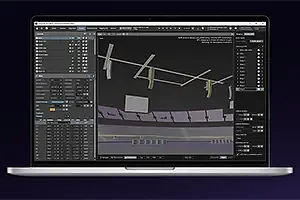
The system was integrated into the show's wider infrastructure via Dante, using Amadeus ART::IP as the immersive processing module and ART::Director as the software interface between the mixing console, the DirectOut PRODIGY system and the spatial audio workflow.
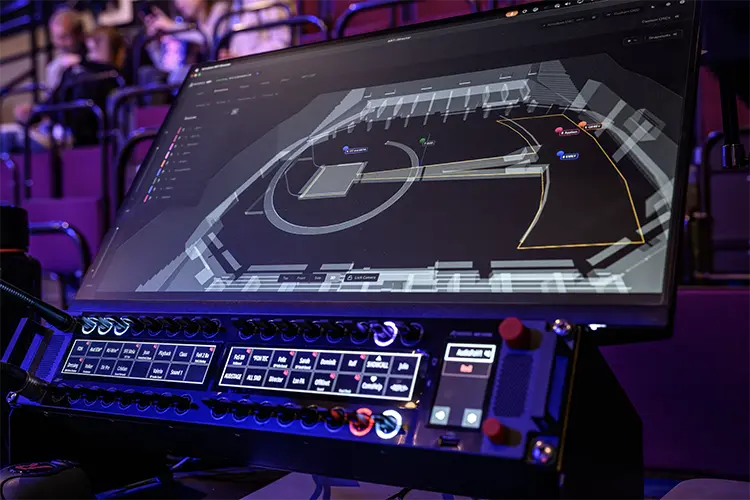
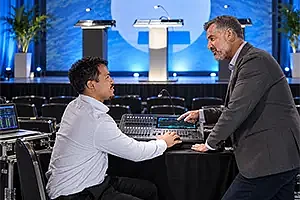
The fixed positions of the main stage and the green room allowed audio snapshots to be triggered via an OSC Stream Deck. Fade times between the two positions enabled the perceived sound image to move smoothly instead of jumping instantly from one location to another. This provided the team with a simple and efficient workflow for changing the perceived sound location throughout the show.
Throughout the event, the Amadeus ART system was used whenever the hosts spoke from the green room, while its musical application was reserved for one key moment: the opening ceremony of the Grand Final.
During this opening performance, featuring the previous year's winner alongside Mozart-inspired elements, dancers, acrobats and an orchestra, the ART::IP module played a vital role. With the orchestra located in the green room, the team needed to transition the mix smoothly to the reverse PA system without compromising timing, spatial localisation or musical continuity.
The Amadeus ART system enabled the loudspeaker clusters in the reverse PA system to be aligned, ensuring a seamless transition with no abrupt pauses or noticeable changes. As a result, the music, presenters and all other show audio remained perfectly synchronised with the visual production.
A flexible platform for future productions
On the night of the Eurovision Grand Final, the Wiener Stadthalle came alive with the energy of the audience and the competing performances. Inside the venue, Amadeus Acoustics helped deliver a precise, responsive and visually aligned sound design, exceeding expectations for a production in which every cue, transition and audience moment needed to feel completely effortless.
We spent a great deal of time evaluating the project and determining the best way to approach it. We explored the different possibilities together with our technical production partner, Agora, who had no previous experience with Amadeus Acoustics but were open to trying something new. From the very first test, everyone was delighted with the result. During our second round of checks, several members of the production team told us they believed it was the best-sounding Eurovision ever hosted in Austria, explains Richard Redl.
Looking ahead, Johannes Minichmayr believes Amadeus ART Immersive offers enormous potential for future music productions, where spatial precision, automation and creative flexibility can support performers, staging and movement.
The platform's value lies not only in its spatial audio capabilities but also in the speed and simplicity of its workflow. The ability to import 3D data, automate objects, work with tracking position data and allow the system to calculate alignment automatically opens up new creative possibilities for productions in which sound design must follow the action on stage with precision and ease.
This was the first time Eurovision had used immersive spatial audio in this way. Perhaps in future editions we can take the concept even further. There is tremendous potential for highly targeted production applications. What we do know is that this year Amadeus Acoustics performed exceptionally well, everybody loved it, and now we'll see what comes next, concludes Redl.