

A stage with no visible loudspeakers: how TiMax works its magic in Grease

At Switzerland’s Thunerseespiele festival, a 64-channel TiMax SoundHub and the TrackerD4 tracking system delivered precise sound to 3,000 spectators, keeping the loudspeakers both visually and acoustically hidden while complying with strict noise limits.
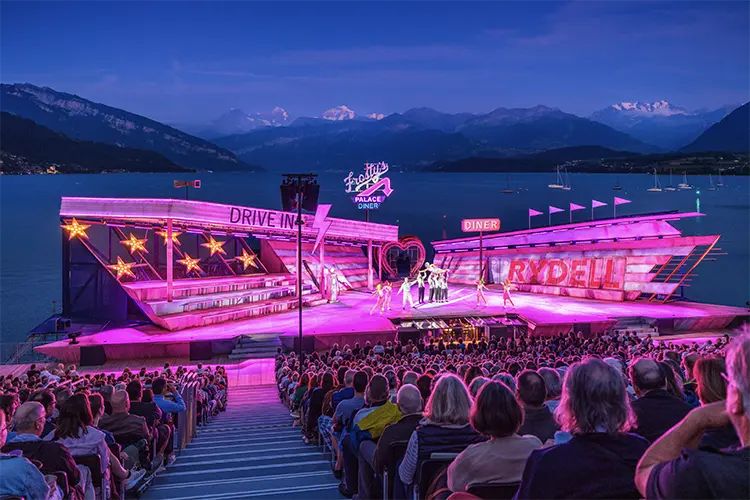
Since 2003, the Thunerseespiele festival, held on the shores of Lake Thun in Switzerland, has staged open-air musicals against the backdrop of the Eiger, Mönch and Jungfrau mountains.
Each year, a new production brings its own challenges, addressed with the help of TiMax SoundHub, a technology that has been part of the venue since audiopool founder Tom Strebel designed the original sound system.
In 2025, The Hunchback of Notre Dame was staged on a set filled with scaffolding, with the loudspeakers in plain sight. However, for the 2026 production of Grease, the classic appearance of the set required them to be completely concealed.
 |
 |
Strebel refined the system alongside TiMax co-founder Robin Whittaker and has spent the past five seasons rebuilding it with Youssef Iskander, now managing director of audiopool. Both served as co-sound designers for Grease.
I want to acknowledge Tom's work. He laid the foundations for a system that stands out for its versatility, says Iskander.
Covering 3,000 spectators without turning up the volume
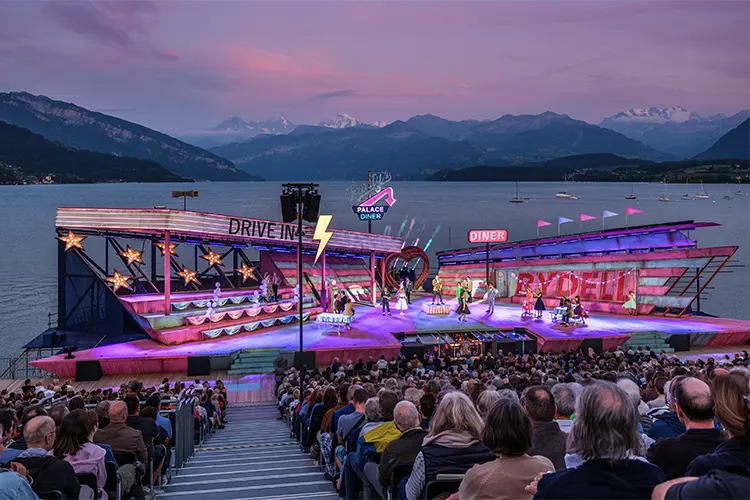
The characteristics of the venue place significant demands on the sound system. A grandstand seating 3,000 spectators faces the stage, with the mountains forming the backdrop. Equipment cannot be flown and, because of nearby homes, noise restrictions are strict.
"We cannot operate at high volume levels, but we still have to provide coverage for 3,000 people", explains Iskander.
The design distributes sound through numerous discreetly integrated sources, managed by a 64-channel TiMax SoundHub, ensuring that every spectator enjoys a listening experience equivalent to that of the optimal listening position.
At the heart of the system, which Strebel refers to as the main PA system, are eight loudspeaker stacks concealed beneath a net at the front of the stage. Surround loudspeakers, delay systems and speakers integrated into the set complete an installation with more than 40 outputs.
"No individual element operates at a high volume, but the system as a whole is powerful, and everything needs to be coordinated", says Iskander.
Loudspeakers that disappear
Small cube loudspeakers integrated into the set acted as TiMax anchor points for localising the performers' voices, allowing the sound system to disappear both visually and acoustically.
Audience members no longer perceive the loudspeakers. They feel that every sound, even from the back row, comes directly from the actors on stage. Some even ask why the sound system is not switched on, although they can hear and understand every detail of the performance, explains Iskander.
Individual tracking of every performer
Vocal localisation, enhanced by the precision of TiMax TrackerD4, played a role comparable to that of lighting in a traditional theatrical performance.
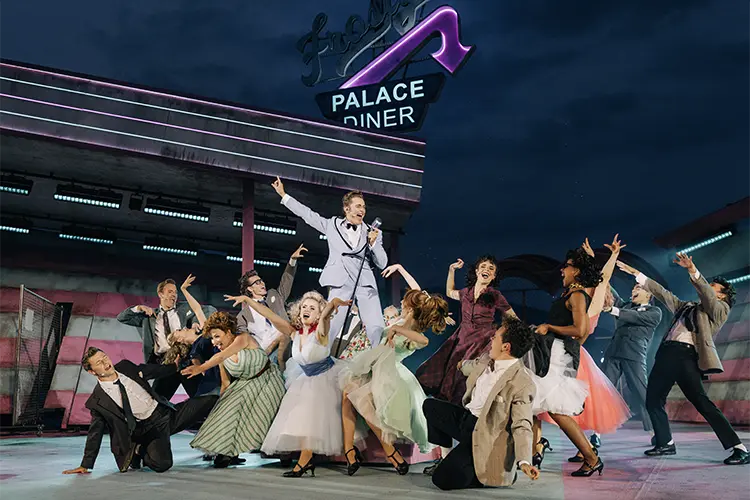
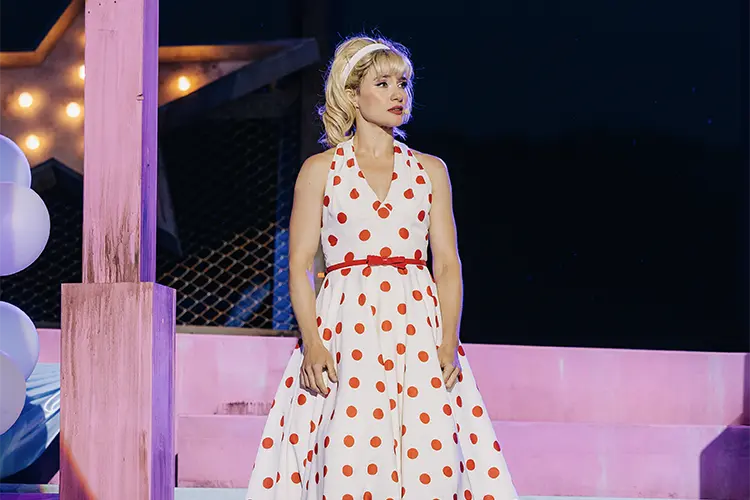
As performances begin before sunset, much of the first act takes place in natural daylight. During Summer Nights, solo lines passed between 25 performers spread across the stage.
 |
 |
"You can see audience members turning their heads towards where the sound is coming from", comments Iskander.
Until 2025, the team tracked only the principal performers, while the rest of the cast was grouped by area. However, following improvements introduced by Iskander and Whittaker to increase the system's accuracy, every performer began wearing a tracking tag, with around 30 used in the production of Grease.
In an open-air environment, sensors are positioned at different heights, both at the front and rear, to detect performers regardless of which way they are facing. "The tracking system saves me a lot of time", Iskander points out.
The audience becomes the screen
For the drive-in scene, TiMax completely transformed the sonic relationship between the audience and the stage. The car was positioned downstage, facing the grandstand, so the audience effectively became the drive-in screen. Vehicle sounds surrounded the spectators, while the film soundtrack played from behind them.
At one point, we brought all the sound back onto the stage, shifting the audience's focus back there. It was one of the most important applications of TiMax in this year's production, explains Iskander.
 Instagram
 Facebook
 LinkedIn
 YouTube
Latest
Home →
L-Acoustics proves that a single system can meet the demands of any type of performance
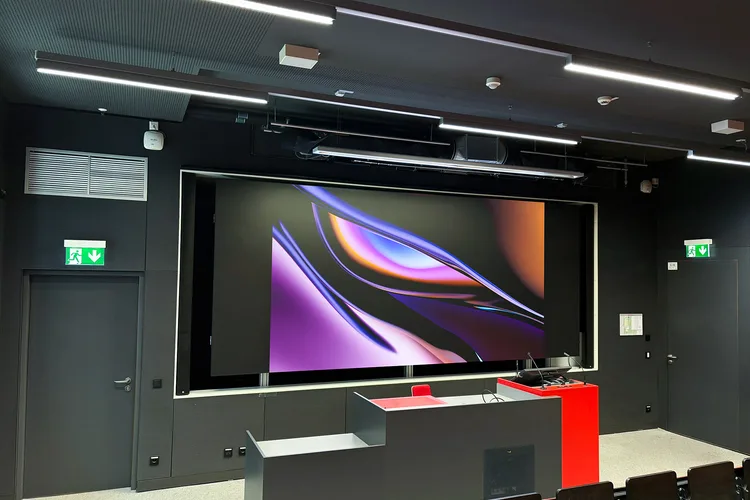
A native 21:9 5K LED wall for Düsseldorf’s media students

500 GLP X-PAR 12Z light Reggae Land’s main stage in broad daylight
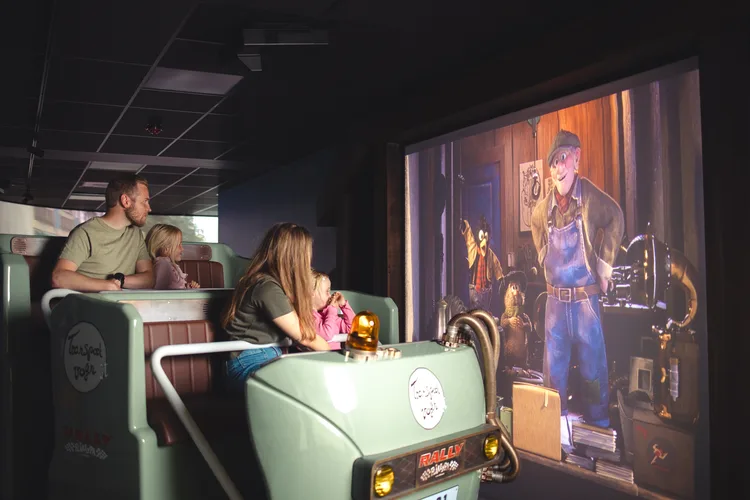
Rally Flåklypa: 21 projectors, trackless vehicles and HIVE in perfect sync
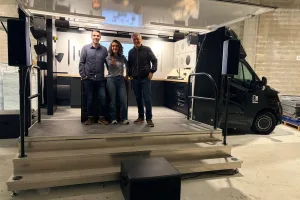
AUDAC's Audette showroom stops in Spain on its European tour
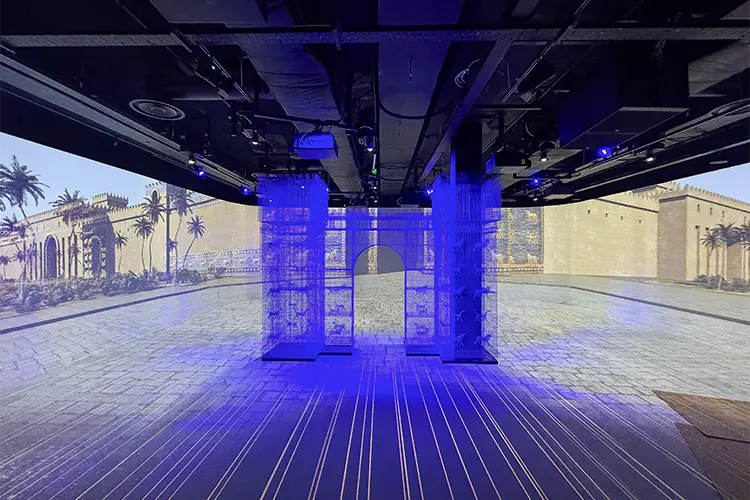
Five civilizations, 12,000 years and invisible sound: L-Acoustics at Timewalk



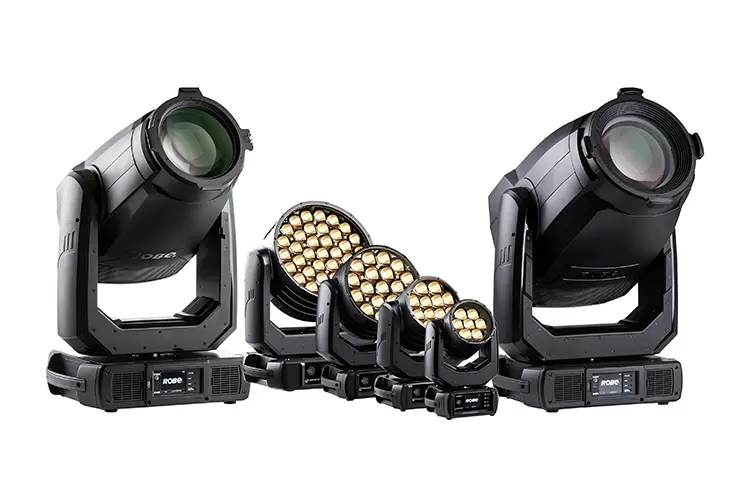
Robe’s T-Series continues to expand: T1.5 Profile to make its world debut in Paris
CYCLOP L: over 50,000 lumens and large-format optics for long-throw applications
Two floors, different atmospheres and an RCF sound system tailored to each space