



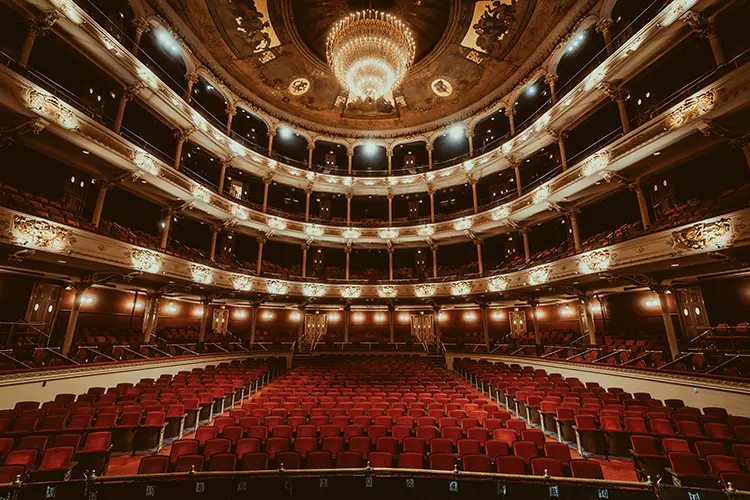
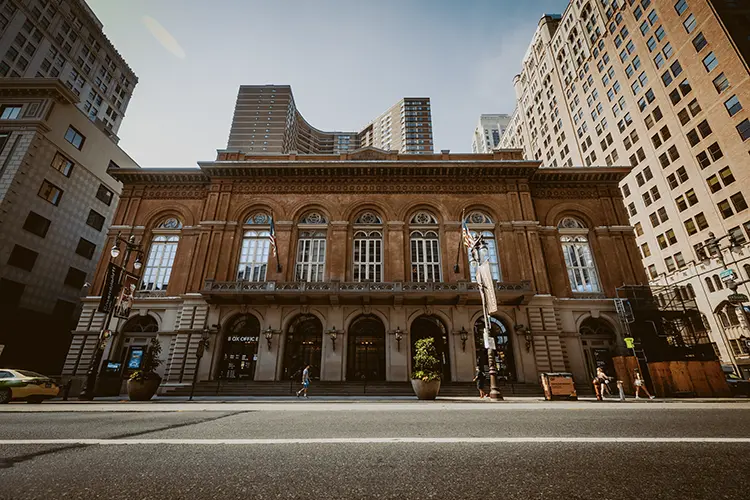
The Academy of Music, the oldest continuously operating opera house in the United States, has been Philadelphia’s grand stage for 168 years.
Now operated by Ensemble Arts Philly, the historic venue has been equipped with a discreet, high-performance Meyer Sound system designed to deliver clear and consistent audio throughout the hall without compromising the architectural integrity of the space. The system, which replaced the theater’s decades-old equipment, was installed by DBS Audio Systems.
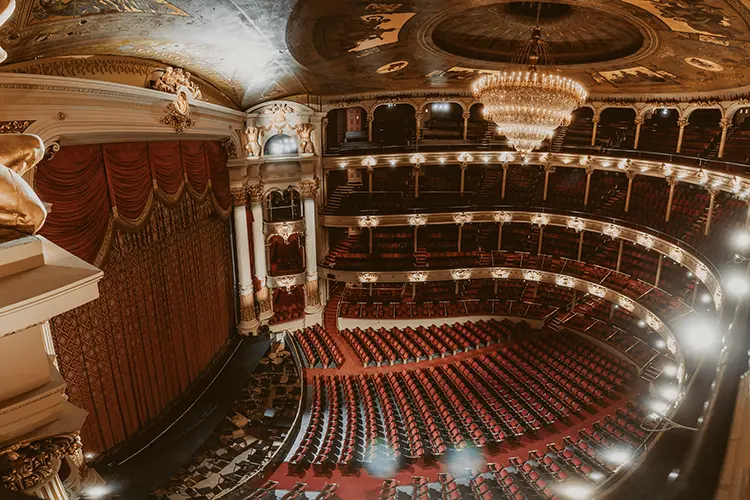
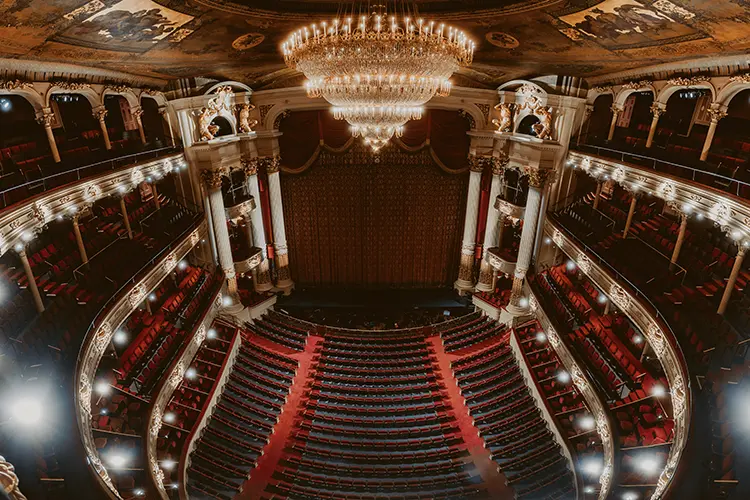
Designed in a Neo-Renaissance style with Baroque influences, the horseshoe-shaped auditorium has three balconies and an approximate seating capacity of 2,800. Since its opening in 1857, it has hosted everything from operatic premieres and symphonic concerts to performances by legendary artists, national conventions, and film productions. The Academy remains a crown jewel of Ensemble Arts, which also manages the Marian Anderson Hall at the Kimmel Center for the Performing Arts, where a Meyer Sound LEOPARD®-based system was installed in 2021.
 |
 |
The Academy of Music is one of the nation’s most treasured cultural landmarks and serves as a premier destination for our Broadway tours, opera, ballet, and special events. With the success of the Meyer Sound system at Marian Anderson Hall—home of The Philadelphia Orchestra—we have seen firsthand how this technology elevates the concert experience. Now, with a transformative installation at the Academy, every guest will enjoy performances with even greater clarity, power, and intimacy, states Ryan Fleur, president and CEO of The Philadelphia Orchestra and Ensemble Arts.
“Our experience with the Meyer Sound system at Marian Anderson Hall exceeded expectations”, adds Andre Barette, director of production for The Philadelphia Orchestra and Ensemble Arts. “Once we heard what that system could do, it became clear we needed to think about the Academy of Music the same way. With an important season ahead and the celebration of the United States’ 250th anniversary on the horizon, the timing was perfect”.
Given that the Academy’s programming spans many genres and formats, flexibility was key. “We present Broadway tours, are home to the Philadelphia Opera and Ballet, and also host conferences and talks”, Barette explains. “Sometimes we support a full touring sound system; other times we are the main system. This design needed to adapt to every scenario and ensure that every seat —including those under the balconies— felt like the front row”.
 |
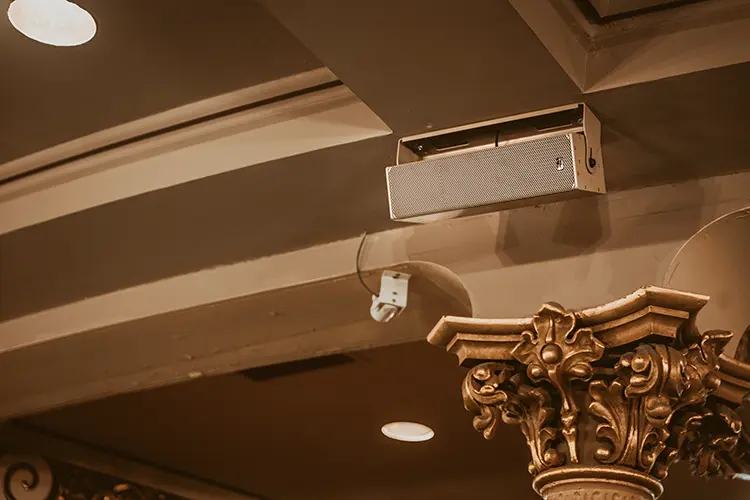 |
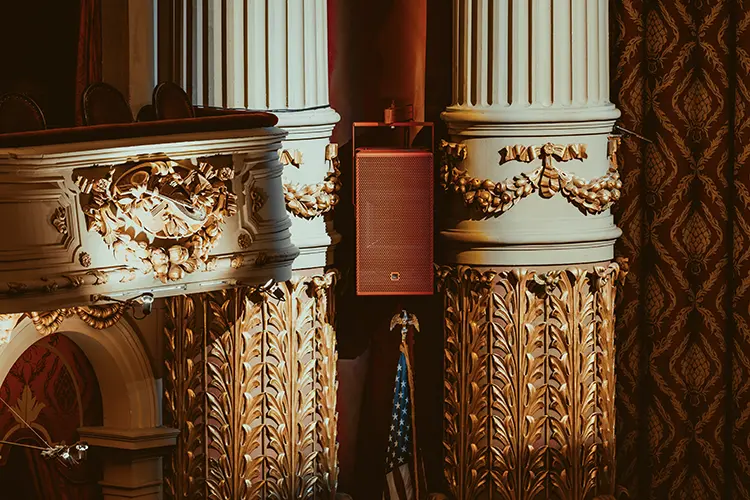
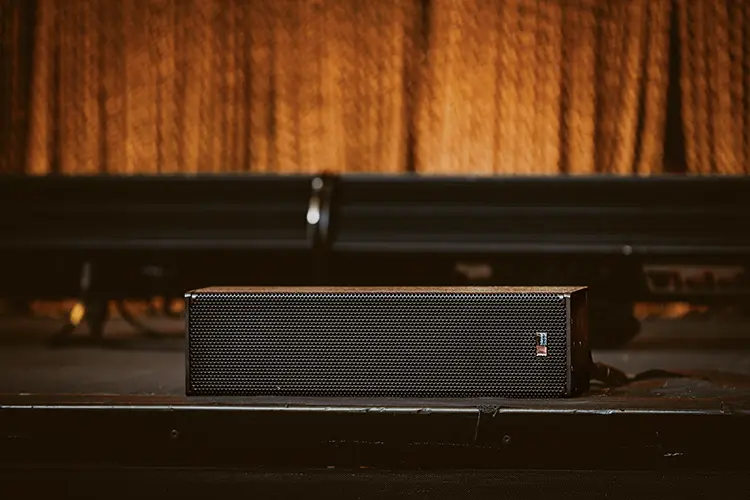
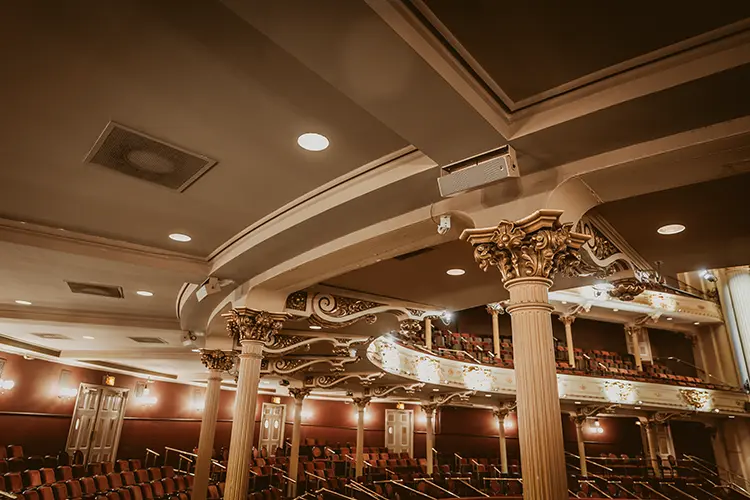
The same team that installed the Marian Anderson Hall system—DBS in collaboration with Bob McCarthy, Meyer Sound’s Director of System Optimization—designed the new one. It centers around a main system comprising two ULTRA-X80™ versatile point-source loudspeakers, two ULTRA-X82™, and four 750-LFC™ low-frequency control elements; along with a distributed four-level balcony system consisting of 24 ultracompact UP-4slim™ under-balcony loudspeakers, eight ULTRA-X22™ XP loudspeakers along the proscenium, and eight UP-4slim front fills. The system is powered by five Galileo® GALAXY 408 Network Platforms and one GALAXY 816, managing primary and secondary Milan AVB networks as well as analog backup. The loudspeakers were color-matched to blend seamlessly with the architectural detailing.
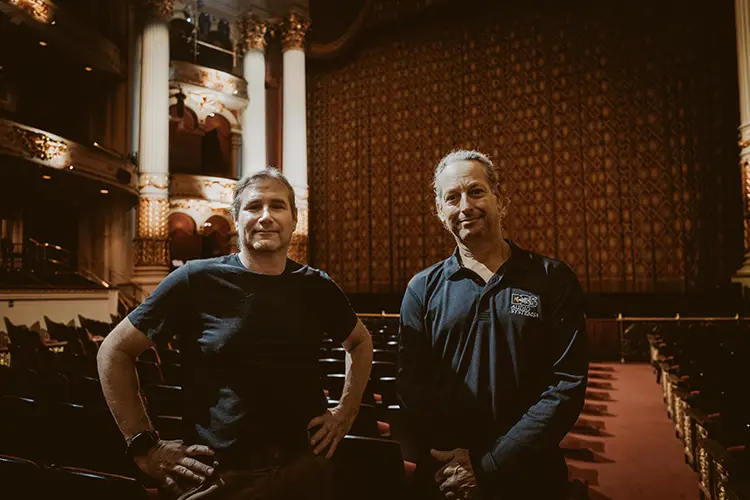
This hall was challenging from both a design and installation perspective. Because of the historic nature of the venue, everything needed to disappear visually while still delivering acoustically, notes Dave Brotman, principal at DBS Audio.
 |
 |
To achieve this balance, Brotman’s team, led by partner Michael Shoulson, built custom rigging systems to place the main loudspeakers between two historic columns. “Neither side was properly aligned”, Brotman explains. “The ULTRA-X80s fit with maybe half a centimeter to spare”.
“We can’t put huge speakers in places that wouldn’t suit the architecture”, Barette notes. “Meyer Sound managed to match the color of the loudspeakers to the space so well that they practically become invisible. The audience hears the sound but can’t tell where it’s coming from. They don’t think about the system; they simply enjoy the experience”.
Originally designed as a lyric opera house, the Academy has a relatively dry acoustic profile, with a reverberation time of around 1.4 seconds. Although this posed challenges for unamplified symphonic repertoire in the past, it now offers an ideal foundation for modern programming that requires amplified sound.
 |
 |
The new Meyer Sound system takes advantage of these characteristics and enhances them, improving clarity and impact for all types of performances—from spoken word and stand-up comedy to contemporary dance and orchestral film presentations.
Bringing the Academy’s ambitious sonic vision to life required not only the right technology but also the right people—and a deep respect for the theater’s heritage. “We at DBS are very proud to have been entrusted with this project”, Brotman says. “Climbing through the narrow spaces between the balconies and entering areas where almost no one has ever been, discovering old hand-hewn beams, was a truly special experience. And it was a pleasure to collaborate once again with Andre and the Academy team”.
We are just beginning to use the system as the season opens. Even so, we have already received very positive feedback from our internal teams and from the Philadelphia Opera, which is currently in residence. We are confident this will enhance the experience for all types of artists and events. The best part is that guests may not even realize the system has changed; they will simply walk out saying, ‘Wow, that sounded amazing’, concludes Barette.
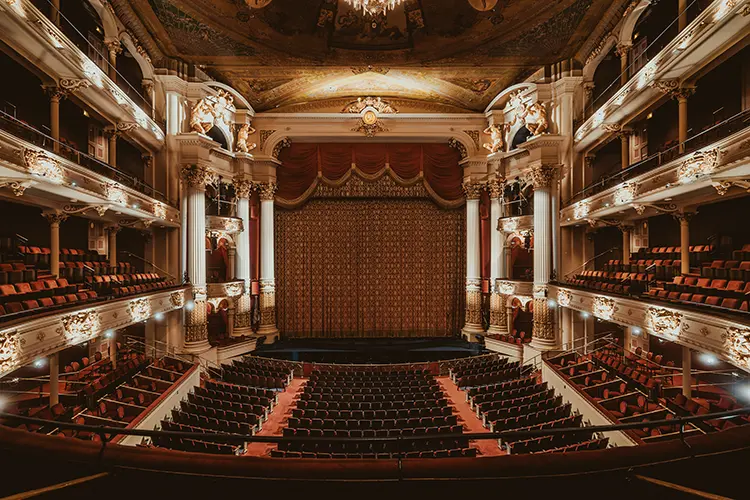
Image credits: Jared Gehman