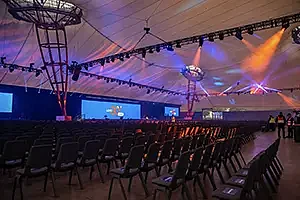
The evolution of live events, hybrid formats and audiovisual productions is expanding the role of stage technology. Beyond lighting, sound and video, increasing importance is being given to the elements that help create a consistent visual and acoustic experience for both in-person and remote audiences.
In this context, manufacturers and suppliers across the sector are expanding their portfolios with solutions designed to enhance the finish of stage environments, optimize acoustics and facilitate the adaptation of venues for a wide variety of uses.
The growing demand for streaming broadcasts, corporate events, studio productions and shows in multifunctional venues is driving the use of elements such as stage backdrops, technical fabrics, masking systems and materials for temporary acoustic treatment.
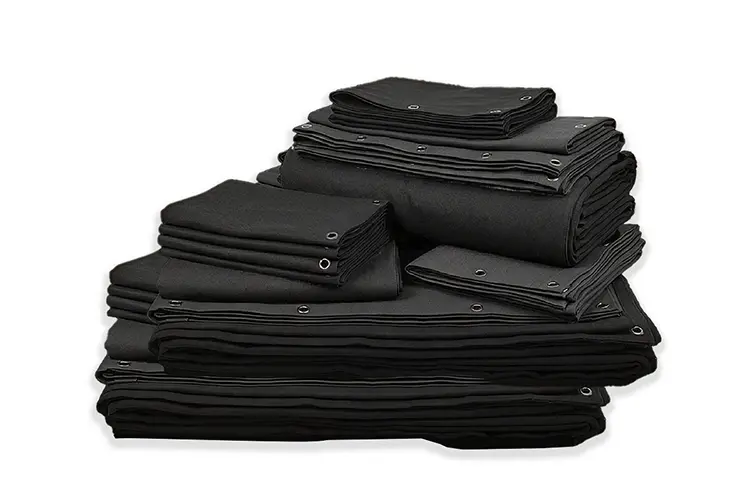
The need to deliver a more polished on-camera image is also accelerating this trend. In many projects, aspects traditionally considered secondary—such as concealing structures, controlling reflections or visually defining spaces—have become key factors in enhancing the professional perception of a production.
At the same time, the rise of touring events and flexible production models is encouraging the adoption of textile solutions that make it possible to transform a venue quickly without the need for permanent interventions. Theatres, convention centres, recording studios, corporate spaces and exhibition venues are increasingly seeking tools that allow them to adapt both the aesthetics and acoustic behaviour of a room according to the requirements of each event.
This evolution is also strengthening the convergence of disciplines that were traditionally treated separately. Lighting, stage design, acoustics and visual design are increasingly being approached as components of a single immersive experience, where every detail contributes to the overall narrative of the show or presentation.
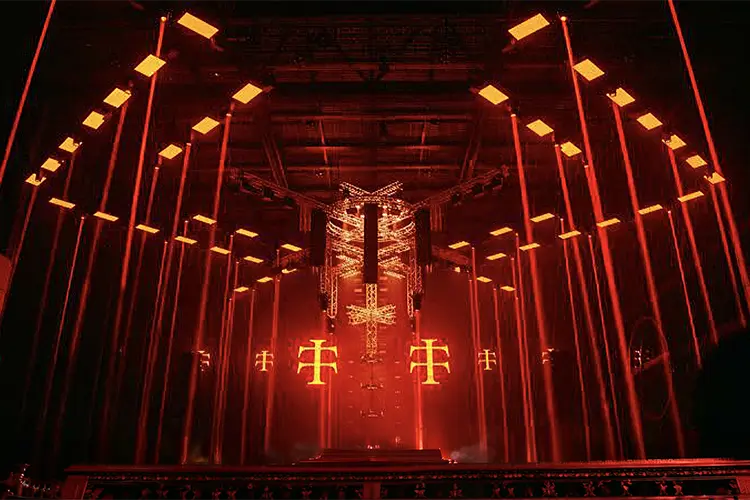
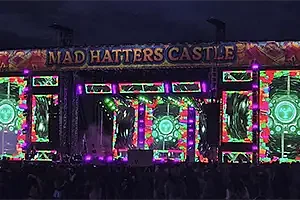
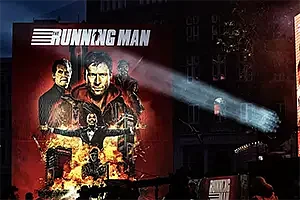
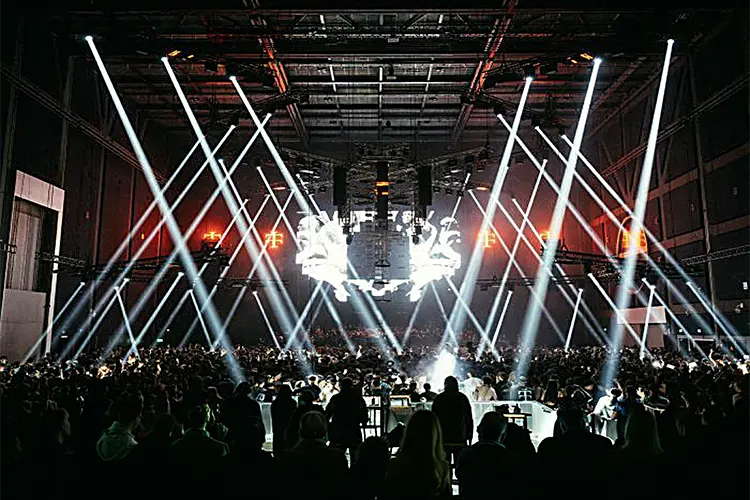
Large-scale productions held in iconic European venues clearly demonstrate this integration. In events where staging, lighting and the overall atmosphere play a leading role, the construction of the visual environment has become just as important as the audiovisual technology itself.
For integrators, rental companies and entertainment professionals, this trend opens up new business opportunities around solutions that, beyond electronic equipment, help improve the end-user experience and add value to every project.