The broadcast industry is immersed in an unprecedented technological transformation, where the integration of virtual production and LED technology is redefining both set design and live broadcast operations.
This convergence, driven by next-generation digital processing systems and high-efficiency display solutions, enables levels of quality and flexibility that open new possibilities for content creation.
Virtual production: real-time precision and flexibility
Virtual production has moved beyond the limitations of traditional physical sets, adopting an approach based on real-time generated digital environments. By using advanced 3D graphics engines and high-speed camera tracking systems, studios can now integrate interactive backdrops and digital sets that dynamically adapt to the broadcast narrative. This system, for example, allows backgrounds to be updated instantly according to live data, making it easier to create immersive and precise environments without resorting to costly physical constructions.
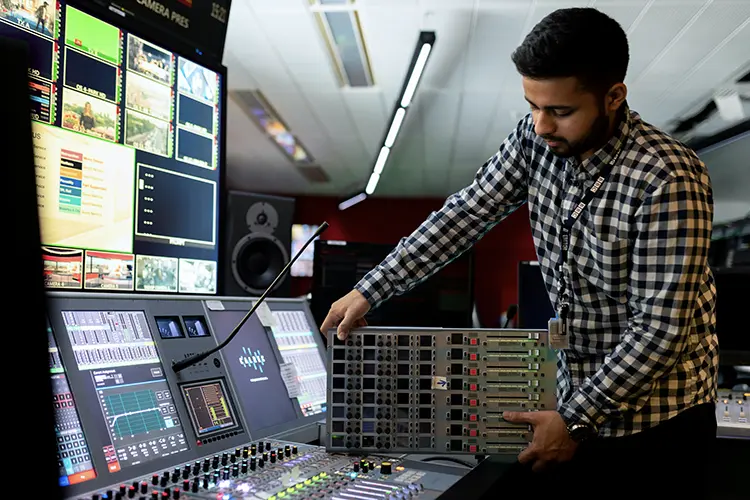
The key to this breakthrough lies in the ability of virtual production software to process multiple data streams simultaneously. Artificial intelligence and machine learning algorithms optimize the visual composition based on predefined parameters and real-time variables, automatically adjusting framing, lighting, and graphic effects. This ensures that interaction between the presenter and the digital environment remains seamless, with an almost imperceptible transition between real and virtual elements.
LED Technology: cinematic quality on set
Complementing virtual production, LED technology has established itself as an essential component in modernizing broadcast sets. High-resolution LED screens, equipped with color and brightness controllers based on DMX and Art-Net protocols, offer an image quality comparable to cinematic productions. These solutions enable the integration of graphics, animations, and real-time data, adding an extra dimension to the visual narrative.
Using LED panels not only improves the fidelity of visual content but also optimizes energy consumption and reduces the maintenance associated with conventional equipment. Thanks to their modularity, LED systems allow for precise lighting configuration, adapting to the specific needs of each broadcast. For example, during sports broadcasts or news programs, lighting effects synchronized with the pace of the narrative can be implemented, achieving visual cohesion that enhances the impact of the message.
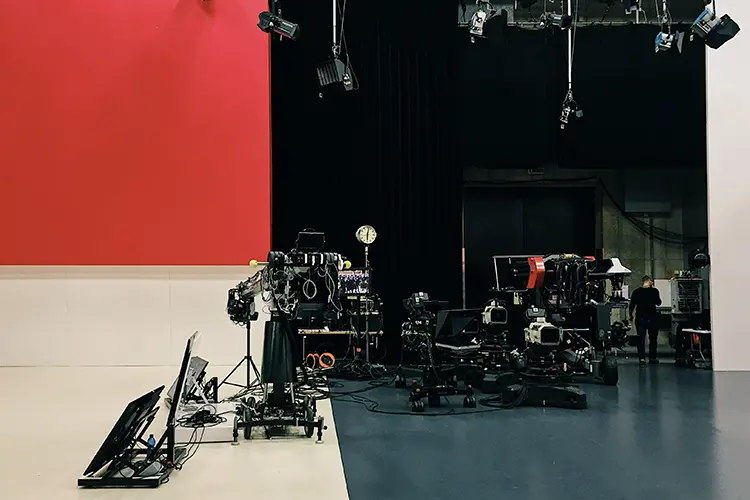
Integration and synergy: the new broadcast ecosystem
True innovation arises from the synergy between virtual production and LED technology. In a modern broadcast environment, the workflow is enhanced through the integration of cloud-based systems that enable real-time coordination among geographically dispersed teams. Data generated by virtual systems and LED panels is synchronized via standardized communication protocols, ensuring that the broadcast remains within established technical parameters.
During a live broadcast, the virtual production system can manage interactive backgrounds while simultaneously sending commands to the LED controller to adjust the studio ambiance. This coordination is carried out through application programming interfaces (APIs) that facilitate interoperability among different devices and software, allowing for automatic adjustments based on predefined conditions or in response to live variables, such as changes in lighting or content composition.
Operational benefits and return on investment
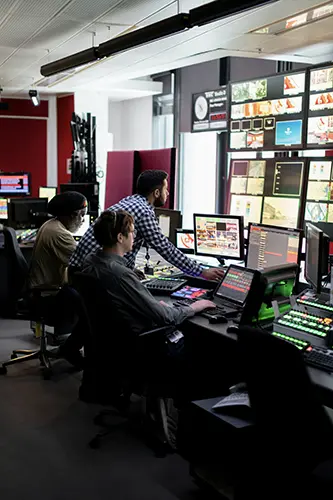
Implementing these advanced technologies brings significant operational advantages. Virtual production reduces preparation and teardown times by eliminating the need to build physical sets for each broadcast. This leads to a considerable decrease in operating costs and greater agility in scheduling, allowing broadcasters to respond immediately to programming changes or unexpected events during transmission.
 |
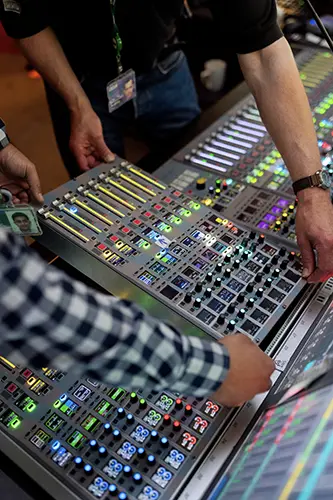 |
On the other hand, LED technology, by offering superior visual performance and lower energy consumption, provides an attractive return on investment for producers. The personalization and interactivity enabled by these systems open new avenues for monetization, allowing for more effective advertising models and highly segmented content tailored to the preferences and behaviors of a global audience.
Towards an interactive, personalized future
The convergence of virtual production and LED technology is redefining the future of broadcast, paving the way for increasingly interactive and personalized broadcasts. With the expansion of high-speed networks like 5G and ongoing advances in artificial intelligence, production systems are expected to become even more autonomous, adjusting parameters in real time to maximize broadcast quality.
Broadcast directors and producers emphasize that this transformation not only elevates the technical level of broadcasts but also enhances creativity and the capacity to innovate in audiovisual storytelling. Modern studios are becoming true innovation labs, where the combination of digital technologies allows for more immersive and effective storytelling, directly connecting with an increasingly demanding and segmented audience.
The integration of virtual production and LED technology marks a milestone in the evolution of broadcast. This new technological paradigm not only optimizes operational processes and lowers costs but also sets new quality standards in live content transmission. Studios are transformed into flexible, highly interactive environments, capable of adapting to the demands of a constantly changing market, where innovation and creativity are fundamental pillars.
With these advances, the future of broadcast is emerging as a field of limitless possibilities, where the convergence of disruptive technologies is redefining how we communicate and entertain. The revolution in sets is not merely a technical improvement but a comprehensive transformation that promises to elevate the audiovisual experience to unprecedented levels, marking the beginning of a new era in the entertainment and communications industry.