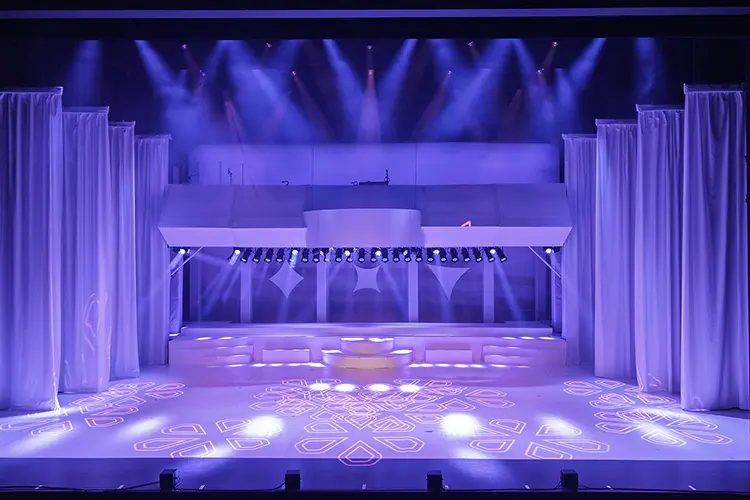
The De Leest theatre, located in Waalwijk (The Netherlands), has been a key cultural hub for the city and its surrounding region since its opening in 1996, establishing itself as a central venue for performing arts and musical programming.
A decade ago, the venue underwent a major refurbishment that introduced a new black box theatre with a capacity of 200 and a retractable seating system, providing a high level of flexibility. Together with the 520-seat main auditorium, it enables a wide range of productions, including musicals, concerts, cabaret, family shows, opera, dance, youth theatre, and film screenings.
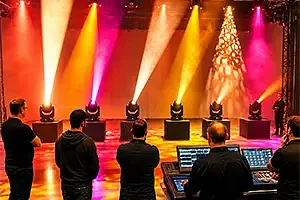
Luc van Heijst, Head of Technical at De Leest since 2004, led the project definition and tender process, which resulted in the installation of 230 Robe LED luminaires—both static and moving—supplied by Controllux, the brand’s distributor in the Netherlands.
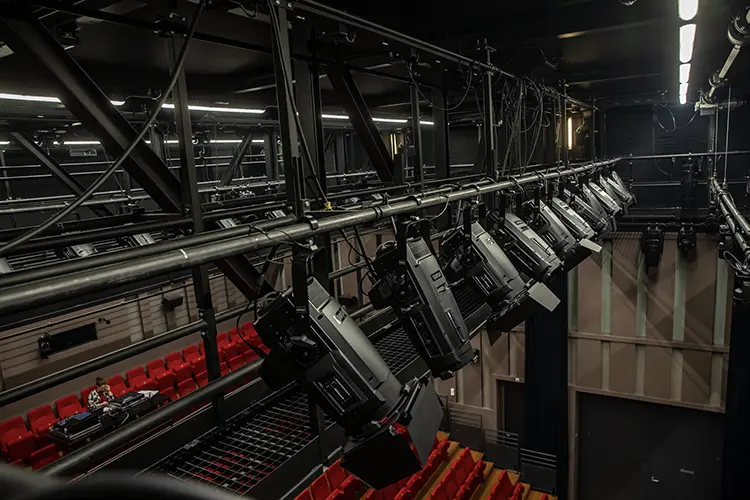
These luminaires fully modernise the stage lighting and are deployed across both performance spaces, replacing older fixtures, some of which dated back to the theatre’s opening. Robe’s solutions provide flexible and dynamic lighting for both venues and all types of productions, while also improving sustainability.
The project includes eight different types of Robe luminaires: 37 TX1 PosiProfile with gobo modules, 16 ESPRITES with Robe’s HCF TE (TRANSFERABLE ENGINE) LED engine, 24 LEDBeam 150, 25 LEDBeam 350, 18 Tetra2, 24 ParFect 150 FWQ, 48 T15 PC and 38 T11 Profile, also with gobo modules. These units can be rigged on the 45 motorised over-stage and side bars in the main hall, as well as on the fixed grid in the smaller space. Units not in use are stored and transported using custom racks designed to optimise venue operations.
These are also the theatre’s first moving lights, replacing conventional fixtures such as profiles, PCs, fresnels and PAR cans. This represents a significant investment and a major step forward for De Leest’s future.
Initial discussions about introducing LED technology began in 2019, explains Luc, involving senior lighting technicians Peter Visser and Raymond Eckhardt, who evaluated available options to modernise the venue and take advantage of incentives linked to more sustainable technologies.
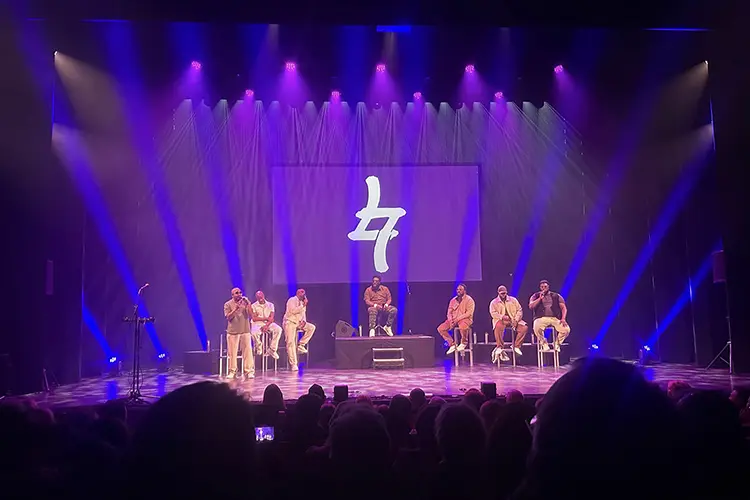
The pandemic slowed the project, but it was later resumed with renewed momentum to upgrade the original lighting. A key requirement was the use of multispectral light sources, capable of delivering high-quality colours through additive mixing. Other decisive factors included low noise levels and smooth dimming—requirements that the Robe solution, proposed by Controllux, met successfully, along with high brightness levels.
“Everyone is very satisfied”, says Peter, who also carried out a meticulous calibration process to accurately match the Lee filter range within the Robe LED engines. Using a 1000W PAR fixture as a reference, he measured values with a spectrometer, translated them, and stored them in the console. This enables instant reproduction of real colours in any production, supporting lighting designers—including those more sceptical about LED technology.
From an operational standpoint, the transition from conventional lighting to LED required an adaptation process, which the technical team embraced enthusiastically, driven by the excellent results achieved in show lighting.
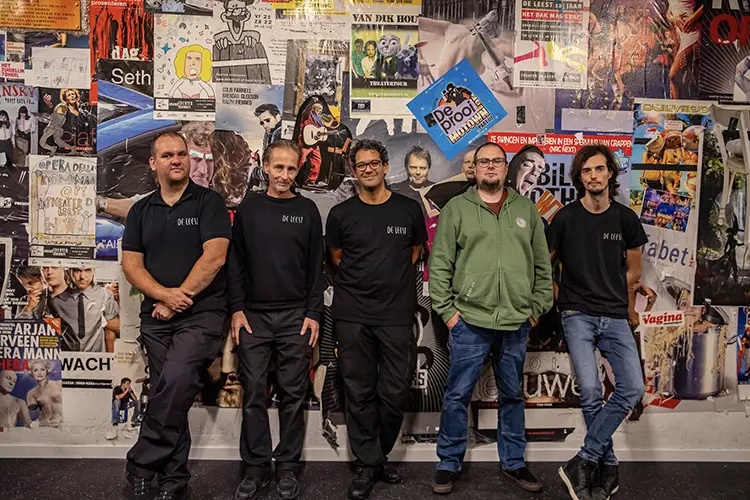
Peter visited the Robe factory in the Czech Republic in 2024, where he witnessed first-hand the high level of precision, quality and craftsmanship involved in manufacturing each product. He also highlighted that the company produces all components in-house, including PCBs, reinforcing his view of Robe as a solid, reliable brand with an excellent reputation among lighting professionals.
Another key factor in an investment of this scale is trust in local suppliers. The De Leest team—comprising six technicians plus Luc—already had experience working with Controllux, where the project was coordinated by Maikel Sakkers, who also handled logistics and ensured timelines were met.
As part of this upgrade, local company DRM-Showtechniek, based in nearby Raamsdonksveer, installed a complete fibre-based control network, while stage lighting is now managed via sACN protocol. At the same time, the exterior surroundings of De Leest were undergoing redevelopment, transforming from a concrete urban square into a greener, more attractive space, ready for the theatre’s winter and spring seasons.