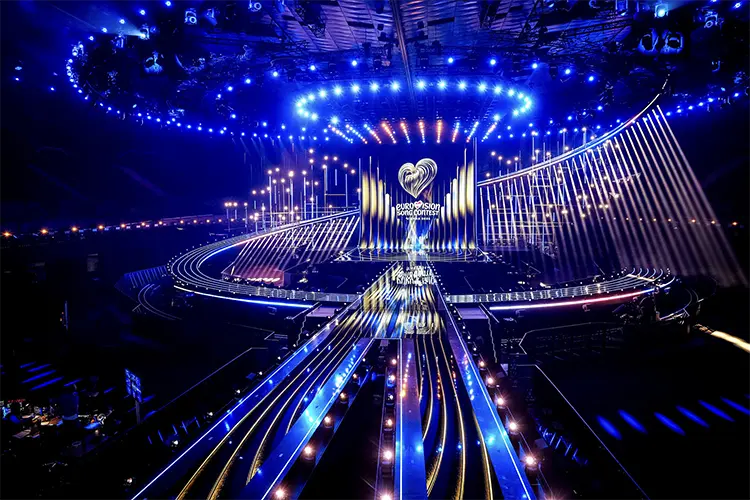
Robe Lighting was one of the technical partners of the 2026 Eurovision Song Contest (ESC), held at the Wiener Stadthalle in Vienna, Austria, in an edition marked by spectacular staging and a high level of production.
The 70th edition of the world’s most famous international pop extravaganza was organised by the European Broadcasting Union (EBU), together with this year’s host broadcaster, Austria’s Österreichischer Rundfunk (ORF).
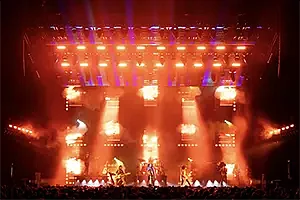
An impressive production lighting design, featuring nearly 550 Robe luminaires, was created by Tim Routledge and his team, working on their third ESC event, collaborating with set, video and production designer Florian Wieder to deliver a vibrant, flexible and visually striking environment.
All of this had to serve the needs and imagination of the 35 delegations, the audience experiencing the excitement live at the Stadthalle, and the millions of viewers around the world following the event through various streaming and television broadcasts.
Robe on stage
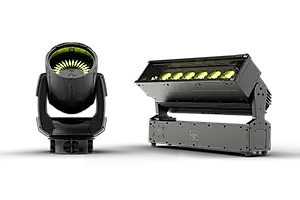
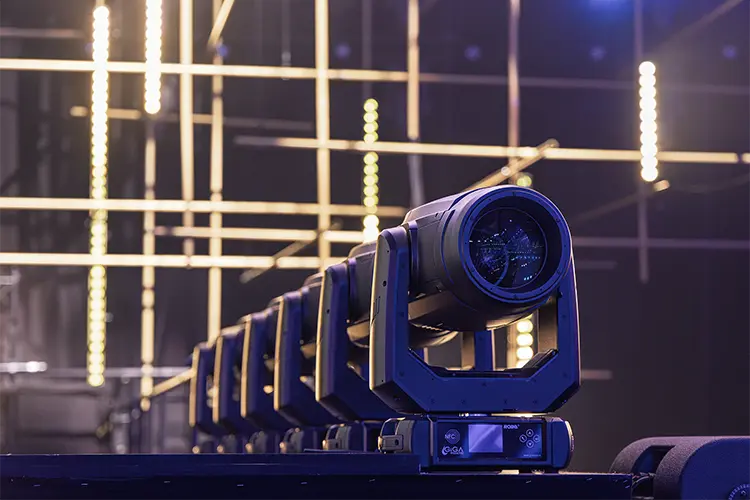
Highlights of the lighting rig included 190 Robe GigaPointe units, a multifunction laser-source luminaire; 98 WTF! — IP-rated LED strobe/wash/blinder fixtures — and 25 Robe HolyPATT vintage-style LED stage luminaires. In addition, Tim’s overall lighting rig included 182 Robe SVB1 multisource LED wash beams, which he also used last year in Basel, Switzerland, and which have since become one of his favourite fixtures.
He also selected 64 Robe iFORTE and iFORTE LTX units — equipped with HCF (High Colour Fidelity) engines — for key lighting and special effects on the main stage and in the Green Room, located this year on the opposite side of the arena from the stage.
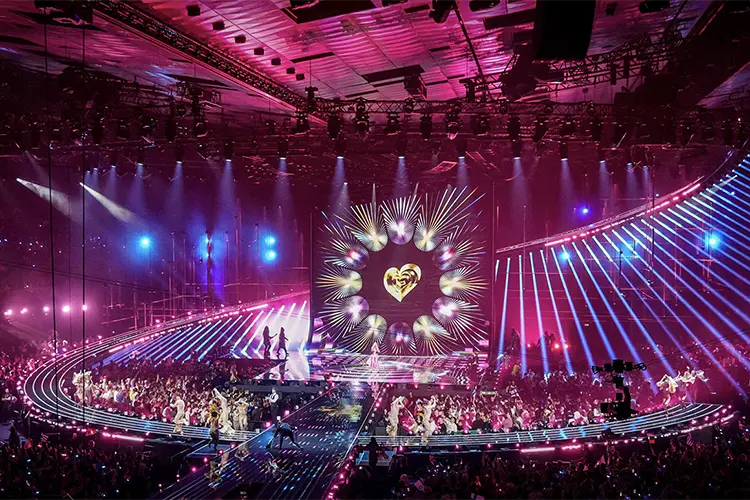
The impressive architecture of the stage space was based on curves, spheres and understated elegance juxtaposed with playful and extravagant elements, in the true spirit of Eurovision. It offered a technically intelligent universe of possibilities for the participating artists.
Architectural elegance
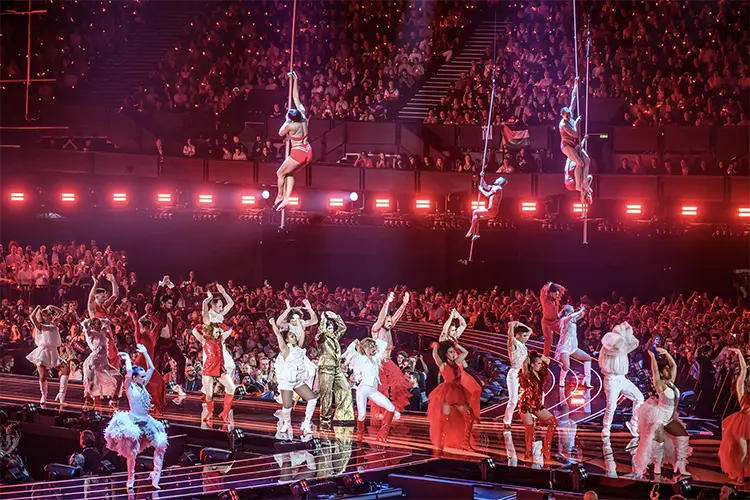
A large “iconic” catwalk with a video floor began at ground level on the left side of the stage and extended through the centre of the venue in front of the stage, rising towards the right side in a gigantic rollercoaster-style loop, winding upwards until it finished high within the roof structure.
 |
 |
A central vertically oriented LED screen curved from above down to the stage floor and extended into a central platform crossing the arena and splitting into a double staircase leading to the Green Room.
All of this created a beautiful sense of fluidity and harmony for lighting and video playback, integrating seamlessly with the other technical disciplines and functioning as a true piece of television art.
The central screen was framed on both sides by seven columns of moving lights, bringing an epic cinematic feel to the entire space and ensuring visibility from every point in the arena.
A talented team
Tim’s talented team included associate designers Morgan Evans and James Scott; moving light programmers Alex Mildenhall and Martin Higgins; key light programmer Marc Nicholson; overnight programmers Olly Martin and Manfred Nikitzer; followspot coordinator Louisa Smurthwaite; and playback and video producer Sam Lisher together with his team. The gaffer and crew chief was Keith Duncan.
All lighting equipment was supplied by UK rental company Neg Earth, with whom Tim also worked on last year’s event and on his first ESC as lighting designer in Liverpool, UK, in 2023.
The stars of the rig
Tim was delighted to be able to use the GigaPointe fixtures on this show and they became the star luminaires of the event.
The product had just officially launched at ISE in February and, equipped with a 350W white phosphor laser engine, it is a highly anticipated multifunction luminaire. It was a very special moment to see so many units used at such a high-profile event following a demo conducted at the end of 2025.
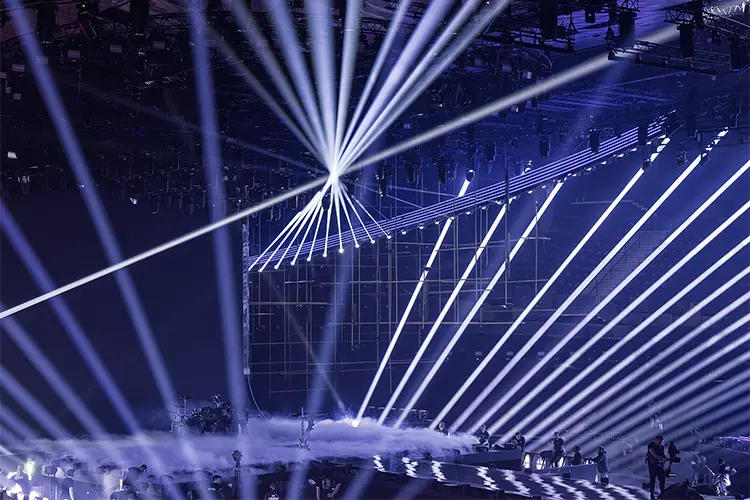
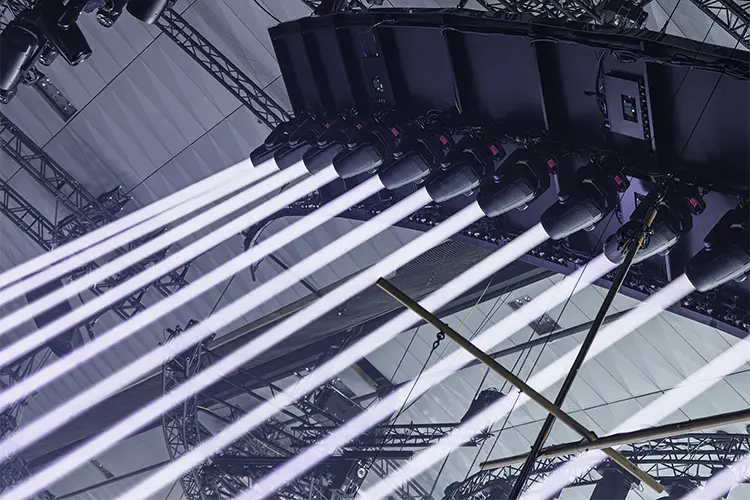
In Vienna, they were distributed throughout the venue. They stood out along the front of the catwalk and suspended beneath the elevated sections of the stage. They were also installed around the central semi-circular roof trusses and on all four sides of the main stage at floor level.
 |
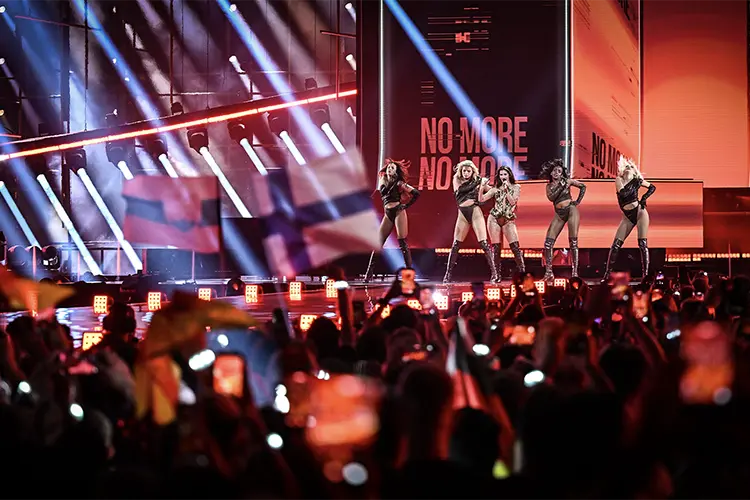 |
The GigaPointes were used throughout the performances, especially for gobo and beam effects. The SpectraBeam effect was used several times to create unique, high-impact looks, particularly for San Marino, with concentrated rainbow effects. They also featured prominently in the “stage-ready” sequence shown immediately after the postcard videos, using the participating country’s flag colours for each introduction accompanied by an orchestral stinger.
They worked as true all-rounders; we loved them. They were very bright, reliable and adapted perfectly to every position and use throughout the event, explained Morgan Evans.
Tim added that the GigaPointes became one of the key visual elements of the lighting design and stated that he was so pleased with their performance that he will also use them on Take That’s Circus stadium tour in summer 2026.
WTF! expanding Eurovision
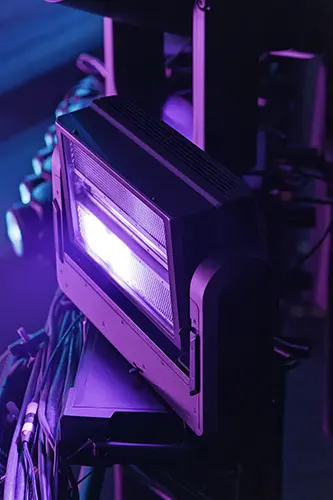 The 98 Robe WTF! fixtures were the main strobe units in the lighting design, deployed on the side roof trusses and on the large central semi-circular “crown” trusses above the stage, alternating with GigaPointes and other luminaires.
Tim had already experienced using a much smaller number of WTF! fixtures on British rapper Dave’s latest tour, so he was well aware of their potential and very pleased to have them at Eurovision.
“I love their directional capability, and we used all the LED chip groups and zoning for different effects”, he explained, adding that they appreciated the fixtures’ pan and tilt capabilities, which together with the zoom proved very useful for reducing camera reflections.
They also used the zoom and LED zoning to create colour temperature effects, while the fixtures positioned on the audience trusses helped flood the entire arena with light.
“These fixtures offer many possibilities for television productions”, noted Tim, who has already incorporated them into the design of another upcoming tour.
Key lighting
Eurovision is one of the world’s most watched and highly rated live music shows and, as with any television production, key lighting is absolutely essential!
Robe’s iFORTE fixture, thanks to its high CRI and excellent light quality, has become a go-to unit for Tim since the product launch, and on this occasion they were strategically installed in all key lighting positions on both the main stage and the Green Room.
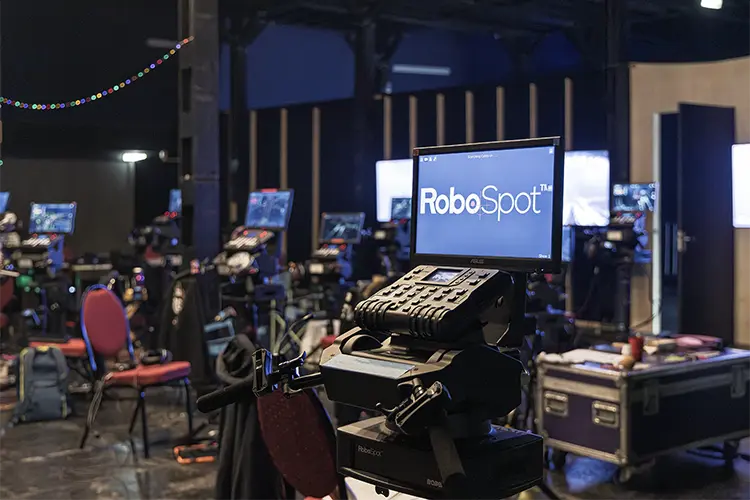
The iFORTE fixtures were distributed around the arena on perimeter trusses and on the two outer rings above the stage; their power output was ideal for the long throws required from those positions. Twelve of the 64 iFORTE units were combined with different remote follow systems, including three RoboSpot units. These iFORTE fixtures were used for key stage lighting and proved essential in every television shot. “They’re the best; I couldn’t do a show like this without iFORTE”, he confirmed.
 |
 |
SVB1 – making the stars shine
Eurovision is about making a wide variety of stars from multiple cultures shine with brightness and magic while performing their songs, and Tim had already used Robe SVB1 fixtures at ESC 2025 in Basel, Switzerland, where he was delighted with them. He liked them so much that they were included in this year’s main rig, while Neg Earth also made a significant investment in SVB1 luminaires supplied by Robe UK.
The fixtures were distributed around three of the four large circular roof trusses, helping to emphasise the structure. They created versatile and dynamic kinetic looks that could be either intense or subtle depending on the artist.
HolyPATT!
This year, the Green Room design stood out for its retro, cosy and classic concept inspired by traditional Viennese cafés, and the 25 HolyPATT fixtures were far more than the perfect scenic accessory to reinforce this aesthetic, providing a stylish tungsten-style spherical glow visible in every wide and medium shot.
The Vienna Radio Symphony Orchestra was positioned in the Green Room during the grand final and was also accompanied by HolyPATTS behind their platforms. Tim and his team applied the precise tungsten emulation with great style and elegance to bring a highly theatrical atmosphere to the space.
The challenge of painting with light
One of this year’s main technical and creative challenges was ORF’s decision to record the shows — including the two televised semi-finals used to reduce the number of participants to the 25 finalists — using large-sensor cinematic cameras, something never before seen in Eurovision history.
For Tim and the lighting department, this meant that far more depth, definition and detail became visible, allowing them greater freedom to experiment with lighting refinements that affected the on-camera appearance of elements such as strobes and pyrotechnics — harder, softer, etc. “It allowed us to add more texture and sophistication to every performance”, he stated, something clearly reflected in the final broadcast.
Related to this, the LiveEdit directing software used to mix the broadcast could preselect different colour LUTs applied to all cameras for each artist, enabling much more stylised lighting looks and treatments to be developed and optimised.
Tim described this process as “very rewarding because it gave us more opportunities to paint with light”, making perfect key lighting and the role of the iFORTE fixtures even more important.
Working with winners
Eurovision 2026 was hosted by Victoria Swarovski and Michael Ostrowski, together with Emily Busvine from the Green Room, and the winner was Bulgaria thanks to DARA’s spectacular performance of her catchy Balkan anthem Bangaranga, beating Israel, represented by Noam Bettan with Michelle, and Romania, whose representative Alexandra Căpitănescu finished third with Choke Me.
Photos: Marko Polasek (technical photography) and ORF Cloud (show images)