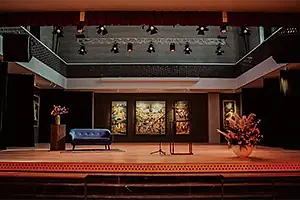
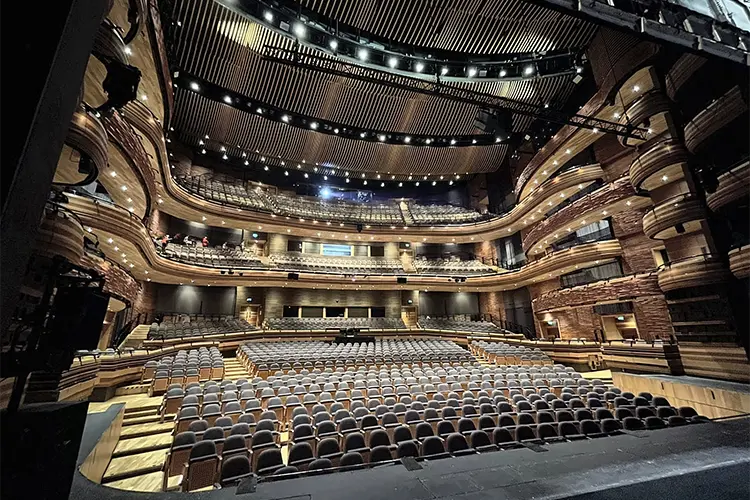
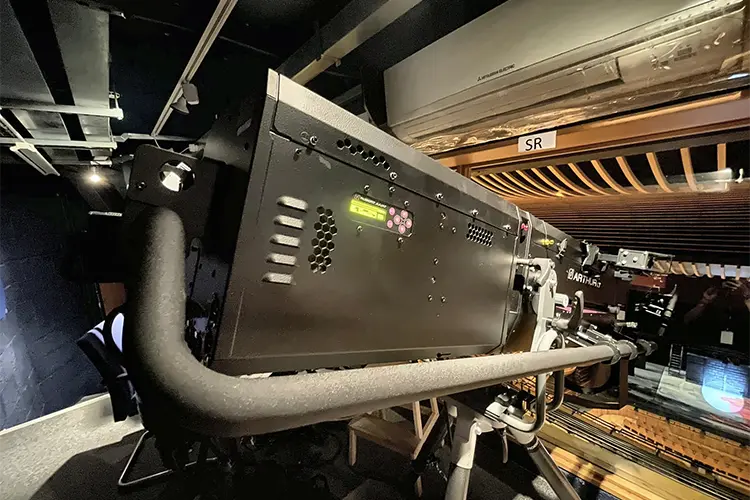
Cardiff's Wales Millennium Centre has upgraded the followspots in its Donald Gordon Theatre with four Robert Juliat Arthur LT LED units.
Beyond the change in technology, the project highlights several factors that should be considered when replacing discharge followspots in large venues: throw distance, output level, integration with LED rigs, colour rendering, noise, operating temperature and maintenance costs.
The centre, which regularly hosts opera, ballet, musicals and major touring productions, sought to replace equipment that had been installed when the building first opened. The aim was not only to reduce energy consumption, but also to address two increasingly common problems in older installations: the cost and availability of discharge lamps and declining light output compared with productions now using predominantly LED technology.
When power is not the only issue
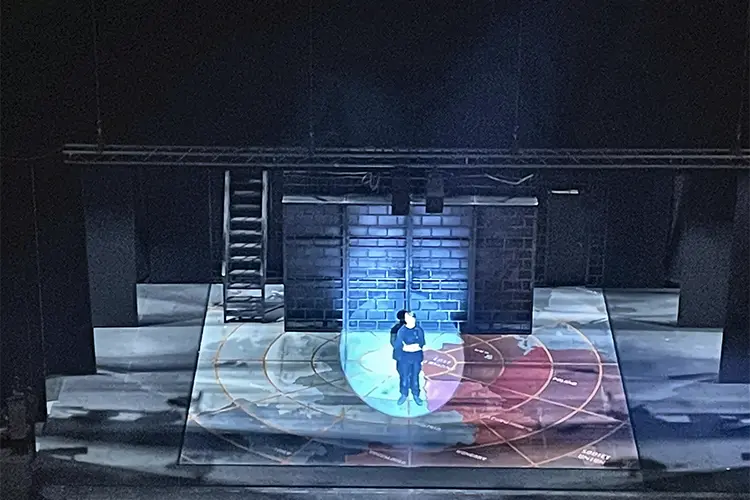
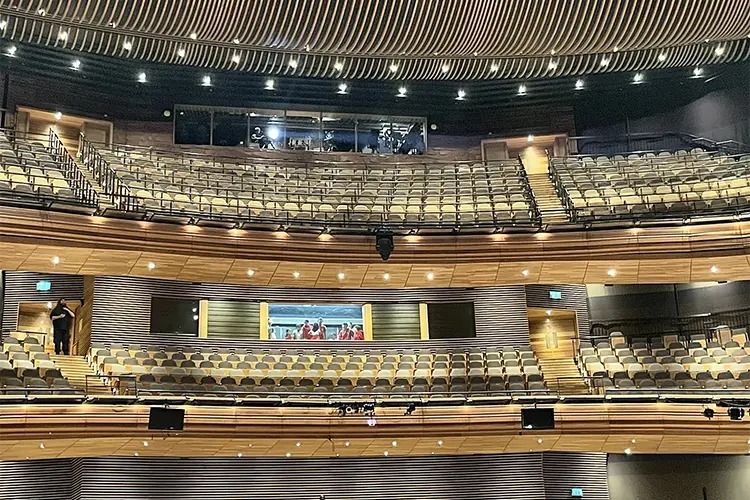
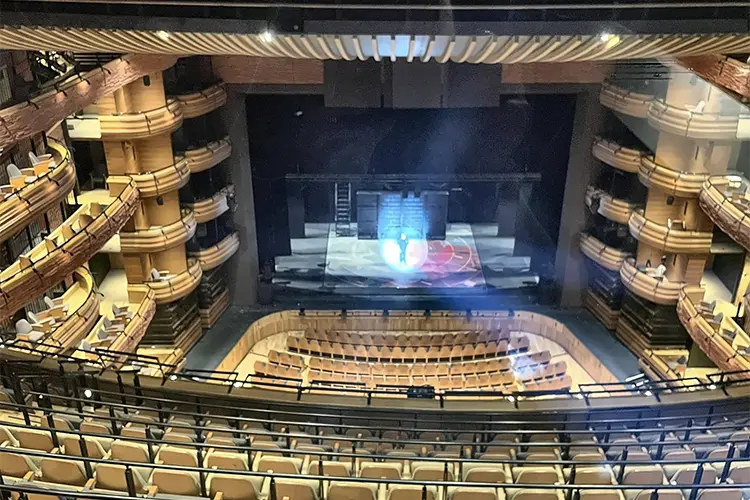
In the Donald Gordon Theatre, the followspot position is approximately 36 metres from the stage. This distance directly affects the choice of optics, aperture and the usable light output that ultimately reaches the performer.
 |
 |
The technical team had also received feedback from touringqueer touring productions indicating that the old followspots were beginning to appear somewhat weak compared with modernised, predominantly LED lighting rigs.
To determine which solution would work from that position, the theatre conducted an on-site test with several followspot operators. The trial ruled out one of the options initially considered after it failed to deliver suitable performance within the venue's actual geometry.
This is an important consideration in this type of upgrade: comparing electrical power or lumen output alone may not be sufficient. The throw distance, required angle, beam size on stage and actual contrast conditions with the rest of the lighting can completely change the result.
800 W LED versus discharge followspots
The installed solution consists of four 800 W Robert Juliat Arthur LT units, the long-throw version of the original Arthur. Its optics offer a zoom range of 4° to 10°, designed for positions located far from the stage. According to the manufacturer's specifications, its output exceeds that of a 2,500 W HMI followspot.
The comparison is interesting because it illustrates one of the changes LED is bringing to this type of application: lower installed electrical power does not necessarily mean a lower light level on stage, particularly when the light source and optics are designed together for long throw distances.
Colour rendering is another important parameter in theatre and broadcast applications. The Arthur LT has a stated CRI of over 94, a particularly relevant feature when the performer's skin tones need to remain consistent with the rest of the stage lighting or television cameras.
Less heat and noise at the operator position
The change also affects working conditions. Wales Millennium Centre's operators highlight improvements in smooth operation, brightness, throw range, heat generation and noise levels.
The final two factors may seem secondary on a technical data sheet, but they become important in theatres where followspot positions are occupied for several hours and, in some designs, are relatively close to the audience or other noise-sensitive areas.
The reduction in temperature also improves operator comfort and reduces the thermal load within the technical area.
Maintenance and service life as part of the calculation
Another reason for replacing the old systems was maintenance. The centre reports that sourcing lamps for its previous followspots was becoming increasingly difficult and expensive.
In permanent installations, the transition to LED should therefore be assessed beyond electricity consumption alone. Operating hours, lamp replacement, spare parts availability, technical servicing and downtime all contribute to the total cost of ownership over the system's lifetime.
 |
 |
For Wales Millennium Centre, these factors were also linked to its strategy of reducing its carbon footprint and the need to lower the recurring costs of infrastructure used by numerous productions throughout the year.
Testing from the actual position before specifying
Perhaps the most transferable lesson for other venues lies in the selection process. Before making the purchase, the technical team installed the candidate units in the theatre, operated them from the actual followspot position and allowed several operators to test them. The trial assessed not only light output, but also ergonomics, throw range, beam performance and the suitability of the optics for the actual 36-metre distance.
When renovating theatres, auditoriums or arenas, particularly when replacing discharge technology with LED, this type of test can be far more decisive than a direct comparison of catalogue figures.
The four Arthur LT units were supplied by Gobo Plus following demonstrations carried out jointly with Live Technology.