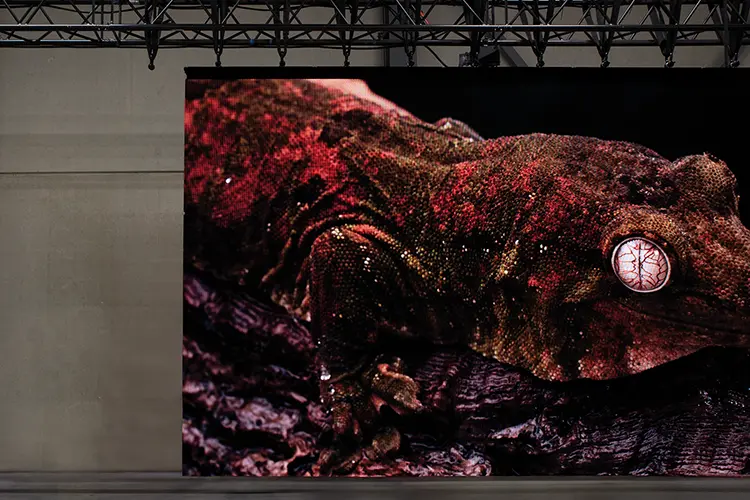
With the introduction of the A1.9i, DMT’s Alpha series now consists of three models: the A3.9i, the A2.6i and the new A1.9i. The DMT Alpha series was designed with quality and price in mind in order to offer LED screens that represent excellent value for money.
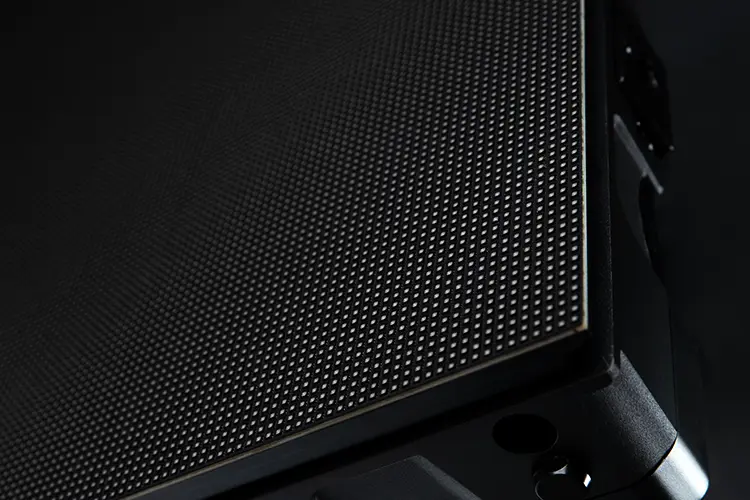
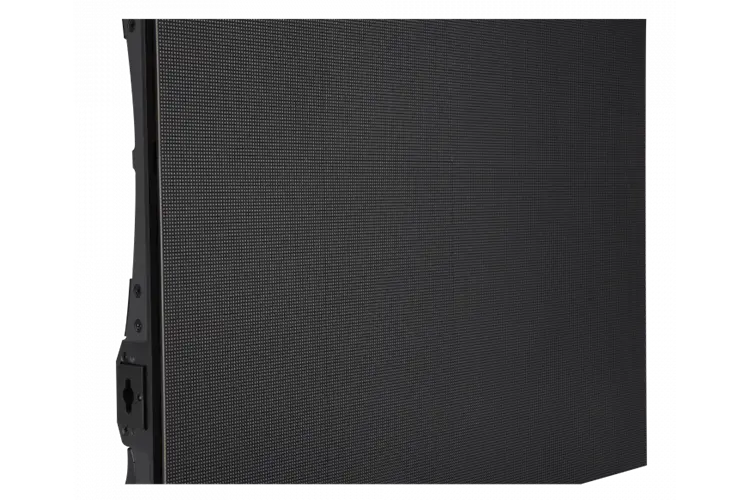
With a pixel pitch of 1.9 mm, the DMT Alpha series A1.9i is an indoor HD LED screen with a minimum viewing distance of just 2 metres. Thanks to its higher pixel density, the A1.9i has the best screen resolution of DMT’s Alpha series models. For situations where screen resolution or minimum viewing distance is less demanding, the A2.6i or A3.9i could be the perfect choice.
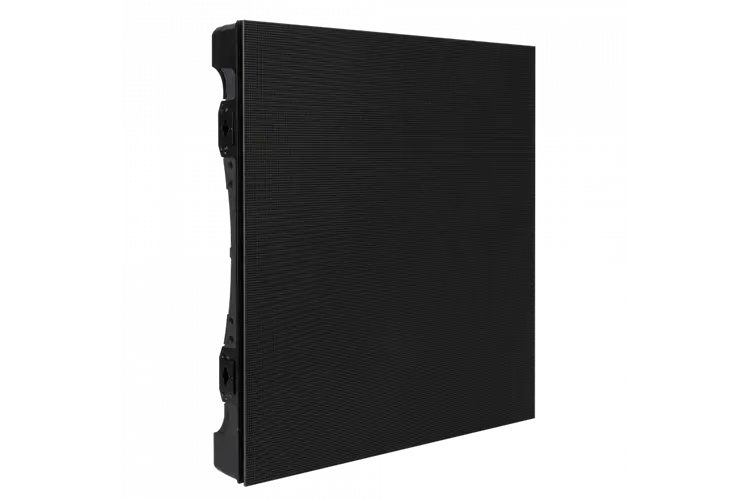
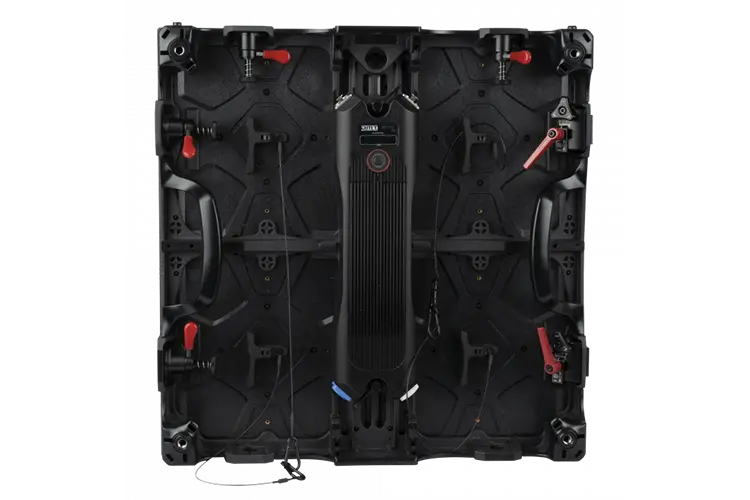
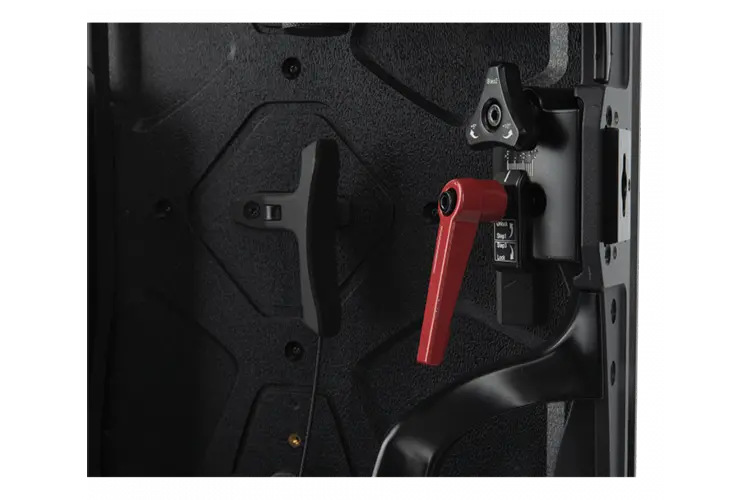
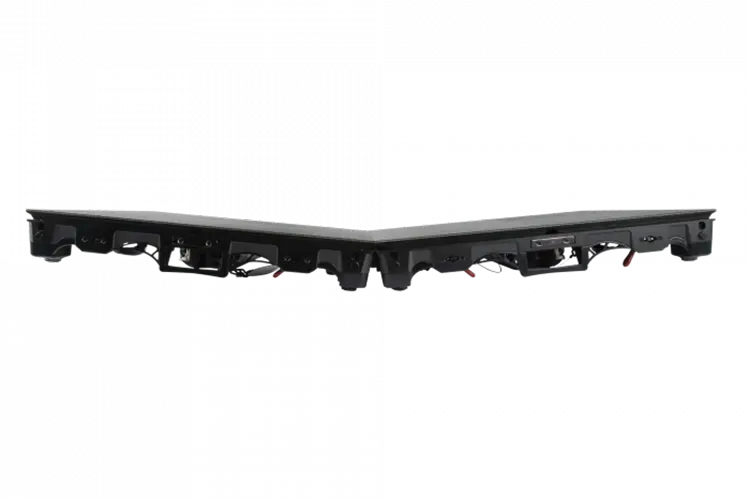
Each DMT Alpha series LED screen measures 50 x 50 cm and comes in a lightweight cabinet that features an innovative quick-lock system for fast and easy mechanical interconnections. The cabinets also allow angled connections between -5 and +10 degrees so that curved LED walls can be easily constructed. Built-in NovaStar receiver cards ensure flawless operation. The panels all offer front and rear access for easy servicing, while secure hanging and stacking can be easily achieved with one of the dedicated rigging bars.
The interview below with LED screen expert Tom Quicken delves into some practical and technical details about LED screens and provides further information about DMT’s Alpha series.
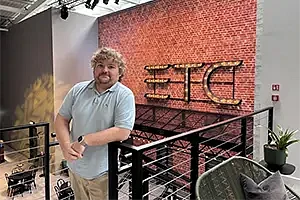
Tom Quicken is Highlite's DMT Product Expert and as such knows the ins and outs of LED screens. He monitors and responds to market developments and advises on product selection. He assists customers with their set-up, organises and delivers training and troubleshoots all LED screen related issues.
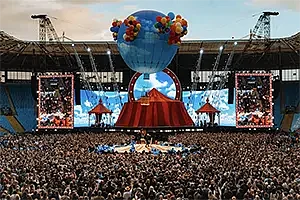
In the 12 years I have been working with LED screens, I have seen the evolution up close. It started with very large pixel pitches, while today's pixel pitches are getting very small, less than 1 mm. I am a lighting engineer and in my career I have worked on everything from small, private setups to productions with large setups of 500 to 1,000 LED panels used in places like the Amsterdam Arena in the Netherlands. I once worked for a video company that was active in the rental business. This was at a time before commercial LED pixel screens were available, although they were on their way. But in those days we made them ourselves. We were the first to design and build a large interactive LED screen dancefloor, which was used at the 2014 Eurovision Song Festival. For me, the challenge is often to create a good quality screen with a good price/quality ratio. The quality of the LEDs used in LED screens is improving all the time, and the processors that drive the screens are getting better and better, with each new generation offering improved functionality and ease of use, as well as lower prices. All of this is making LED screen technology increasingly accessible to a wider audience.
 |
 |
Your work puts you at the forefront of market developments. Can you give us some insight into the current trends in LED screens?
As with any trend in electronics, as the technology improves, so does the demand for what it can do. The biggest developments have been in increasing screen resolution, or a denser pixel pitch. In recent years I've seen a sharp increase in the use of affordable indoor screens for the two major deployment fields, (permanent) installation and rental applications. To meet this demand, Highlite commissioned me to find the best balance between price and quality. The result is the DMT Alpha series, which offers the most popular pixel densities of the moment, 3.9 and, 2.6 mm, and the recently added 1.9 mm per pixel.
As an industry professional, what challenges have you encountered when setting up LED screens in different environments?
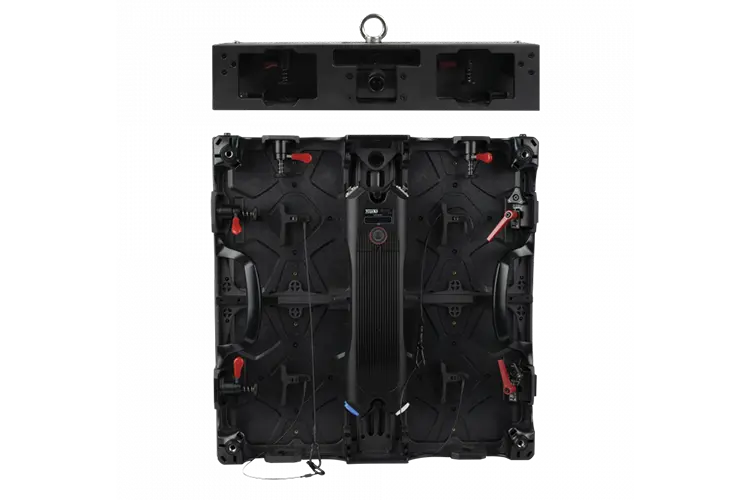
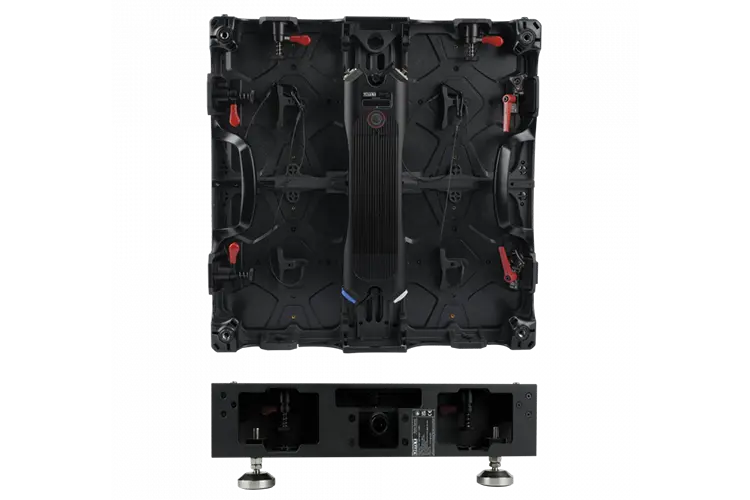
Let me start with a very practical example. For hanging an LED screen, rigging bars are usually the best solution. But very often the truss braces are right where you want to hang the bar and in the way of the hanging eye bolt. To mitigate this, rigging bars can be designed with sliding and adjustable eye bolts. This is exactly how DMT’s rigging bars for the Alpha series are designed.
Another challenge and request from the field is the ability to create a curved screen, for example a circular screen on an event stand. To this end, the DMT Alpha series can be set up with a horizontal angle of -5 to up to +10 degrees.
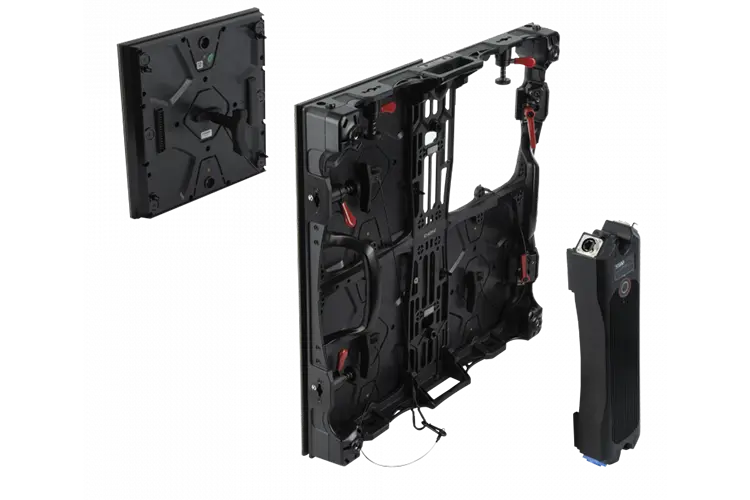 In a permanent installation, mounting and servicing the screen can be a challenge. Since the DMT Alpha series is fully front serviceable, the LED modules and power supply can be (re)mounted from the front of the screen. This allows users to mount the screen very close to the wall. The four M10 threads on the back of the screen are there to make mounting easy in these situations.
One last example: Sometimes it is not possible to hang the entire screen on site. In these cases, the screen must be stacked on the floor. As well as being a hanging bar, the Alpha series rigging bars can also be used as a stacking bar. Its two feet are threaded so that their length can be conveniently adjusted to level the bar or compensate for uneven floors.
When it comes to creating and managing content for LED screens, what best practices do you recommend to ensure a seamless and compelling visual experience?
When creating content for an installation, I would recommend doing it pixel to pixel simply because it gives the best results. Why is that? Although a controller may have a scaling function, if your source material is full HD but your screen is only 500 pixels wide, for example, the controller will rescale the image to fit the screen. This doesn't always look good. If your content resolution matches your screen resolution, no scaling is required and any image degradation is avoided.
 |
 |
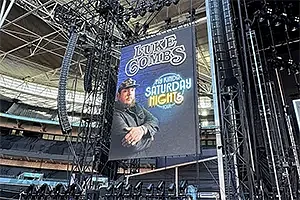
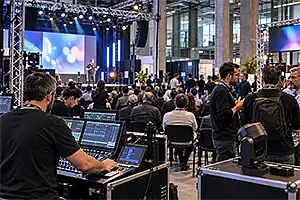
In rental situations, a media server from a brand such as Resolume or Arkaos is often used. This server converts the content to the correct resolution, which is often not the same resolution as the LED screen. Consider a live situation where there is a large central screen and several smaller screens to the left and right of the stage; you may want to project the visuals on all the screens at once, and then a moment later you may want to project the content in full on the central screen only. Pixel-to-pixel content is less practical in this situation.
In your experience, how do LED screens contribute to creating immersive and visually stunning displays in different applications?
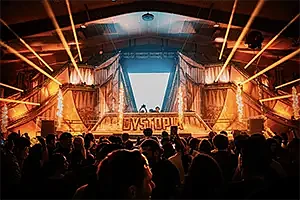
LED screens are very versatile in terms of what can be displayed. Basically, anything is possible. Whatever the application, a good image quality will always result in a more immersive experience. What really improves the quality in situations where there is a lot of light hitting the screen are full black LEDs, for example when a screen is used as a backdrop on a stage and the front lights are not only hitting the talent but also the LED screen. This type of screen provides much better contrast because it doesn't reflect light as much as an LED screen with white LEDs.
Can you give us an example of a project where the DMT Alpha series played a crucial role and what were the key factors that contributed to its success?
Probably the majority of LED panels are used by rental companies, so they are used in a variety of applications. But a good example of a permanent installation would be the installation of 60 DMT Alpha series A3.9i - Indoor LED panels at an event venue called The Hangar at Milsom’s Kesgrave Hall near Ipswich, where the screen has a prominent position as a 15m2 backdrop on the stage.
How do manufacturers try to produce future-proof LED panels as the technology continues to evolve?
A manufacturer could choose a single platform and make all panels compatible with it. This way, different pixel-pitched LED panels can make use of the same frame and users don’t have to invest in new hardware every time a new LED panel is introduced, which makes it economically attractive. Secondly, as the pixel density of the panels increases, the need for processing power may also increase. So an LED panel with an easily upgradeable processing card is beneficial for future-proofing LED panels. Finally, better image processing with higher colour bit depth may become available. Existing LED panels could benefit from this better image processing and offer improved visual quality after a processing upgrade.
From your perspective, what role does the DMT Alpha series play in creating memorable brand experiences for companies and organisations?
It offers a reliable solution with high resolution and good image quality at an affordable price. That's what most applications are looking for.
Are there any common misconceptions about LED screens that you often come across and how do you address them in your professional interactions?
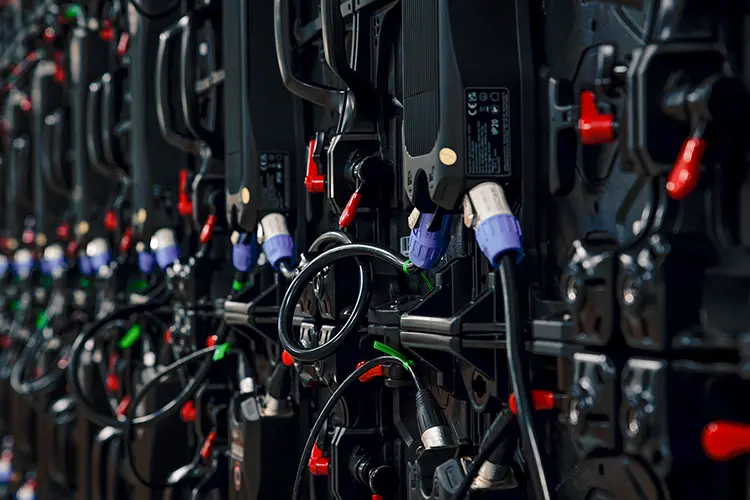
I often see that people tend to only look at the resolution and the price when choosing an LED screen, but this does not tell you enough about the quality. It is often much more important to (also) look at the type of LED used in the screen and its brand. The driver ICs, the brand of the power supply, the brand of the connectors, the technical side, so to speak, all determine the quality of the LED screen, its durability, reliability and longevity.
 |
 |
For the DMT Alpha series, Highlite has chosen a reputable LED brand, reliable Novastar receiver cards and sturdy Seetronic connectors to provide a reliable quality LED screen.
Are those the greatest strengths of the DMT Alpha series that enhance the user experience?
In my opinion, the quality and contrast of the screen has the biggest impact on the user experience. I would say that using black LEDs instead of white has the biggest impact on image quality, followed by the image processing.
Looking ahead, what do you see as the future of LED screen technology and how does the DMT Alpha series fit into these anticipated developments?
In the future, I expect to see screens with different LED technologies and ultra-high resolutions. At the moment, almost all LED screens use single SMD LEDs, just like the DMT Alpha series. This may change for technologies that allow for higher resolutions, such as COB LEDs, but these still have some major drawbacks that need to be worked out. So for the near future, the modular design based on a single platform that can be upgraded as required is the strength of the DMT Alpha series. And using the same platform across the range is ideal for rental companies as they only need to invest in one type of rigging system that will be compatible with future additions to the series.