Astera showcased a full range of its powerful and flexible wireless LED lighting solutions on stand B30 in Hall 12.1 at the 2024 Prolight+Sound expo, including the award-winning PlutoFresnel and LeoFresnel fixtures and the new ProjectionLens for PlutoFresnel.
The slick and contemporary stand design enabled sales director Sebastian Buckle and the team to welcome visitors and highlight numerous current Astera innovations like the HydraPanel, PixelBrick, AX9 PowerPAR and AX2 PixelBar, the smart and neat NYX Bulb and, naturally, the flagship TitanTube family – Titan, Helios, and Hyperion – which were popular and ubiquitous in show and event lighting worldwide.
It was important for Astera to have a significant presence at PL+S which was always a busy and productive show and a crucial platform for engaging with industry professionals from many sectors on multiple levels. As well as for networking, it was also seen as a key forum for staying abreast of trends and general innovations in the worlds of professional lighting and visual technology.
As a major European trade show, it attracted players and influencers from rental and staging markets, and having a strong brand presence meant making new connections, building on existing ones and seeking out potential clients and partners.
With that in mind, targeted product demonstrations highlighted the versatility, performance, and invention for which the brand was known, and the show was also a great opportunity to gather valuable industry feedback from experts and end-users that could be fed into ongoing product development and planning.
The Astera booth featured eye-catching 4-sided LED screens at the top. The space was subtly expanded with more room for products, while the overall style was consistent with other Astera booth designs. The HydraPanel Flexi Series was incorporated on the back wall.
Astera Fresnels
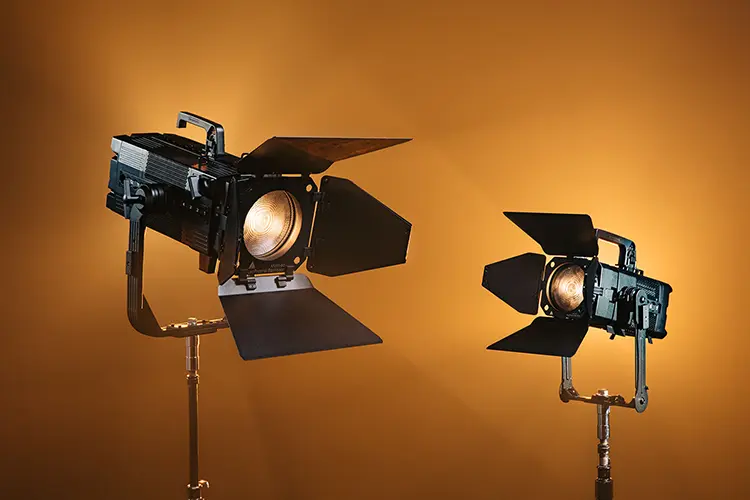
The two Astera Fresnels currently available were both launched in the last 12 months. The PlutoFresnel was for medium to small spaces and applications and the larger LeoFresnel was a cable-free LED alternative to the classic 1K fresnel, and ideal for scenarios needing more power and punch!
These were the first battery powered fresnel lighting fixtures developed by Astera, and came with a complete package of barn doors, a full yoke with TVMP adapter for stand mounting, removable handle and several other super-useful accessories – as you would expect with an Astera product.
Designed under the mantra Fresnels Made Portable, the PlutoFresnel weighed just 4.6kg and could be easily transported and installed in a range of contexts that would be more challenging for conventional tungsten fresnels. PlutoFresnel offered a 15° to 60° beam angle without any colour fringing, both wired and wireless DMX control and an inbuilt battery with up to 3 hours run time.
The full spectrum high rendition Titan LED engine provided an impressive output comparable to a traditional 300W Tungsten fresnel, with power consumption of less than 80W, and the fixture weighed a tidy 4.5kg, ideal for small and less accessible spaces. The removable handle, foldable legs and YokeBases made mounting and adjustment straightforward while enhancing creativity and productivity!
The larger LeoFresnel while comparable in light output to a standard 1K Tungsten lamp, actually had an even higher lumen value than this industry benchmark when running in 6500K daylight white!
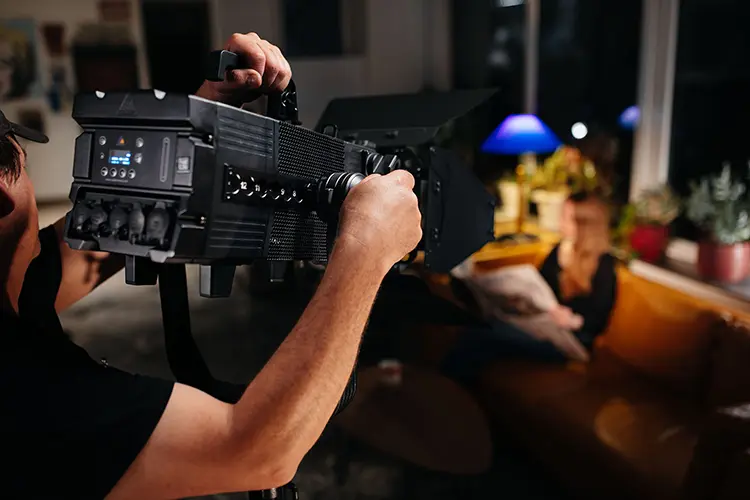
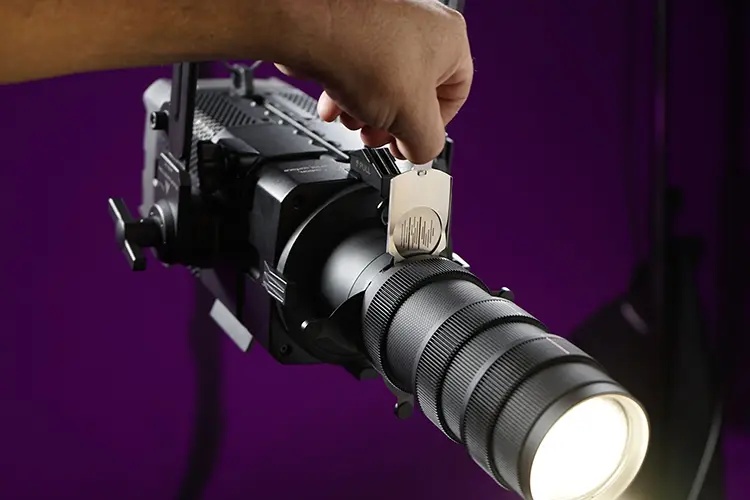
Last month, Astera launched a ProjectionLens for the PlutoFresnel, with precision optics, 16° to 36° manual zoom, accurate shutters for highlighting specific areas, plus gobos, all adding to the value and multifunctionality of the Astera Fresnel.
The ProjectionLens was quickly installed by being slid in/out of the luminaire. Zoom was simply adjusted by twisting the lens barrel – like a camera zoom lens – and two focus wheels assisted in producing sharp, clear gobo projection at any distance, one for a standard focus and the other for close proximity work.
The E-Sized gobo holder meant that projection of shapes, breakups and other effects and custom logos/gobos were seamless and eye-catching, with the projected beam or gobo image aligned and focused by rotating and tilting the lens barrel.