

In the field of sound reinforcement for events and rental applications, advanced control and monitoring software has become an indispensable tool for optimizing sound distribution with precision and efficiency.
These systems allow professionals to manage the design, implementation, and adjustment of audio systems in real time, offering detailed control over acoustic parameters to adapt to any environment.
Sound system design and control software integrates various modules that address each phase of the process, from acoustic simulation to dynamic coverage adjustment and live monitoring.
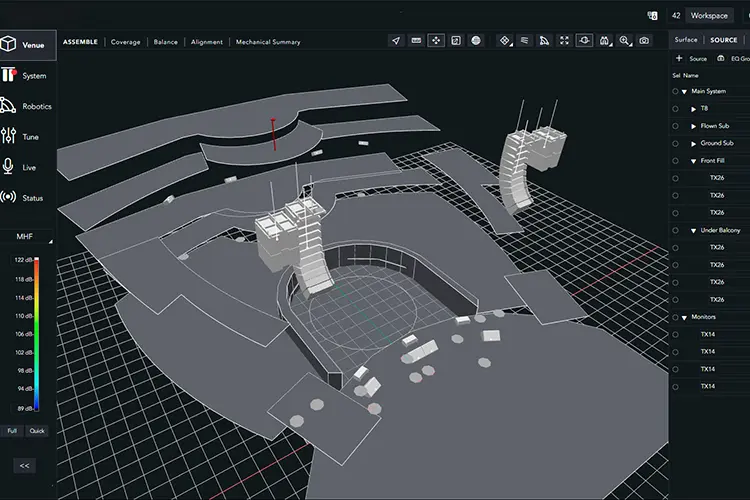
In the simulation phase of environments, the user can digitally model the workspace, calculating how the sound will behave based on the venue's characteristics, such as geometry, materials, and reflection areas. This step is critical for predicting sound dispersion and coverage before physical installation.
Next, in the system adjustment stage, the software allows users to identify and assign sound sources to their physical locations in the virtual model, aligning the projected characteristics with the actual devices. This process is supported by optimization algorithms to ensure that the systems respond consistently with the previously calculated acoustic parameters.
Coverage control, one of the pillars of these systems, allows for mechanical adjustment of sound dispersion along multiple axes (horizontal and vertical), depending on the design of the speaker enclosure, whether in line arrays or point-source systems. These dynamic adjustments provide a critical advantage: the ability to modify coverage in real time without direct physical intervention in the systems, maximizing operational efficiency, especially during events with changes in audience distribution or unforeseen acoustic conditions.
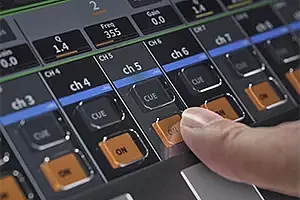
The equalization and digital processing module provides a set of DSP tools to adjust frequencies, filter resonances, apply limiters and compressors, and balance the system based on the acoustic conditions of the space. Integration with advanced DSP platforms allows the system to automatically adjust based on real-time feedback, optimizing sound quality without constant intervention from the FOH engineer.
In the real-time monitoring phase, operators can access critical system performance data, such as speaker temperature, amplifier response, and network conditions. This detailed monitoring allows issues or potential failures to be detected before they impact system performance, ensuring stable and consistent output throughout the event.
Finally, the diagnostics and maintenance module not only facilitates access to real-time data but also enables service notes and diagnostics to be recorded and stored directly on the devices, streamlining troubleshooting and preventive maintenance. This type of integration helps extend equipment lifespan and maintain high levels of operational reliability.
The architectures of these control systems are based on modern technologies, such as microservices and advanced network standards (e.g., AES70 over AVB networks), providing flexibility and scalability in implementation. These systems are continuously updated with new functionalities, ensuring that installers and operators can adapt to the changing demands of the live sound industry, including applications in large venues, massive events, and unconventional spaces.
This technical approach allows professionals not only to optimize the acoustic performance of their systems but also to reduce setup times and enhance the overall sound experience, making the most of the available technological resources.