

In recent years, stadiums have ceased to be used exclusively for sport. Today, they operate all year round and host competitions, concerts, festivals, and public or corporate events. This variety of uses has increased technical demands and made audio a key element in their design.
Around 25 years ago, the options available for providing sound reinforcement in these spaces were limited. Only a few loudspeaker systems could meet the acoustic and structural requirements of a stadium.
One of them was the Ci7 from d&b audiotechnik, a coaxial model with controlled dispersion that was installed in several of the company’s early projects. Some of those installations remain operational, although they have been supplemented with more recent equipment.
These early experiences helped establish a principle that remains relevant today: the system must meet regulatory requirements for sound pressure and intelligibility in voice evacuation applications while also addressing the needs of live events. To achieve this, the design must consider the loudspeakers, amplification, digital processing, and control systems as a whole.
 |
 |
One system for different uses
A modern stadium needs to deliver clear safety messages while also reproducing music and other content associated with the venue’s programme. In some cases, both functions must coexist during the same event day.
These needs are accompanied by requirements established by organisations such as UEFA and FIFA regarding intelligibility, coverage consistency, and reliability. Meeting them can be challenging in large, open or semi-covered venues with high levels of ambient noise, reflective surfaces, and exposure to adverse weather conditions.
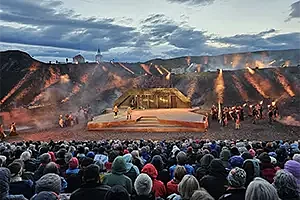
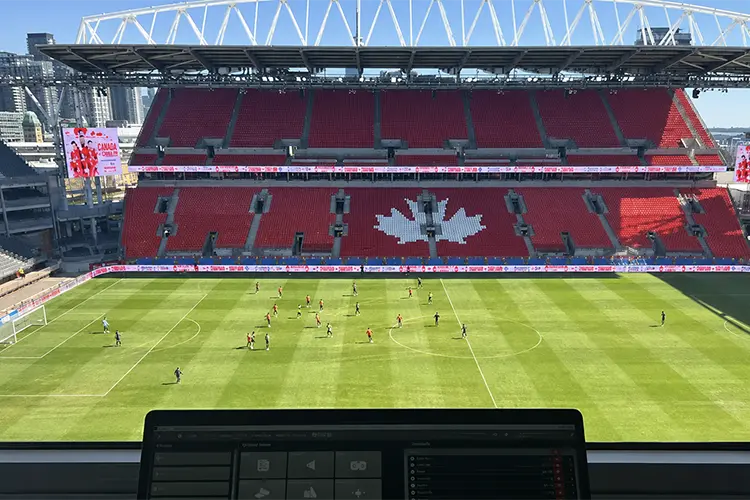
The schedule of venues such as Wembley Stadium reflects this diversity. The same venue may host a football match, a concert, and a public event within a few days. As a result, the traditional approach of separating public address systems from those intended for music reproduction is giving way to integrated installations.
The aim is to provide a permanent system capable of adapting to different configurations while delivering both suitable music reproduction and good speech intelligibility. This integration also simplifies technical management and maintains more consistent coverage across different events.
Controlling sound distribution
The diversification of stadiums presents another challenge: controlling sound propagation, particularly when venues are located near residential areas.
Sound pressure remains important, but it must be accompanied by precise coverage control. The goal is not simply to achieve a particular level, but to direct acoustic energy towards the audience areas while reducing it on the playing field, roofs, reflective structures, and outside the venue.
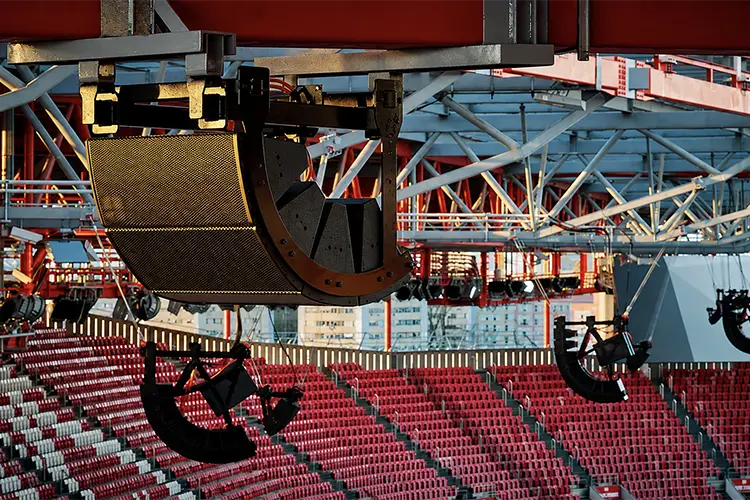
Directivity control across a wide frequency range and cardioid behaviour at low frequencies help limit this dispersion. Systems such as the SL and CL Series from d&b incorporate these technologies. Large concerts often use configurations based on KSL and GSL systems, while permanent installations also employ more compact models such as XSL, CCL, or the A-Series, particularly where weight, sightline, or infrastructure restrictions apply.
The aim is to maintain similar levels of clarity and coverage throughout the different areas of the stadium, including the stands, spaces beneath the tiers, and VIP areas.
 |
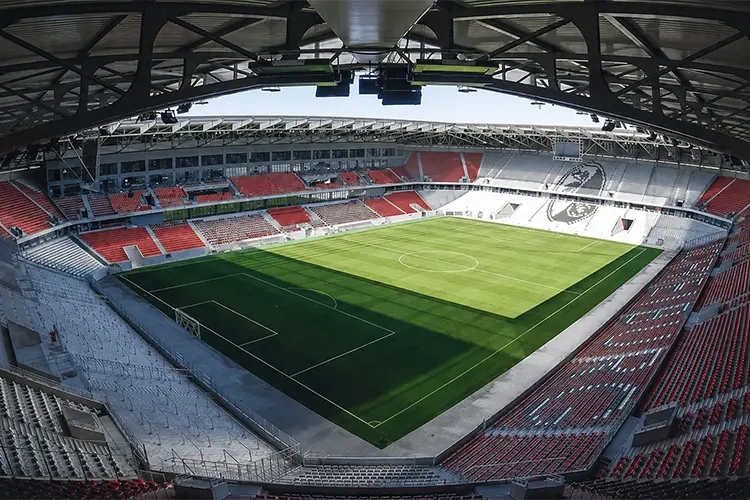 |
Prediction and processing
Design begins before installation. Acoustic simulation tools make it possible to predict system performance and verify whether it will meet the sound pressure and intelligibility targets established for each project. These predictions also provide a reference for subsequent on-site measurements.
The reliability of the simulation depends on the quality of the electroacoustic data and the level of detail in the model. Applying generic parameters is not sufficient in a stadium: its geometry, materials, audience areas, and the characteristics of the loudspeakers and amplifiers must all be considered.
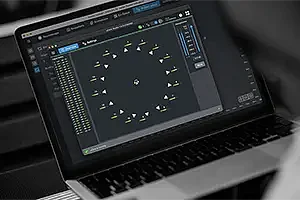
Digital processing makes it possible to adjust sound level distribution without physically changing the position of the equipment. Tools such as d&b ArrayProcessing are used to optimise array coverage and adapt system performance to different venue configurations.
This process allows the same installation to accommodate several types of event and evolve as the stadium’s requirements change.
Solutions adapted to each venue
No two stadiums are alike. Architectural and structural limitations, operational requirements, or the preservation of historic features may prevent the use of standard configurations.
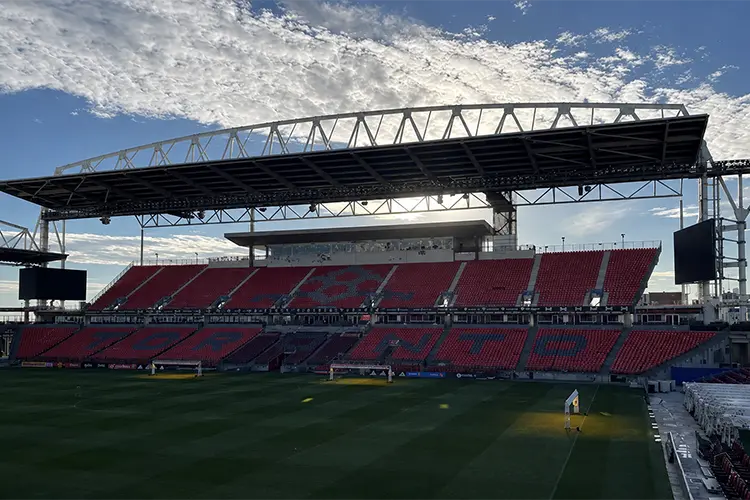
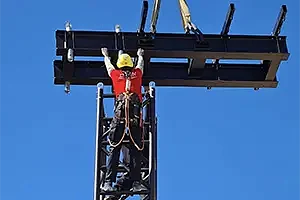
In these cases, specific solutions are developed in collaboration with consultants, integrators, and venue operators. These adaptations may include weather protection, custom mounting and rigging systems, mechanisms that simplify maintenance, or modifications that allow the loudspeakers to be integrated into the architecture.
Safety as a permanent requirement
Although concerts and competitions are temporary, public information and voice alarm systems must remain available at all times.
Communication must be clear during both normal operation and emergencies. The design must therefore include redundancy, zoning, message prioritisation, and emergency preparedness protocols.
Standards such as EN 54 and EN 50849 establish requirements for equipment and systems. However, reliability depends not only on the components used, but also on how the system is designed, integrated, verified, and maintained.
Coordination between professionals
Stadium audio is closely connected to architecture, structural design, safety, and operational management. Its planning therefore requires collaboration between engineers, acoustic consultants, integrators, and venue operators.
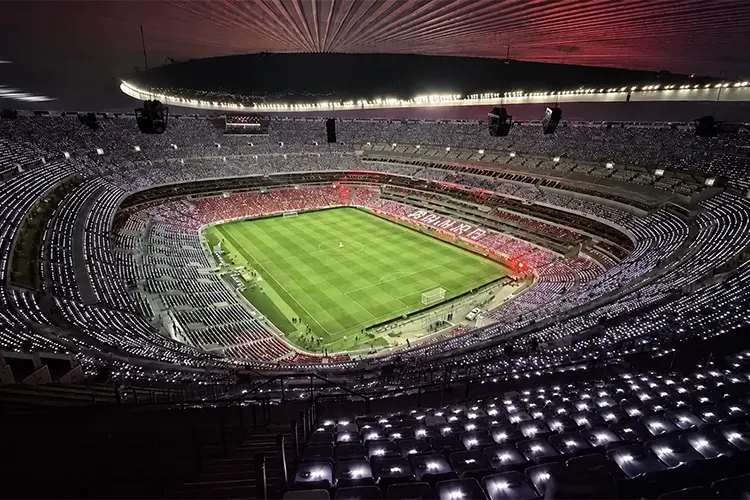
Joint work should begin during the early stages of the project, with simulation and the definition of objectives, and continue throughout installation, configuration, and system commissioning.
Stadiums prepared for new uses
The evolution of stadiums also requires a reassessment of the role of audio. The objective is no longer simply to achieve high sound pressure levels, but to provide clarity, consistency, and control in different situations. The ability to adapt to competitions, concerts, institutional events, and emergencies has become an essential requirement for the systems installed in these venues.
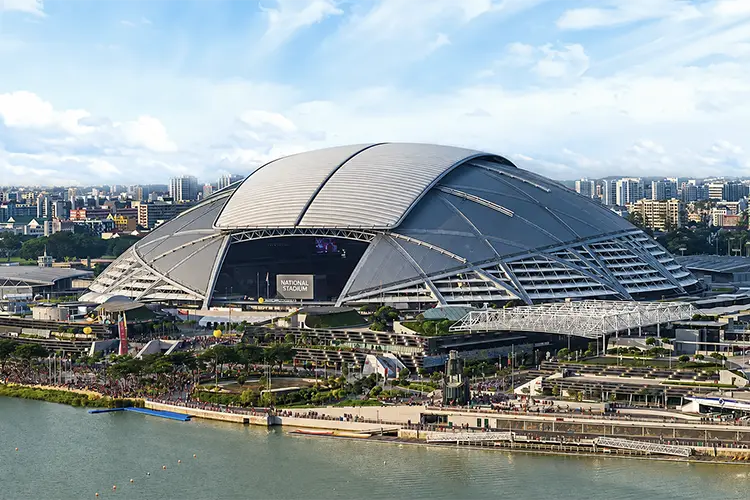
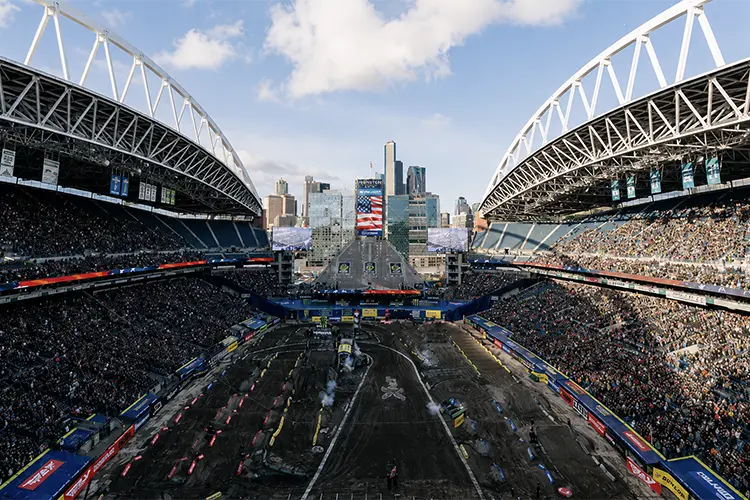
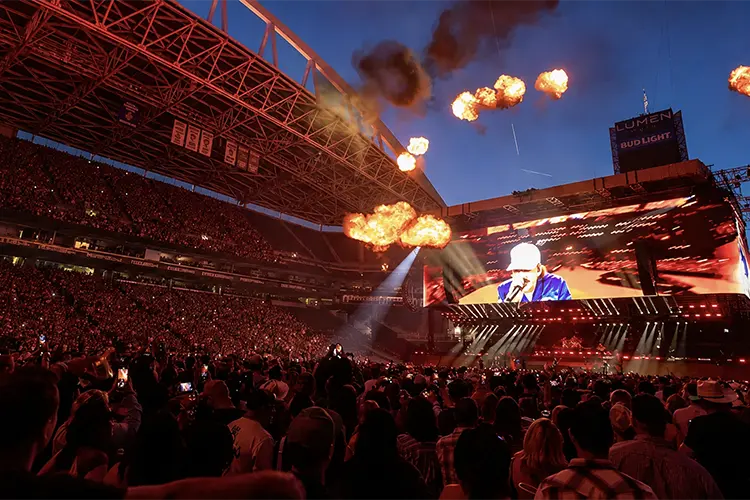
d&b audiotechnik has been involved in projects of different sizes, including Estádio da Luz in Lisbon, Lumen Field in Seattle, and Singapore National Stadium.