
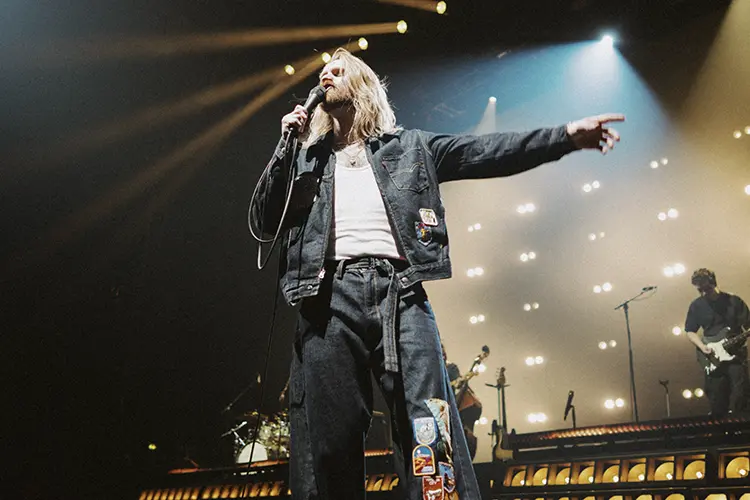
When British singer-songwriter Sam Ryder embarked on his Road to Wembley tour in October 2025, the journey took him from the intimate corners of small clubs to the iconic scale of Wembley Arena, fulfilling a lifelong dream.
For monitor engineer Jamie Hickey, the tour represented a unique opportunity to put Sennheiser’s Spectera wideband wireless ecosystem to the test in the most demanding and diverse environments imaginable. The result? A resounding validation of the system’s versatility, reliability and sonic excellence at every venue on the tour.
From Eurovision to Wembley
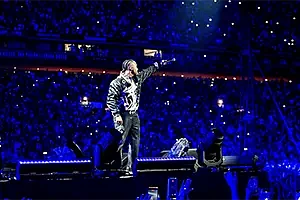
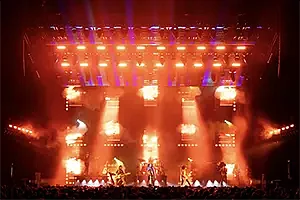
Sam Ryder won over audiences across Europe with his second-place finish at Eurovision 2022, delivering the UK its best result in decades. Since then, the TikTok-born phenomenon turned mainstream success has continued to build a loyal following thanks to his powerful voice and authentic stage presence. Road to Wembley coincided with the release of his second album, Heartland, launched on October 17, 2025. The tour was conceived as a series of intimate shows leading up to a much larger performance at OVO Arena Wembley on November 6.
Ryder personally selected venues with strong sentimental value from his early career, including The Cavern Club in Liverpool, Cavern in Exeter, Clwb Ifor Bach in Cardiff and King Tut’s Wah Wah Hut in Glasgow. Each venue hosted both a matinee and an evening show, creating an intensive schedule.
A natural progression
Jamie Hickey, one half of the duo behind Production & Touring Ltd, brought 20 years of experience as a monitor engineer to his first tour with Sam Ryder. "It’s something I’ve always loved. What I enjoy is the challenge of getting into someone’s head and trying to understand what they want", says Hickey about his work.
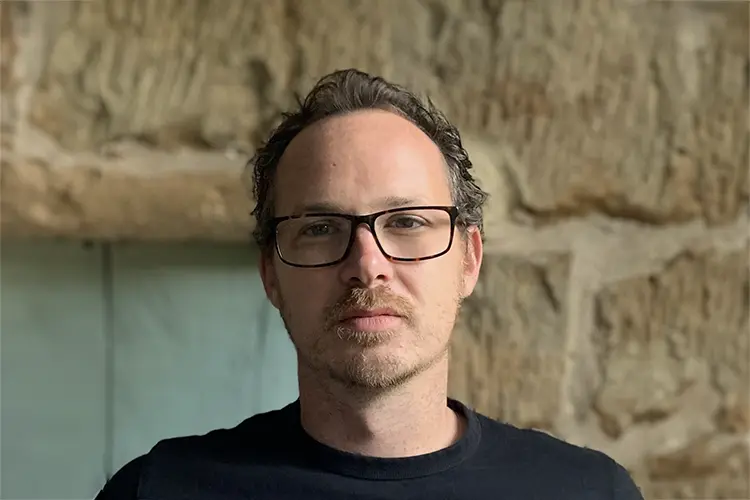
Hickey’s business partner, Mike Taylor, who served as Production Manager, was the driving force behind the decision to take Spectera out on the Road to Wembley tour.
As a long-time Sennheiser user with experience on the 2000 Series IEM systems and evolution G4 wireless, Hickey was eagerly anticipating the arrival of Spectera.
It was a natural progression to move to Spectera as soon as it became available. I arranged with Peter Craig (Sennheiser Relations Management) to be part of the Spectera Pioneer Program and take it out on the road to start using it. Not only in the obvious environments—the big arena shows—but to see how it performed under the spotlights of a small venue. And this Sam Ryder tour was the ideal scenario, because it culminated at Wembley, but the lead-up consisted of lots of small shows in 300-capacity venues, using the same equipment as for the arena, he explains.
For Hickey, the technical advantages of the system were evident from the very beginning. "The first thing you notice when using Spectera is the complete absence of background hiss; the traditional noise floor is a thing of the past", he explains. "As soon as you start passing audio through the system, you can’t help but be impressed by the frequency response and stereo image. There is so much space. Reverbs, keyboards and stereo guitar patches come alive in a way that was previously impossible in live monitoring. It’s true stereo in IEMs for the first time, and it sounds really good".
Small venues, big challenges
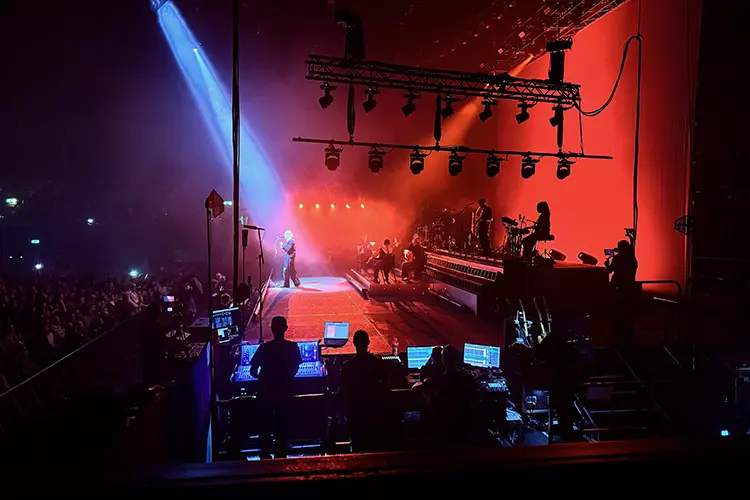
In total, the tour deployed one Spectera Base Station, four DAD antennas operating on two 8 MHz TV channels, and 18 SEK bodypacks—a compact setup that proved extraordinarily powerful across very different performance spaces. The system was complemented by a range of Sennheiser microphones including SKM 6000 handheld transmitters, MD 421 Kompakt, e 904, e 935 and MKH 416.
Smaller venues present specific challenges that often go unnoticed in modern, purpose-built facilities. "There isn’t always a stage wing where you can place your monitor desk and all your equipment", explains Hickey. "You have to squeeze things around corners, under archways, through brickwork and old structures. I love the idea of having technology that is so powerful, so reliable and sounds so good that it doesn’t have to be reserved only for big flagship events—although it obviously performs incredibly well there too".
This philosophy—testing Spectera in the day-to-day reality of working venues rather than just in showcase environments—provided valuable real-world validation of the system’s capabilities.
Reaching Wembley Arena
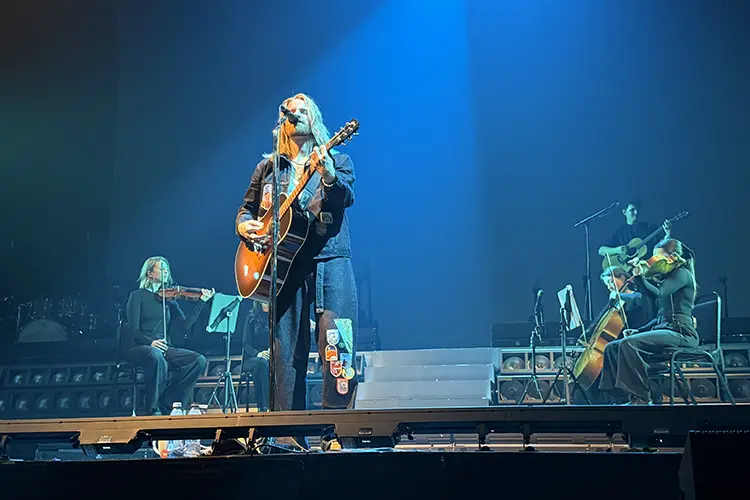
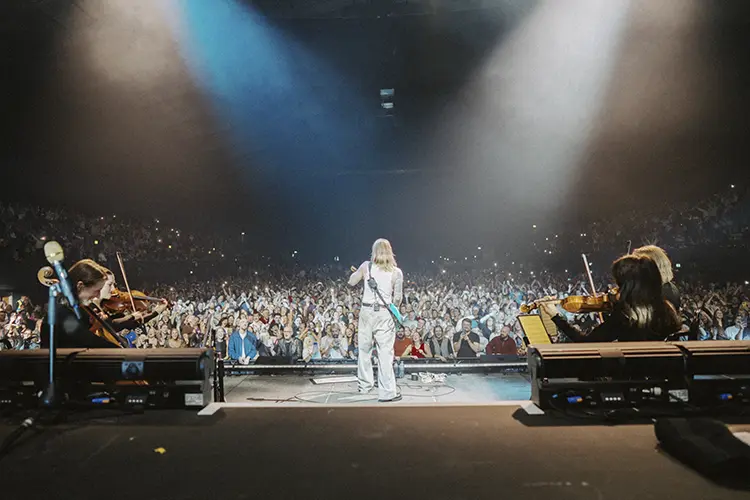
By the time the tour reached Wembley Arena, Hickey was managing 13 stereo IEM mixes—with six bodypacks also used as transmitters—for nine musicians, one production manager, one playback technician, plus a management mix and a guest mix.
It was a very demanding test in terms of capacity. I was worried that I wouldn’t be able to manage all the mixes within a single unit, and also about potentially running out of DSP. However, the system performed perfectly: it was running at full capacity, but still with room to spare. Wembley represented a complete deployment of the system, recalls Hickey.
The Wembley performance also highlighted Spectera’s extraordinary coverage capabilities, surprising even a seasoned engineer like Hickey. "It’s the best coverage I’ve ever heard in my life, from any system, anywhere", he states. "Wembley Arena is a somewhat older building, and the dressing rooms are buried in concrete. I was able to line-check the four-piece string section while they were in their dressing room, about 80 metres away. It blew my mind".
One ecosystem, infinite possibilities
 The bidirectional capability of Spectera—which allows each SEK bodypack to handle microphone transmission and in-ear monitor reception simultaneously—proved transformative for the production. "This changes the game", says Hickey. "We have a single ecosystem for microphones and in-ears. It’s one unit. That’s crazy. And the latency is usable. The flexibility to move from 0.7 to 2.7, to manage your DSP and available RF spectrum… it’s impressive".
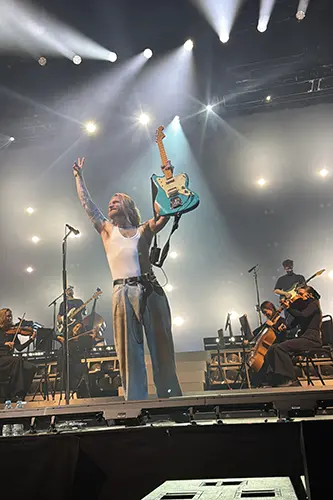
This flexibility was put to the test during a particularly emotional moment at Wembley, when Kelvin Pratt, Sam Ryder’s childhood guitar teacher, joined him on stage to play a solo on the song Go Steady. Pratt’s bodypack was configured in transceive mode: his guitar signal was sent to the line system via Dante, passed through his Kemper Profiling Amp, and returned to the line system, all using Spectera’s ultra-low latency mode.
Hickey admits he was initially concerned about the number of paths the signal had to travel through. "It wasn’t a problem. Not an issue at all", he confirms. "A complete paradigm shift. The Dante implementation is fantastic and a very valuable addition on the I/O side".
Instant buy-in from musicians
The response from Sam Ryder’s band and musicians was positive from the very first moment they tried the system.
They were excited. Most musicians are geeks at heart, and they were immediately very interested. Just the feel and the look already say, ‘this is new’. If a product doesn’t deliver a wow factor or a noticeable change, nobody bothers to think about it. But with Spectera, the sonic character and the way it delivers audio were evident even to the least interested person, recalls Hickey.
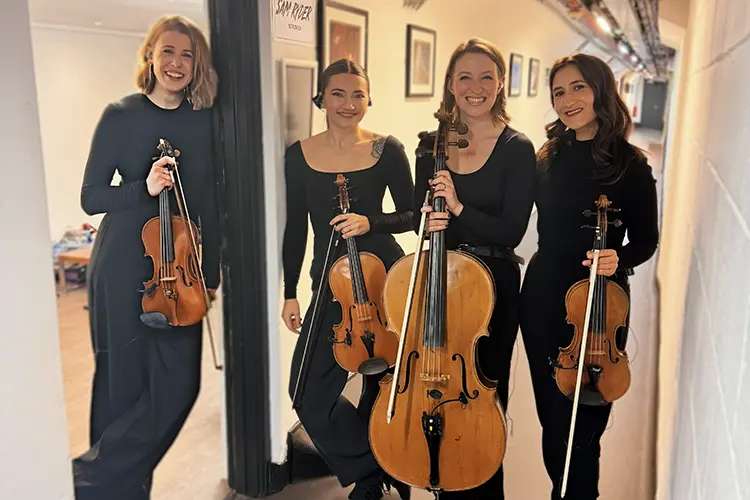
The string section—the players of the most traditional instruments in the ensemble—noticed it most. "The string players were on board straight away", notes Hickey. "One of the comments I received was that they could hear everything with absolute clarity. Although they were initially a bit intimidated about playing at Wembley, the experience was very positive. The system worked so well that the technology stopped being a novelty very quickly, because it was perfectly integrated".
Sennheiser’s support throughout the deployment was key to the success of the tour, demonstrating the value of strong industry partnerships. Hickey thanks Peter Craig from Sennheiser Relationship Management for facilitating his participation in the Pioneer Program and preparing the system for the tour.
"Peter has been fantastic throughout this process. That kind of support makes all the difference when you’re trying something new", says Hickey. Hickey also worked with Marcus Blight, Technical Application Engineer at Sennheiser, who provided crucial technical guidance throughout the tour. "I had questions about RF coverage and implementation, and Marcus was very approachable", comments Hickey. "He responded very quickly and provided really detailed information. He was fully involved. The support from Sennheiser has been excellent".
A total revolution
Looking back on the tour, Hickey’s enthusiasm for Spectera is unequivocal.
We had no problem putting it through its paces, working on either a single RF channel or two. We’ve used it with Dante and with MADI. And it can only get better, based on the conversations we’ve had at Decibel Dialogues. There’s a huge amount of work going on behind the scenes, and I can’t wait to use it more on all kinds of productions. It really is, in the truest sense of the word, a total revolution.
Photo credits: Jack Robinson