



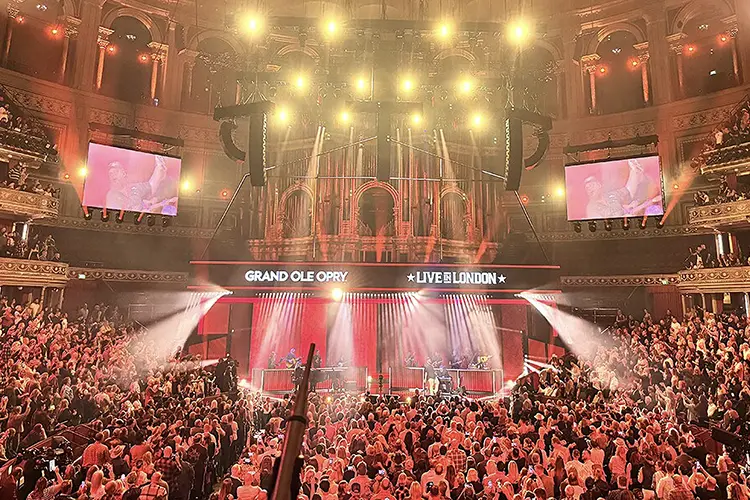
When the Grand Ole Opry decided to celebrate its centennial by crossing the Atlantic for the first time, expectations were high. Royal Albert Hall —a venue with its own deep and historic legacy— would host Nashville’s most iconic institution for a one-night-only event that fused tradition with global ambition.
For the more than 5,000 attendees, the night was about music and memory. For the audio team behind the scenes, it was about precision, pressure, and the pursuit of sonic authenticity.
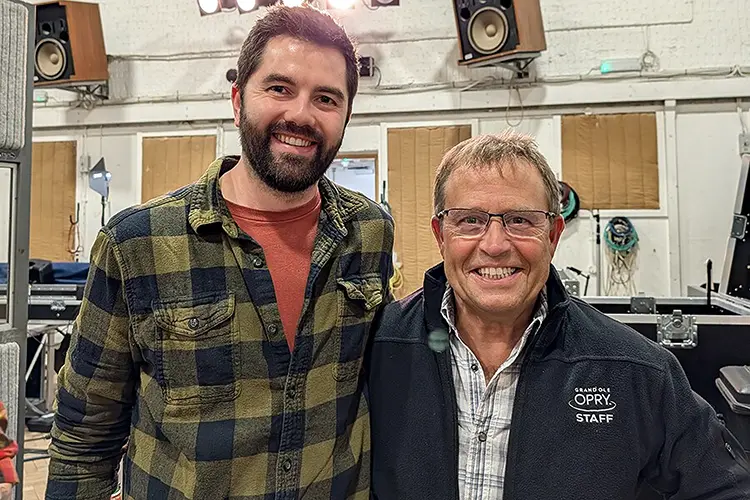
Engineers Kevin “Sarge” McGinty (FOH) and Brady Reuter (MON) took on the challenge of bringing Nashville’s unmistakable sound to London, ensuring it resonated clearly within one of the world’s most prestigious venues.
From Nashville to London: a mission of authenticity
The Opry’s centennial was not just a milestone; it was a statement of intent. “We weren’t trying to create a new sonic experience”, explains Sarge. “The goal was to bring the Opry sound —the one we deliver every night in Nashville— to London”. Every decision, from console choice to microphone selection, supported that mission.
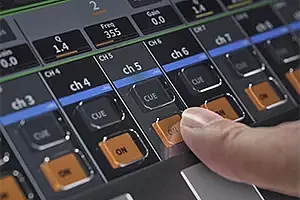
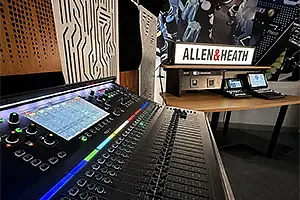
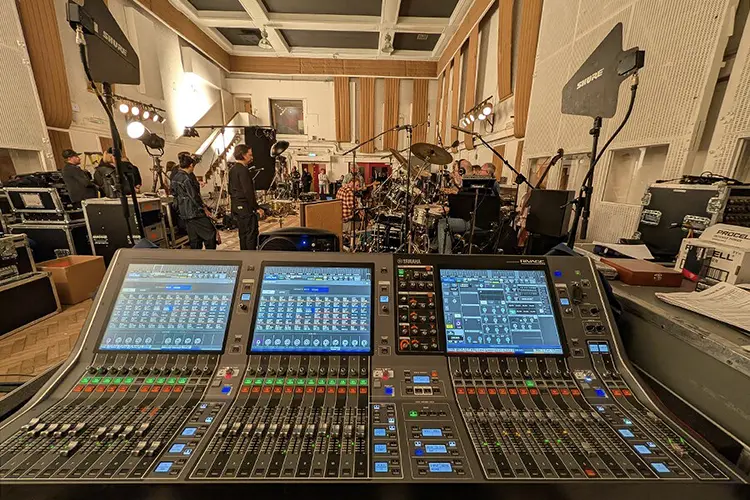
For both engineers, the Yamaha RIVAGE PM Series consoles were essential. “For me, it was a no-brainer”, says Brady. “I wanted to work on the console I use every day so I could port my files and keep everything as close to home as possible”. Sarge agrees: “If I had to build a file from scratch after landing, it wouldn’t have worked. We went straight to Abbey Road”.
The RIVAGE PM platform provided not only familiarity, but also a seamless workflow under significant time pressure. Show files were prepared in Nashville, emailed to London, and loaded onto identical consoles at Abbey Road and Royal Albert Hall before the team arrived. “Reliability was never a question”, adds Sarge. “The desk sounds great and does everything you need”. Brady also highlights Yamaha’s UK support: “They even pre-patched my outputs for Albert Hall before I walked in”.
From Abbey Road to Royal Albert Hall
Before stepping into Royal Albert Hall, the team spent three and a half days at Abbey Road Studios rehearsing with the Opry band and artists such as Luke Combs, Carly Pearce, Ashley McBryde, and Darius Rucker. For Brady, walking into Studio Two —the same room where The Beatles recorded— was a unique experience. “People talk about the thrill of stepping into the Opry circle. For me, walking into Abbey Road was that moment”.
Technically, Abbey Road offered ideal conditions: pristine acoustics, a controlled environment, and time to refine snapshots. Sarge used Nuendo Live for virtual soundchecks, building a foundation that would carry directly into the live show. “Snapshots were laid out, the event list was set, and we tweaked during rehearsals”, he recalls.
The pace between rehearsals and show day was intense: rehearsals wrapped at noon; by 2:00 PM the crew was already loading into Royal Albert Hall; and by 4:00 PM they were working with artists. Preparation proved critical. “Without that planning, it wouldn’t have been possible”, says Sarge.
Opry 100’s London debut at Royal Albert Hall
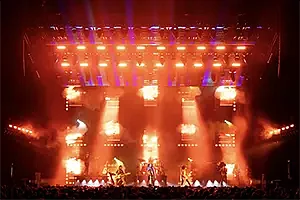
Royal Albert Hall elevated the experience even further. Moving from the precision of the studio into a historic 6,000-seat venue allowed preparation to meet iconic acoustics. With refined snapshots and a locked workflow, the team arrived ready to respect both the space and the occasion, translating the Nashville sound with precision and historical sensitivity.
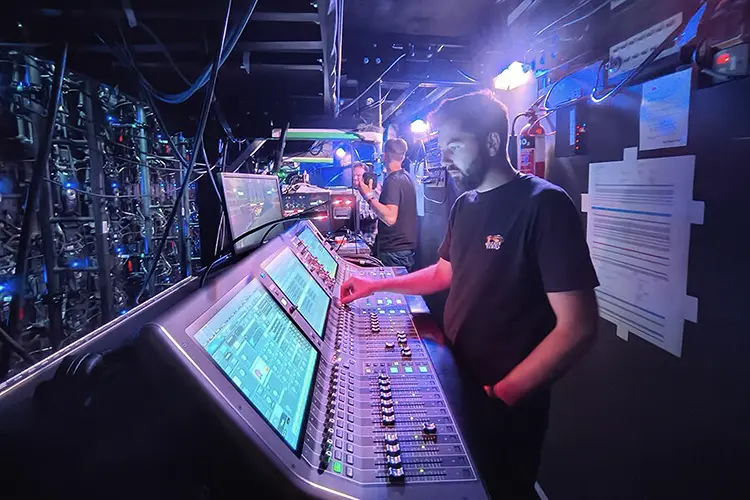
To manage the large number of artists, Brady worked from an unusual monitor position behind a video wall, without direct line of sight to the stage.
I’m used to reading body language, so this setup pushed me to rely more on communication and make adjustments on the fly, he explains.
The team established a smooth workflow: musicians communicated their needs after rehearsals, and Brady quickly adapted scenes to ensure comfort and confidence.
Gear choices: reliability over experimentation
In a high-pressure, one-off event, reliability took precedence over innovation. The engineers avoided experimenting with new or unconventional setups. The only exception came from Mumford & Sons, who opted for a single Neumann U47 FET microphone and no monitors, performing entirely off the house mix. “It worked perfectly”, says Sarge. “We’ve since added a few to the Opry”.
As for plugins, the approach was kept simple: Dynamic EQ6 and Dynamic EQ4 served as the main tools, alongside Bricasti Y7 reverbs in some cases. “I almost wish Dynamic EQ6 was a standard EQ”, Sarge jokes.
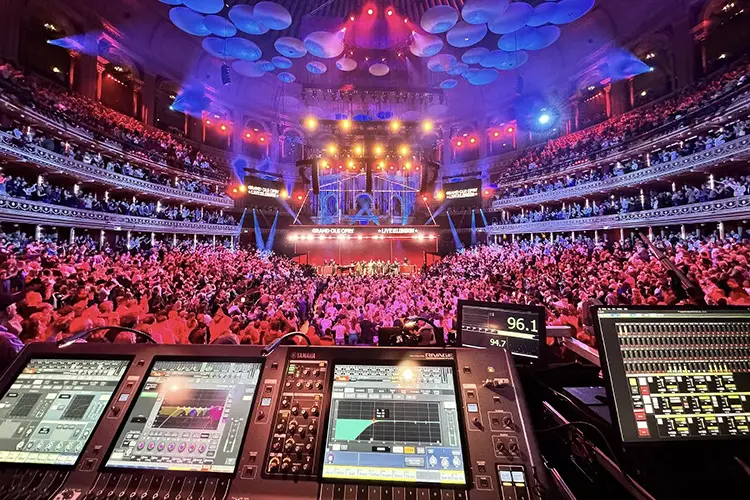
Beyond the technical aspects, the emotional weight was evident. “It was a mix of stress and excitement”, Brady admits. “You’re in another country, in legendary spaces, with last-minute changes. But then you look up and see Marty Stuart at Abbey Road, and it all makes sense”.
Workflow innovation
The success of the London debut reflects a growing trend in live production: remote preparation and file-based workflows. By pre-building show files in Nashville and transferring them digitally, the team reduced setup time. Virtual soundcheck also allowed mix adjustments without the presence of artists, a key advantage under tight schedules.
Keeping the circle: authenticity at the core
Throughout the event, authenticity remained the guiding principle. “Country music is lyric-driven”, says Sarge. “You can’t bury the vocals. Our job was to make sure London heard the Opry exactly as Nashville does”. This idea extended beyond sound into symbolism: the iconic wooden Opry circle was transported from Nashville and placed center stage.
For the engineers, the event was a career milestone. “Being able to say I worked at Abbey Road and Royal Albert Hall is incredible”, Brady notes.
A century of tradition, amplified worldwide
Opry 100 brought a century of musical tradition to London, delivering the sound and spirit of Nashville to an international audience. More than a concert, it was a statement of global reach. For audio professionals, it highlighted the importance of preparation, trust in familiar tools, and adaptability. For audiences, it confirmed that the Opry’s legacy remains intact —even across oceans.