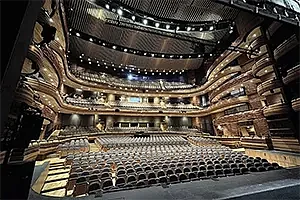



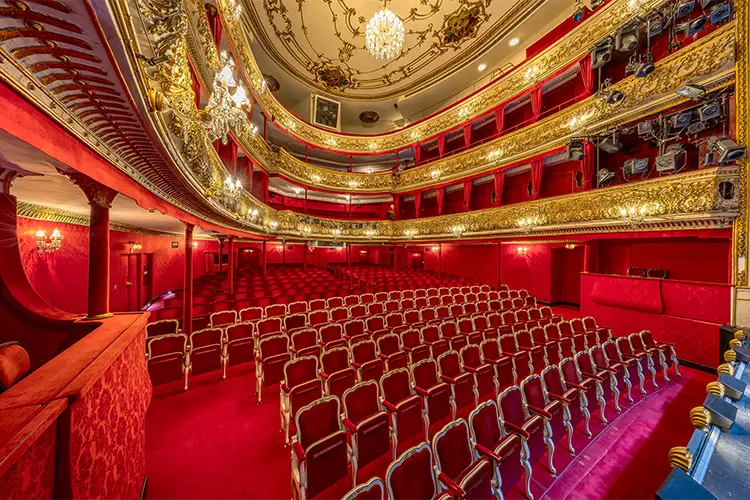
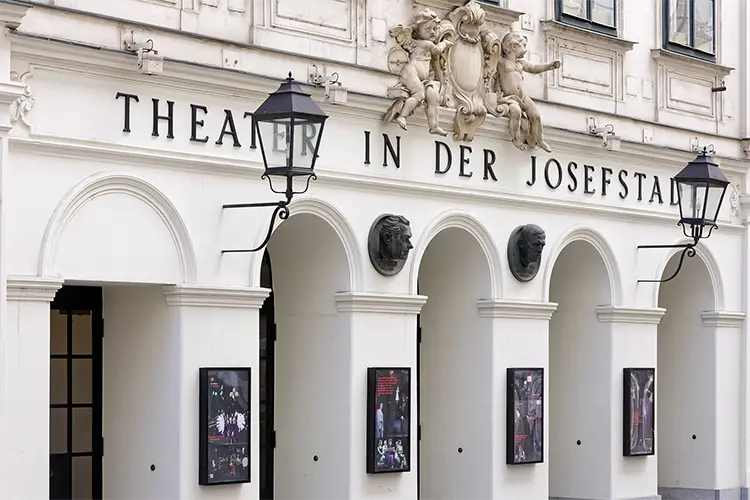
With more than 200,000 spectators and around 550 performances each season, Vienna’s Theater in der Josefstadt is one of the most successful theatres in the German-speaking world. This historic venue, located in Vienna’s 8th district, is renowned for the quality of its stage productions.
It also upholds the highest standards when it comes to audio equipment: since 2025, Sennheiser Spectera wideband wireless systems have become an essential part of the theatre’s fully digital audio workflow.
Digital wireless avant-garde
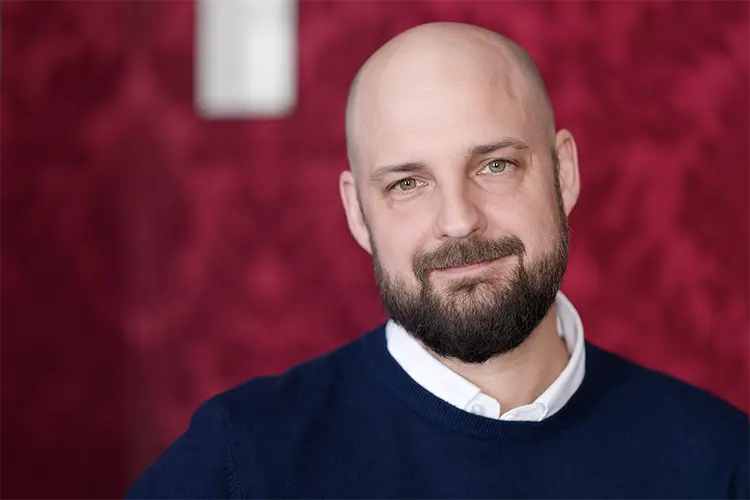
"We are the first theatre in Austria to be equipped with permanently installed Sennheiser Spectera systems", says Raimund Hornich, Head of the Sound and Multimedia Department. He has worked at the Theater in der Josefstadt since September 2023, following 14 years as Chief Sound Engineer at Vienna’s renowned Burgtheater. Together with his deputy, Thomas Haas, who has been with the theatre for 16 years, he led a comprehensive modernization of the venue’s audio infrastructure. The project was completed in just six weeks during the summer break of 2025.
 |
 |
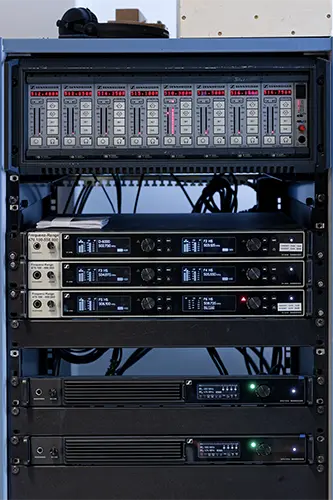
The main components of the new system include a state-of-the-art digital mixing console, high-performance loudspeakers — including a newly added centre cluster — and the innovative Sennheiser Spectera ecosystem. The system employs two Spectera Base Stations, 26 bidirectional SEK bodypacks and eight DAD antennas. Sennheiser’s groundbreaking WMAS technology is deployed in the theatre’s main auditorium, which features three balconies and seats nearly 580 people.
"The existing sound system was showing its age and urgently needed replacement", explains Hornich when recalling the international tender process that led to the upgrade.
A bidirectional revolution: transmitter-receiver bodypacks
The Theater in der Josefstadt had already benefited from Sennheiser wireless technology. We used it — and continue to use it — with excellent results. Even the receiver modules of an older EM 1046 system still perform reliably in specific applications. However, before selecting a new wireless solution, we also evaluated products from other manufacturers. In terms of features and value for money, none of them could match Sennheiser’s offering, comments Hornich.
 According to Hornich, the adoption of Spectera was also a matter of timing: "Our original plan was to expand the Sennheiser Digital 6000 system, which is also used at the Kammerspiele, a venue associated with the theatre. But then Spectera arrived at exactly the right moment for us".
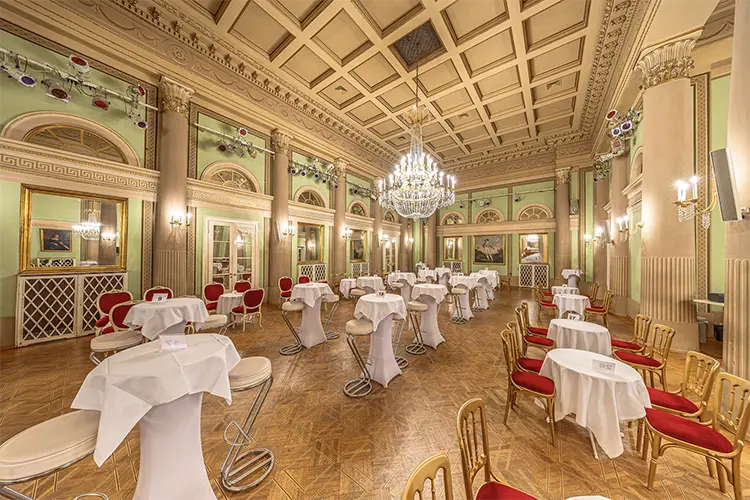
He also highlights: "It is fantastic that the SEK bodypacks can function as both transmitters and receivers. We do not always need this dual functionality, but it is a major advantage when required. The first production of the upcoming season, under our new artistic director, will be staged throughout the venue, including the adjacent Sträußelsäle halls, meaning the action will extend beyond the stage. In that context, the combination of transmitter and receiver in a single unit truly demonstrates its potential".
Complete freedom and maximum flexibility
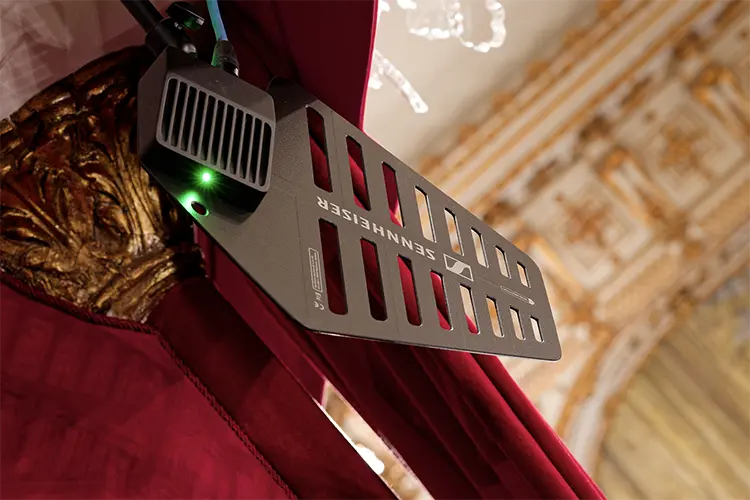
To ensure full coverage, eight Spectera DAD antennas powered via PoE over CAT cabling were installed throughout the venue. "It doesn’t matter where the performance takes place — there are no dropouts, not even in the dressing rooms," says Hornich. "If the connection is briefly lost because performers step outside before the show, the signal reconnects immediately when they return to the coverage area".
In the main auditorium, the second balcony is additionally equipped with two active Sennheiser AD 3700 directional antennas connected to three EM 6000 dual-channel receivers and an EM 1046 system with eight receiver modules. Thomas Haas explains: "We use the EM 1046 with plug-on transmitters. They can simply be attached to conventional microphones and provide 48V phantom power. It’s extremely practical, and we would like to see similar SKP plug-on transmitters added to the Spectera ecosystem in the future".
Smart management: e-ink instead of adhesive tape
Each Spectera Base Station can manage up to 64 audio links (32 inputs and 32 outputs) using up to two wideband RF channels rather than numerous narrowband RF carriers.
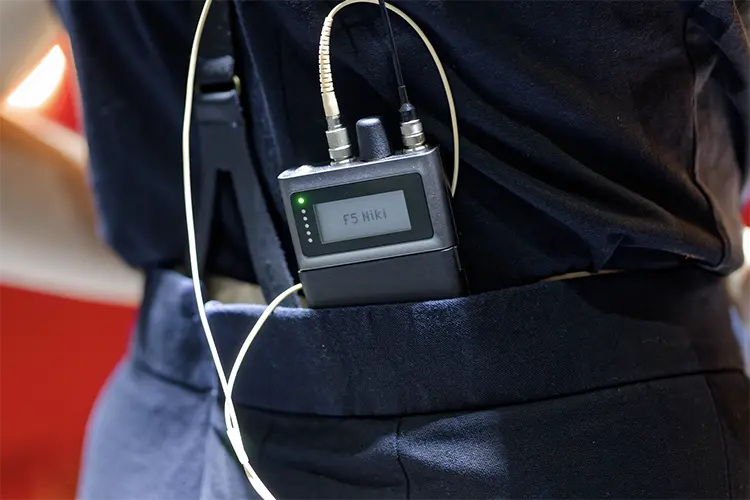
Currently, up to 24 SEK bodypacks communicate with the two Spectera Base Stations, while two additional units are kept as spares. A numbering system simplifies organization, and the bodypacks are stored in a clearly labelled wooden rack.
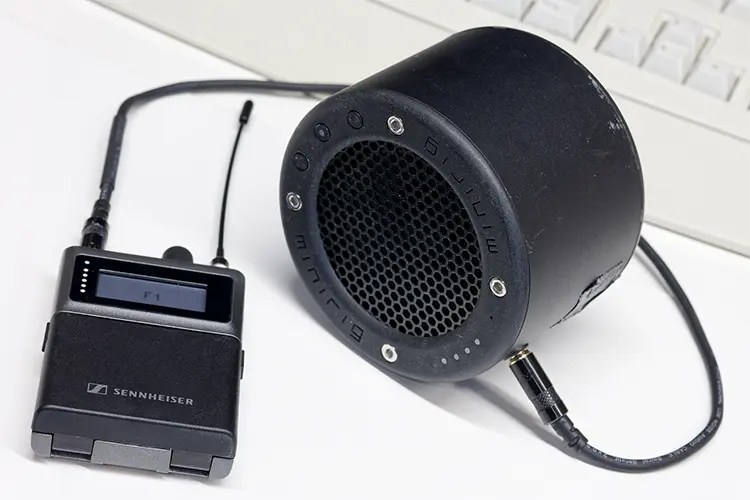
Haas praises the e-ink displays, which remain perfectly legible at all times and eliminate the need to identify units with adhesive tape. He also notes that the receiver function of the bidirectional bodypacks is used to feed audio signals to small active loudspeakers hidden within stage scenery, transforming them into invisible sound sources during certain productions.
 |
 |
Goodbye wireless stress: set it and forget it
The two Spectera Base Stations feature redundant power supplies, drawing power both directly from the mains and through a UPS system. They operate in the UHF band using 8 MHz frequency blocks centred at 474, 482 and 562 MHz. According to Hornich, the venue enjoys a relatively favourable RF environment:
Deploying wireless systems in central Vienna only becomes challenging about 700 metres away, near City Hall. We use frequency bands permanently assigned to the theatre and do not change transmission frequencies, so there is no need to scan the RF environment every day.
Reliability backed by experience
"Looking back, installing a completely new wireless system in the summer of 2025 involved a certain amount of risk", acknowledges Hornich. "But we had expert support and no real concerns, especially since Spectera had already proven itself in Austria at the Woodstock der Blasmusik festival and on ORF’s Dancing Stars television programme".
The implementation was supported by Florian Fuchs (Sennheiser), Volker Schmitt (Sennheiser Technical Application Engineering), Gerhard Vonwald (Wireless Audio Support) and systems integrator TSAMM AG, led by Mario Reithofer.
A pioneering solution for Josefstadt
One year after the installation, Hornich concludes: "Sennheiser Spectera wideband wireless systems represent a decisive step in the right direction for us. We have received numerous enquiries from partners and professional associations interested in the system".
Although he cannot directly compare the sound quality with the previous system due to the comprehensive upgrade of the theatre’s audio infrastructure, he is enthusiastic about future additions to the Spectera ecosystem, including SKM handheld transmitters and higher-capacity battery solutions.
 |
 |
Performance without compromise
After hundreds of successful performances, Hornich is fully convinced by Sennheiser’s WMAS technology:
The Spectera wideband system is absolutely reliable. Since its installation, we have experienced no unpleasant surprises. The rugged SEK bodypacks withstand the demands of daily theatre operations. After a year of use, we are extremely satisfied. The Sennheiser Spectera ecosystem is the right choice for our needs.
The theater in der Josefstadt: a viennese institution
The Theater in der Josefstadt is considered Vienna’s oldest continuously operating theatre. Founded in 1788 as a small suburban venue attached to the Zum goldenen Strauß tavern, it quickly became so popular that a new building was constructed in 1822 to accommodate growing audiences. Its inauguration featured Beethoven’s overture Die Weihe des Hauses, conducted by the composer himself.
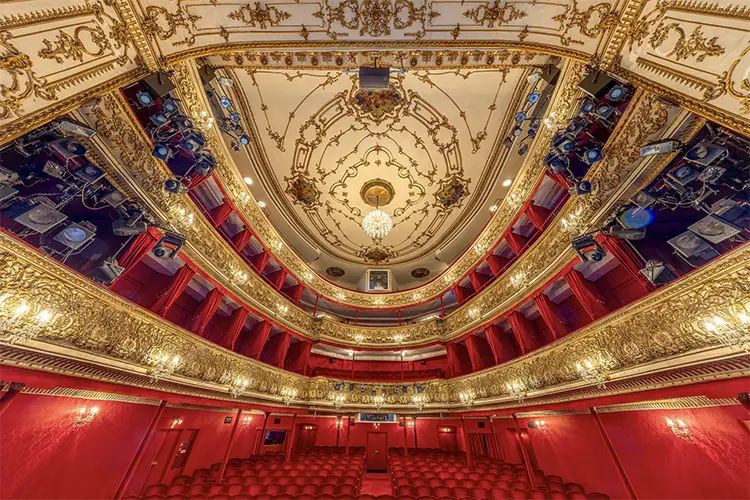
In 1924, legendary director Max Reinhardt took over management of the theatre and led a profound modernization that established it as one of Europe’s leading venues for classical theatre, contemporary drama and comedy. The official reopening took place on 1 April 1924 with Carlo Goldoni’s Der Diener zweier Herren, directed by Reinhardt.
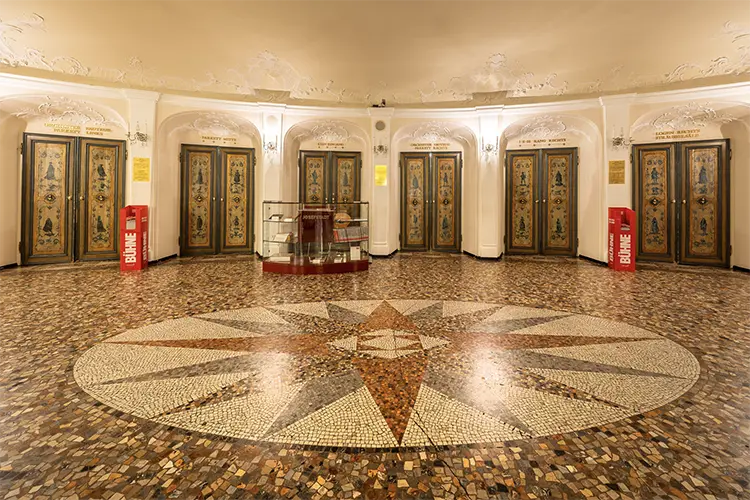
The theatre’s current architecture, with its façade adorned with angel figures, the elegant Star Foyer and the historic Sträußelsäle halls, is the legacy of Reinhardt’s ambitious transformation. Its baroque-inspired auditorium offers 562 seats and ten standing places and is renowned for its exceptional acoustics, which enhance speech clarity and intelligibility. In 2024, the theatre commemorated the centenary of the so-called Max Reinhardt’s Josefstadt, a defining period in its emergence as a major European cultural landmark.