




When a venue is as architecturally intricate and historically significant as The Mabel Tainter Theater, any technical upgrade must not only deliver flawless performance but also blend seamlessly into the building’s renowned aesthetic.
That challenge became the driving force behind a recent loudspeaker installation featuring Eastern Acoustic Works’ (EAW®) AC6 ADAPTive line array, a solution that not only elevated the venue’s sonic capabilities but also integrated perfectly into its ornate 19th-century interior.
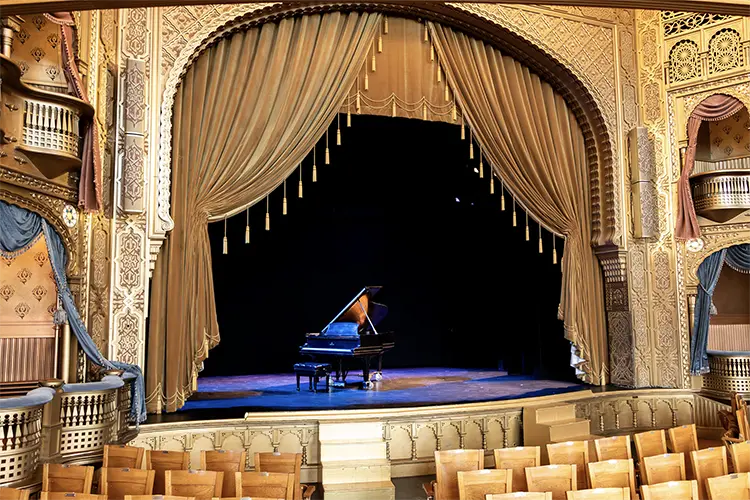
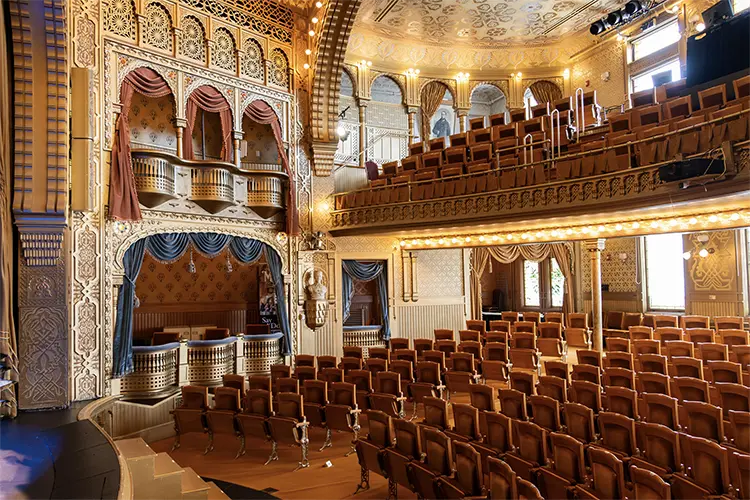
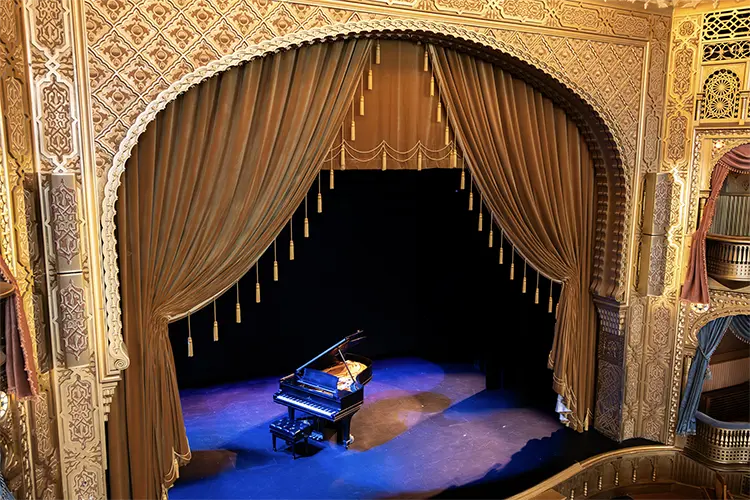
Built in 1889 as a memorial to Mabel Tainter, the beloved daughter of philanthropist and lumber baron Andrew Tainter, the venue remains one of Wisconsin’s most treasured historic landmarks. With hand-carved woodwork, hand-painted decorative stenciling, angled surfaces and a uniquely designed auditorium originally intended for Vaudeville performances, The Mabel Tainter Theater is as visually stunning as it is acoustically unconventional. Today, it hosts plays, musicals, concerts, weddings and community events, requiring a modern sound system capable of supporting a diverse range of productions without compromising the building’s historic character.
 |
 |
The venue’s previous sound system, a point-source configuration installed in 2007, could no longer meet the demands of modern productions.
It was very difficult to achieve any meaningful gain before feedback with the actors’ microphones. On top of that, balancing the orchestra pit with the stage was always a challenge. I could turn certain elements down, but I couldn’t make either the actors or the orchestra any louder, explains Spencer Berndt, Technical Facilities Manager at The Mabel Tainter Theater.
 Performance was only part of the challenge. "We work in a very delicate environment", adds Berndt. "All the woodwork is hand-carved and all the decorative details are hand-painted. None of it can be replaced. So whatever system we installed had to respect that history while delivering the performance we had been missing".
Metro Sound & Video was selected to lead the project, headed by Systems Engineer and Integration Designer Jonathan Harlfinger. Having previously worked at The Mabel Tainter Theater, Harlfinger immediately identified the AC6 as the ideal solution. "When I first saw these loudspeakers at a trade show, I told Spencer, 'These would be a perfect fit here'", recalls Harlfinger. "We've installed them in large cathedrals and smaller contemporary churches, and they've consistently delivered outstanding performance. Their size, performance and flexibility made them the perfect solution for a venue like this".
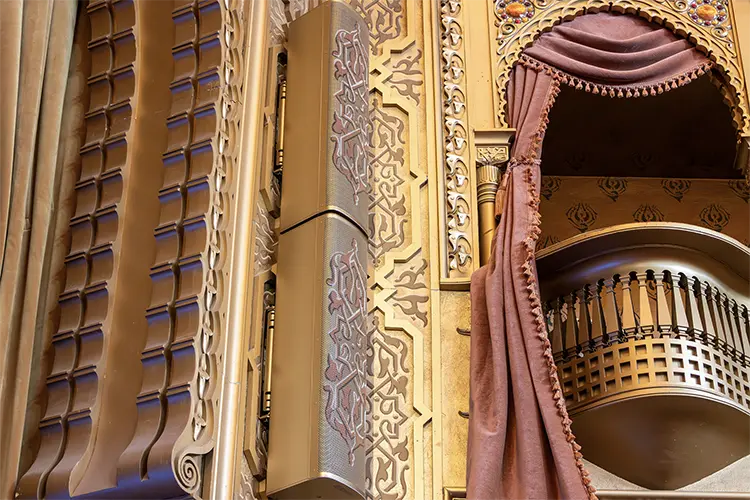
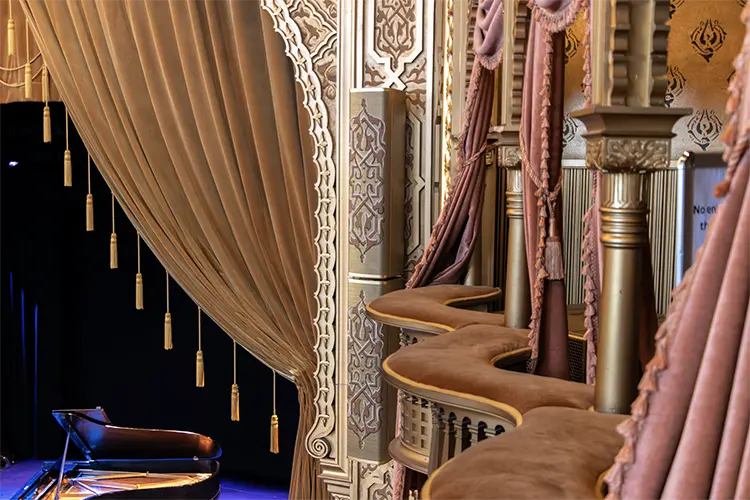
But performance was only half the story. The AC6 needed to disappear visually into the theater’s ornate proscenium. That required a custom paint finish—and not just any paint. Working closely with EAW, the team carried out a meticulous color-matching process using Rosco’s Metallix paint line. After testing several blends, they arrived at the perfect combination: 80% bronze and 20% gold, faithfully matching the surrounding woodwork under the theater’s lighting conditions.
Next came the stenciling work. Berndt enlisted local artist Wade Lambrigsten, owner of Vintage Sign Shop and responsible for much of the venue’s decorative work, to recreate the theater’s historic stencil pattern directly onto the loudspeaker grilles. EAW shipped the grilles separately so the artwork could be applied before final assembly.
It was quite a process, but it was absolutely worth it. In low light, you can hardly tell the loudspeakers are there. People attending performances don't even realize we've installed a new sound system, Berndt says with a laugh.
Harlfinger agrees: "Many members of the board and the local community were amazed. They love how well it blends into the surroundings. That level of customization was a key part of the project's success".
Beyond its visual integration, the AC6 has significantly improved the venue’s sound quality and flexibility. "The clarity is incredible", says Harlfinger. "People attending the first performance were amazed by how good the system sounded, especially the piano. The difference was night and day".
 |
 |
For Berndt, the upgrade has opened up new workflow possibilities. "One of the biggest improvements is that I can finally use ambient microphones", he explains. "Before, sound coming from the stage was a constant issue. Now I can capture more of the room, create a much more accurate stereo image and mix the orchestra without worrying about feedback".
The AC6’s ADAPTive technology, combined with EAW’s Resolution software, gives The Mabel Tainter Theater precise control over sound distribution throughout its acoustically challenging auditorium. Coverage can be shaped and adjusted to accommodate angled surfaces and different seating areas, directing sound toward the audience while keeping it away from reflective surfaces that have long complicated the venue’s acoustics.
For a theater that has survived more than a century of change, the AC6 installation represents a balanced combination of preservation and modernization.
This project respected the building’s heritage while giving us the tools we’ll need for the future. It’s exactly what The Mabel Tainter Theater deserved, concludes Harlfinger.