


PIXERA maps 175 megapixels onto a 1896 market hall floor in Prague

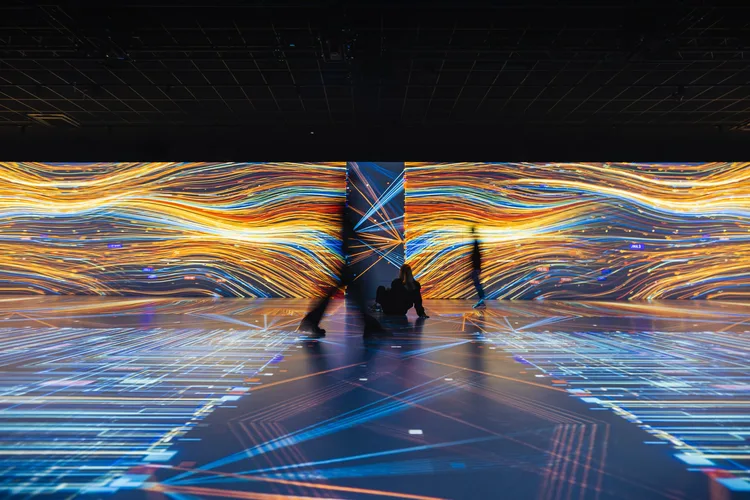
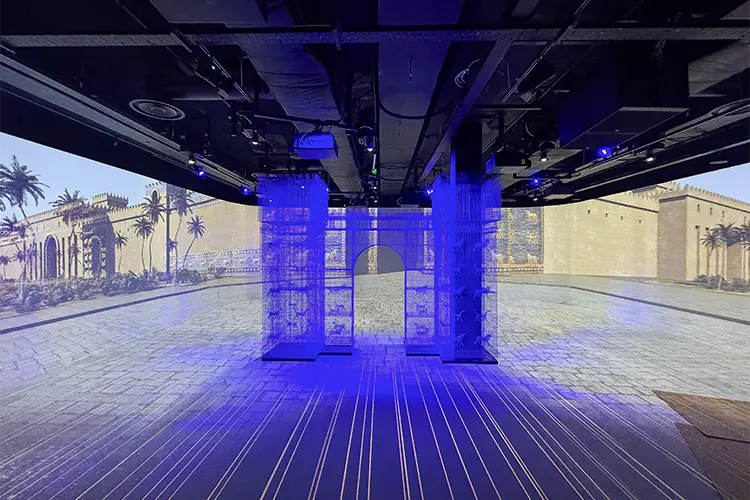
At Signal Space, the largest digital art gallery in the Czech Republic, Virtuality.one uses AV Stumpfl’s PIXERA on clustered PixelBox media servers to drive 19 Panasonic 4K laser projectors across the walls and floor of the immersive hall.
Signal Space, a 2,500 m² venue that opened in September 2025 inside Prague’s heritage-protected Old Town Market Hall, is the year-round successor to Signal Festival, held in the city since 2013. Its immersive hall, of around 300 m², runs 19 outputs at 3,840 x 2,400 at 60 fps in 10-bit 4:4:4: slightly over 175 million pixels that must read as one continuous image.
We recommended PIXERA mainly for its reliability and its 3D mapping. The clustering is straightforward to configure, so a client can run four outputs from a single system, or build a cluster of render engines that keeps all 19 of our 4K projectors perfectly in sync, says David Houžvička, chief technology officer, Virtuality.one.
A floor that is neither flat nor square
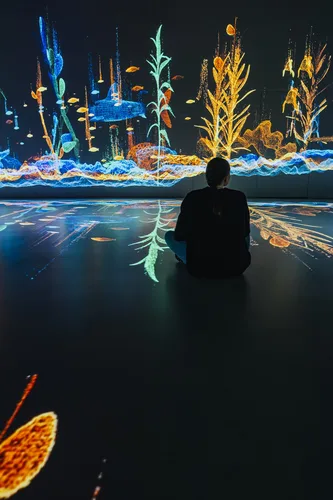
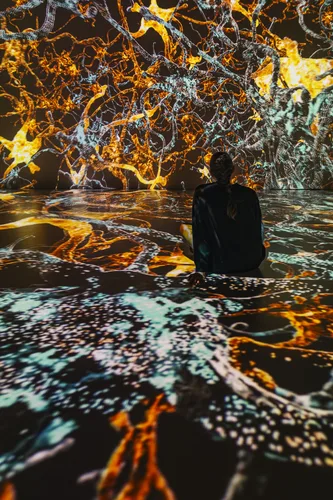
The market hall was completed in 1896 and its floor was laid with a fall of around 25 cm so it could be washed down; the concrete was never poured level either. Add ultra-short-throw lenses with their own barrel distortion, and Panasonic’s camera-based auto-calibration could align the walls but not finish the job.
The floor itself is uneven, because the concrete was never poured perfectly level, which turns what looks like a rectangular area into an irregular rhombus. PIXERA's warping tools are what allowed us to reach a pixel-perfect calibration, says Houžvička.
The critical point is the hard edge where floor meets wall, where the architecture gives the eye a straight line to compare against.
 |  |
Cluster, framelock and genlock
PixelBox nodes run as a PIXERA cluster with a spare node in reserve, each with an RTX 5000 Ada GPU and a Threadripper 7965WX.
NotchLC support and GPU processing of 8- and 10-bit video make efficient use of the hardware, while framelock and genlock hold the cluster to a common timing reference. “Without frame sync, we could never hold absolute synchronisation across the cluster, and you would get tearing between the servers”, says Houžvička.

Video and audio in one pipeline
PIXERA also plays out and routes the surround audio over Dante.
It is crucial that the system handling video playback also handles the audio. It simplifies the workflow enormously, as content creators and operators are both working in one piece of software, one pipeline, one workflow, says Houžvička.
The room also hosts events, performances and conferences, mixing immersive content with live inputs over SDI or NDI. Software-only licensing let Virtuality.one build servers to a fixed budget, and the growing pool of trained operators in the Czech market makes events easier to staff.
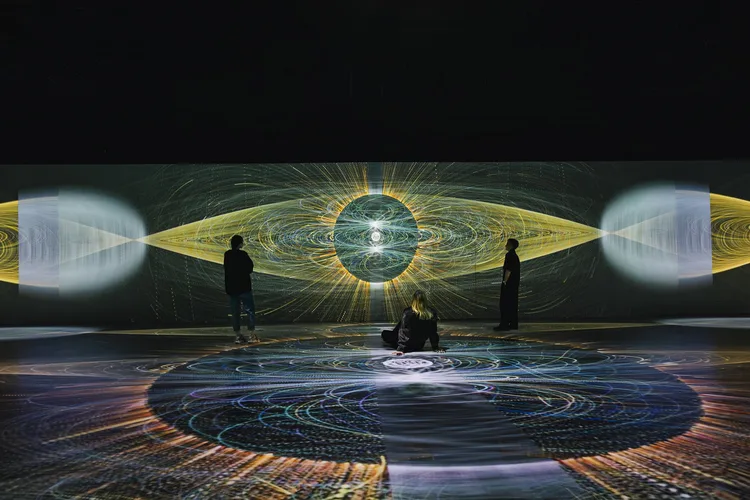
Since late summer 2025 the system has run continuously, stopping once for planned maintenance. “We have not had a single hardware or software issue all year, and that is with daily operation and live events, so active operator intervention rather than passive playback”, says Houžvička.
Photos: © Kateřina Fialová
 Instagram
 LinkedIn
Follow PIXERA
Latest
Home →
TAQA Theater De Vest moves its main hall to Robe T1 Profiles
L-Acoustics proves that a single system can meet the demands of any type of performance

A stage with no visible loudspeakers: how TiMax works its magic in 'Grease'
A native 21:9 5K LED wall for Düsseldorf’s media students

500 GLP X-PAR 12Z light Reggae Land’s main stage in broad daylight
Rally Flåklypa: 21 projectors, trackless vehicles and HIVE in perfect sync



AUDAC's Audette showroom stops in Spain on its European tour
Five civilizations, 12,000 years and invisible sound: L-Acoustics at Timewalk
Robe’s T-Series continues to expand: T1.5 Profile to make its world debut in Paris