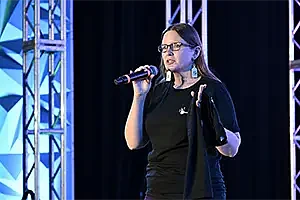
Recently, TV News Check brought together engineering, operations, and newsroom leaders from Scripps, Sinclair, Ross Video, and Crispin to analyze what content centralization means today in the cloud era, along with digital strategies and REMI-style workflows.
Although centralizing master control is nothing new, the conversation revealed how much the concept has evolved and why planning, collaboration, and local accountability remain critical elements for the success of these models.
Expanding the REMI model
The creation of content hubs has gone far beyond the traditional master control approach. Scripps, for example, has developed a remote production center that supports local stations when staffing is limited or overloaded.
These producers handle lower-priority time slots, allowing local teams to focus on high-impact newscasts and more relevant community reporting. In addition, the system has become a source of mentorship, where experienced professionals guide younger teams in editorial decisions and the development of more in-depth stories.
It has allowed our newsrooms to continue operating at a high level without compromising quality due to low staffing… It frees up local resources to focus on higher-impact stories, says Cameron Beck – Director of Washington Operations, Scripps News.
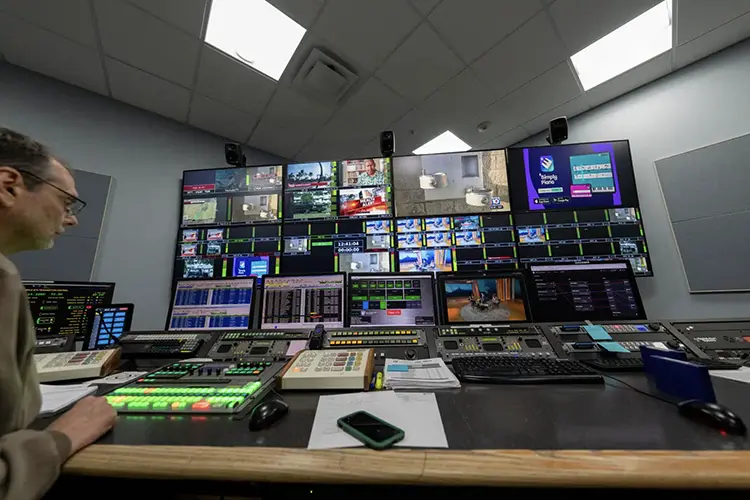
The success of content hubs begins long before their launch. Centralizing news production or master control requires a clear understanding of current workflows, pain points, and goals. Organizations must invest the necessary time and the right people to build models that solve today's inefficiencies and enable future adaptations.
At Sinclair, the hub has shifted from a regional model to one based on network expertise. Instead of grouping stations by geography, the company has created operations centers aligned by network — such as Fox or CW — with specialized teams that understand the nuances of each brand.
“Now that we’re in the cloud, the regional barrier no longer exists. We don’t need the same person to know every detail of four different networks… that’s where the efficiency comes from”, adds Waleed Hamry – AVP, Media Systems Engineering, Sinclair Broadcast Group.
Regarding REMI models, the panelists agreed there is interest, although the U.S. market is complex: numerous hyperlocal markets and overlapping time slots make it difficult to consolidate control rooms without losing flexibility or localism.
Change management, communication, and collaboration
According to the participants, technology is not the biggest challenge; the real difficulty lies in transforming mindsets and processes. Many underestimated the time needed for station staff to adapt to cloud-based platforms, especially after years of working with physical workflows.
Training must go beyond basic onboarding and include real-world scenarios: live sports, breaking news, and exceptional situations specific to each affiliate.
The shift is also cultural. Newsrooms continue to prioritize linear broadcasting, particularly in planning and scriptwriting. However, leaders are pushing for a content-first mindset, encouraging teams to prioritize platforms based on urgency and audience needs rather than solely on the rundown.
Constant communication — especially in distributed teams — emerged as another key point. The panelists highlighted the importance of clear protocols for both daily coordination and emergency workflows. Station groups use tools such as Slack or Teams, or integrations within their NRCS systems, with the common goal of ensuring everyone knows how to communicate, where to find information, and what is expected of them.
Each group has a different strategy… in the end, it all comes down to consistency. If I need to contact someone during breaking news, I need to know the most reliable way to do that, explains Jenn Jarvis – Solutions Manager, Ross Video.

Resilience and continuity in the cloud era
For playout and disaster recovery (DR), more and more broadcasters are choosing hybrid or cloud-based models. Crispin shared examples of groups that have built systems capable of full cloud-based playout, not only as DR but also for daily operations or facility moves.
Sinclair implemented a layered DR strategy that includes cloud redundancy, local DR systems at each station (able to run 24–48 hours of content), and a backup satellite link from headquarters. This approach has already proven effective: when a tornado destroyed one of its facilities, content continuity was maintained thanks to cloud and satellite transmission.
Even so, the consensus was clear: local presence remains essential. Infrastructure can be centralized, but journalism cannot lose its connection to the community.
Scaling content across platforms
Centralization offers a clear opportunity: creating content once and adapting it for TV, digital, OTT, and social media. Both Scripps and Sinclair are committed to this strategy to expand newsroom capacity without overloading teams.
AI is beginning to play a role, especially in scripts and formatting. It can automate repetitive tasks: resizing content, generating drafts, or adapting pieces for different platforms. However, all agreed that human oversight is essential.
“The question is: what problem are you trying to solve? Sometimes the answer is AI. Sometimes it’s a simpler or cheaper solution”, shares Jenn Jarvis – Ross Video.
The goal is not to reduce staff, but to reduce friction and allow teams to spend more time creating and less time reformatting.
Content hubs must support local, not replace it
The dominant conclusion was that centralization brings efficiency and flexibility, but it does not replace local journalism. No cloud infrastructure or AI system can replace the trust built by reporters on the ground.
In fact, both Scripps and Sinclair have deliberately invested in expanding their teams of local reporters thanks to the savings and efficiency derived from centralization.
Centralization is a tool, not a philosophy. The ultimate goal is to use technology to scale smarter and leverage regional expertise to better serve local communities.
The conversation made it clear that news centralization is no longer just a technical architecture, but a strategic approach to building more resilient, efficient, and scalable news operations — always keeping sight of where the audience is.