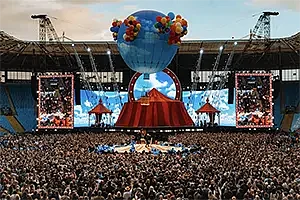
As sporting experiences become increasingly focused on audience entertainment, leagues, teams and venues are under pressure to deliver experiences that go beyond the game itself.
Today’s fans expect real-time data, broadcast-quality visuals, interactive storytelling and equivalent experiences whether they are in the venue or watching from home. Across the industry, technology manufacturers are actively addressing this shift. From stadiums adopting broadcast-style production workflows to sports courts transforming into interactive digital canvases, fan engagement is no longer optional.
SP Grid sits at the centre of this evolution, enabling production teams to unify tracking, automation, data and media control within a single scalable platform, helping turn arenas, stadiums and esports venues into fully connected experience engines.
 |
 |
Unlike single-point solutions that address graphics, tracking or automation in isolation, SP Grid acts as the connective tissue between systems. It aggregates real-time positional data, timing and control signals and distributes them across the users’ desired control workflow. SP Grid is already deployed on projects and venues involved in some of the highest levels of professional sport and entertainment.
We have seen and continue to see many cases where SP Grid is used to create incredible fan experiences, especially in the world of sports. These events require precision, accuracy and integration across multiple moving parts, such as lighting, audio, fan apps and more. With powerful timeline controls, automation features and real-time monitoring, SP Grid ensures that every aspect of the experience is perfectly timed and synchronised, explains Sarah Cox, CCO at Stage Precision.
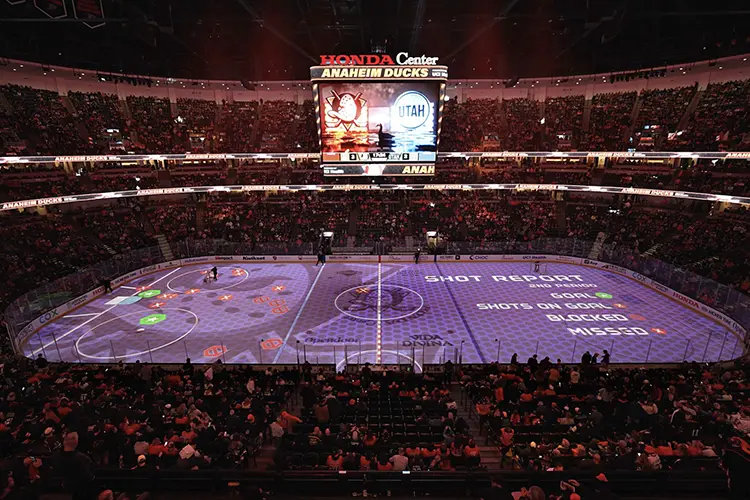
At the Honda Center in California, SP Grid was used to integrate tracking and control systems to support immersive in-arena visuals, dynamic game statistics integration and well-synchronised show moments, including a bespoke game called Frog Dash, designed to encourage crowd participation and increase sponsor visibility.
Describing the system created using Stage Precision’s platform, Eric Gazzillo, Vice President of Innovation at Quince Imaging, states: “It sits at the centre of the operation, managing data flow between the tracking system, game engine and media servers. We use active ID tags on players and SP handles the entire data communication network, from camera calibration through to real-time adjustments”.
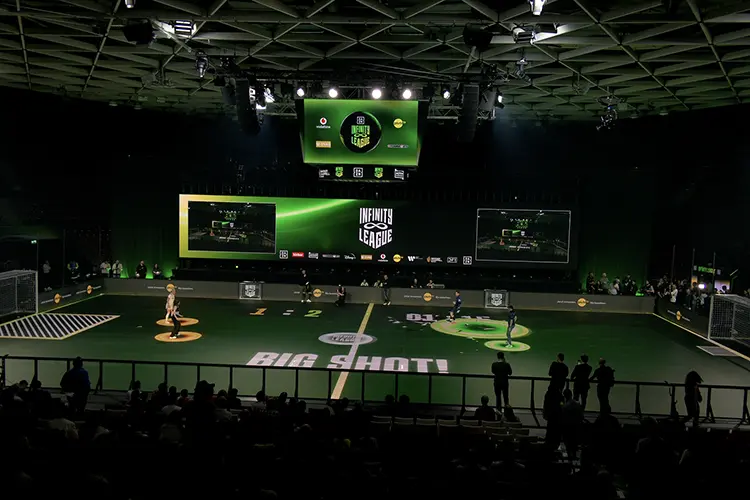
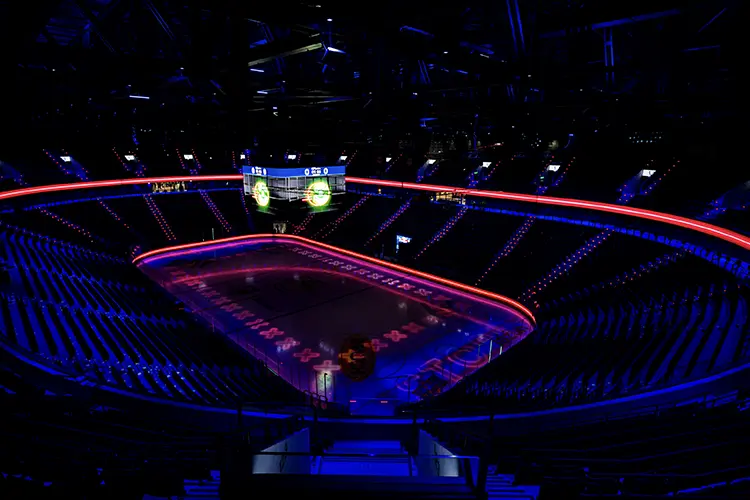
For Red Bull’s next-generation arena at SAP Garden in Munich, SP Grid plays a key role in coordinating complex, data-driven shows that blend sport, entertainment and brand storytelling. “No other software brings together a 3D stage tracking system with a user-friendly control interface like SP Grid”, confirms Leon Herche, Creative Producer at bright! studios, who were responsible for developing a workflow that enables tracking data to be transformed into engaging visual content for real-time gaming and audience participation. “The simplicity of the interface makes it very easy to use. Even the arena team, without specific technical experience, can start and stop games and manage the system easily”. SP Grid’s custom interface feature allows simplified, branded controls to be displayed on a tablet or touch panel, making everyday operation intuitive.
Drawing on SP Grid’s extensive and versatile feature set, several tools and capabilities are particularly impactful in live sports environments. For example, real-time data aggregation. SP Grid can ingest data from tracking systems — such as person and object tracking — enabling instant visualisation of gameplay moments, player movements or sponsored fan interactions in countless creative formats, from on-screen data feeds to digital floors or in-app updates for audiences.
Precise synchronisation of 3D data enables elements such as LED, lighting, audio, graphics and even augmented reality components to launch simultaneously and without manual operation, which is critical for high-impact fan moments. For the 2024 Super Bowl, SP’s tracking solutions became the linchpin of operations for an augmented reality simulcast in collaboration with Nickelodeon featuring the alternate reality of SpongeBob SquarePants.
 |
 |
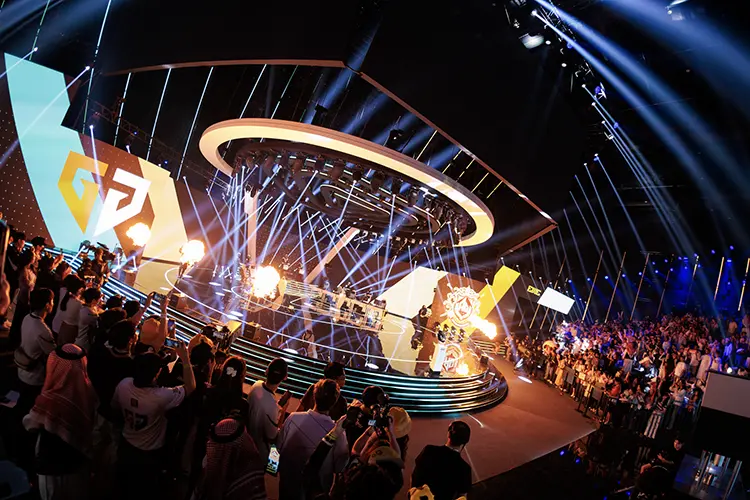
From single-arena deployments to multi-venue leagues, SP Grid also scales effortlessly, enabling consistent fan experiences across seasons or locations. The 2025 Esports World Cup demonstrated this when bright! studios used SP Grid for multi-stage media control across seven venues and dozens of competitive gaming titles.
Finally, by taking technical complexity and presenting data, workflows and complex device connections in a user-friendly way, SP Grid encourages creative teams to experiment with new fan engagement concepts and iterate existing setups over time as audience response is evaluated.
While many in the industry highlight the importance of fan engagement, SP Grid differentiates itself by focusing not on individual surfaces or effects, but on orchestrating the experience at an infrastructure level. Sports teams or organisations can adapt their fan experiences in an agile way, integrate emerging technologies over time and, most importantly, deliver compelling experiences, concludes Cox.
SP Grid enables venues and broadcasters to turn every moment into an engaging audience experience in an era when sports fans demand far more than just a seat and a screen.