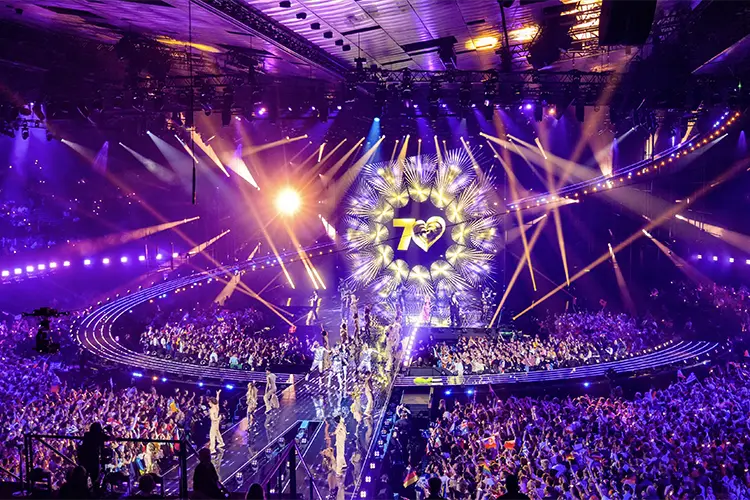
As the official audio supplier to host broadcaster ORF during the Eurovision Song Contest (ESC) 2026, Sennheiser deployed its largest Spectera setup to date at Vienna’s Stadthalle, including pre-production units of the yet-to-be-released Spectera wireless handheld transmitter.
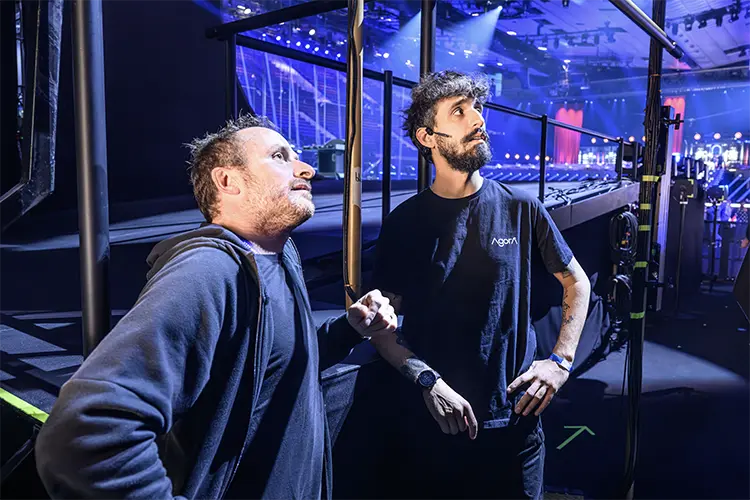
A total of four active Base Stations handled around 150 live streams for wireless microphones, in-ear monitoring and control data in what many are already calling the best live sound in the history of the contest, developed by technical production company Agorà. Sennheiser’s Technical Application Engineering (TAE) team, led by Jonas Næsby and Volker Schmitt, was on site to support the broadband system and the new workflows it enables.
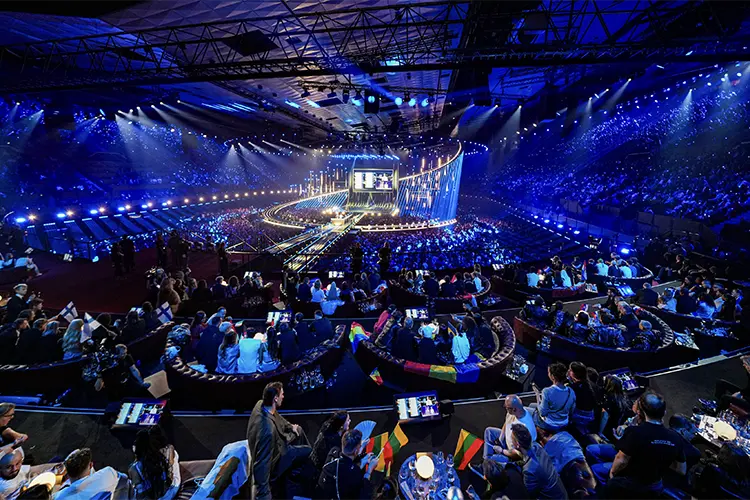
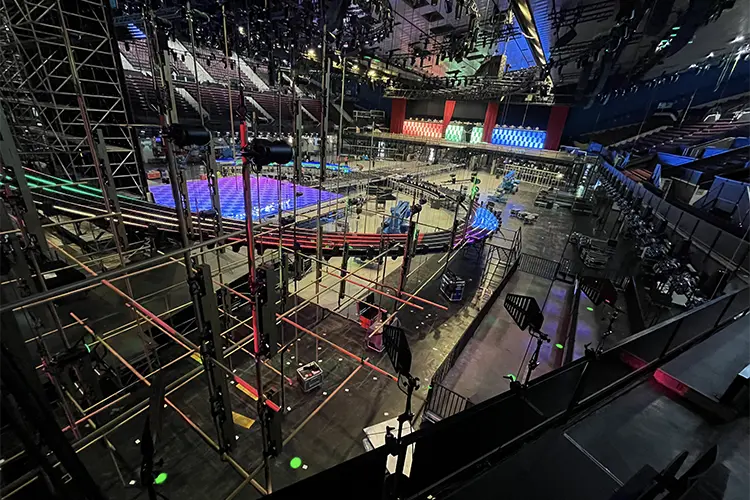
ORF transformed Vienna’s Stadthalle — and in fact the entire city — into a spectacular setting for Eurovision and its huge fan community. The excitement was palpable among both audiences and technical suppliers.
Anticipation kept building because the 70th edition of the Eurovision Song Contest promised to be one of the most technically ambitious productions ever staged. Beyond the live television magic and creativity Eurovision radiates, its scale and complexity have always invited the industry to showcase — and often debut — its latest technologies. And I’m not just talking about Spectera in Vienna, but also video, lighting, lasers and much more, noted Volker Schmitt.
Valerio Motta, ESC project lead at Agorà, commented: “Eurovision is a dynamic, fast-paced and demanding production. Everything feels calm as long as everything works, and having Sennheiser involved in such a delicate project made the audio team feel supported and confident. We all knew that even if any issues had arisen — which they didn’t — the manufacturer’s support would have been there to solve them in the best possible way”.
 |
 |
“I believe there was a unique combination of factors behind the result: excellent sound from the PA system, outstanding signal flow management and remarkable audio quality in the artists’ monitors”, continued Motta. “Not receiving a single complaint from any artist is strong validation of the listening experience throughout the event. Using Spectera in such a demanding production environment and integrating it into a workflow of this scale proved interesting not only from a technical perspective, but also in terms of operational flexibility and signal management. In a production where reliability and speed are essential, having tools that simplify complexity can make a real difference”.
Inside the sound control room
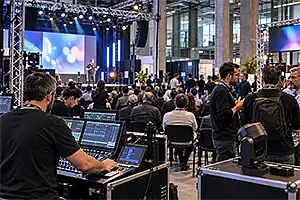
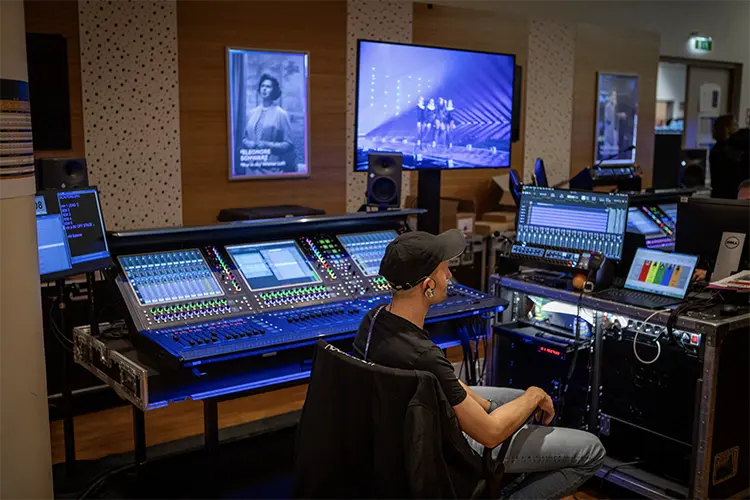
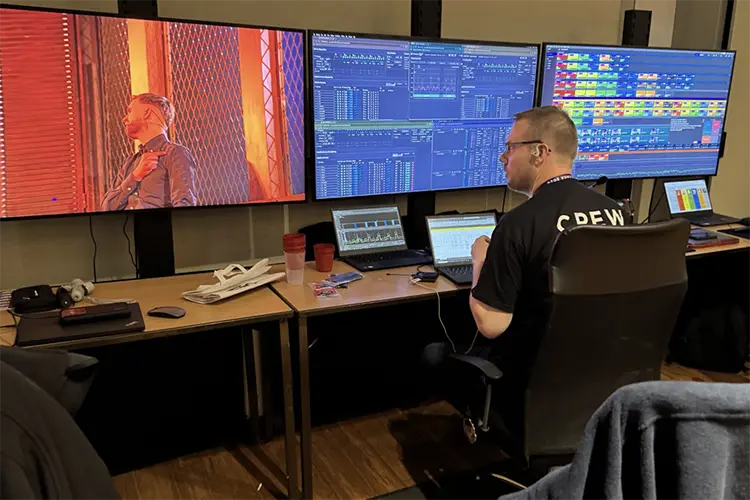
Behind the scenes, technical crews, artists and broadcasters worked intensively for weeks to refine every detail of the spectacular shows. The Stadthalle sound control room, led by Head of Sound Gerhard Jansa, managed microphone audio, IEM audio, artist audio preparation and audio distribution to the OB vans. Fail-safe operation was essential throughout the event; for example, the room housed two independent mixing consoles, each with its own operator.
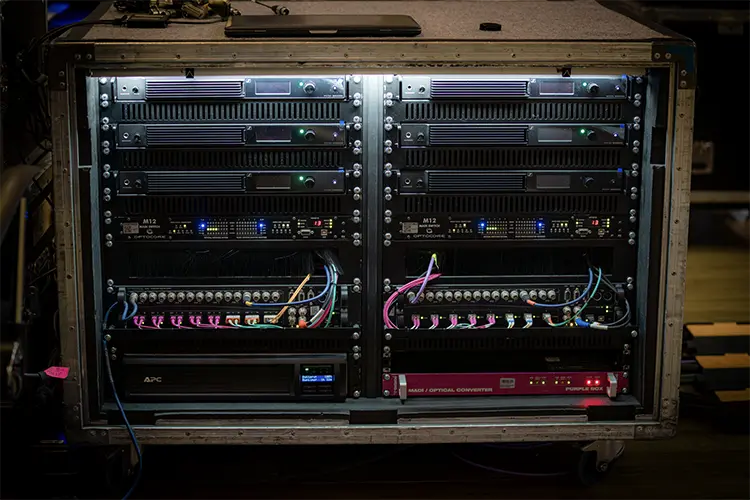
The same philosophy of redundant reliability was behind the six Spectera Base Stations used. While four were active for audio and control data, each operating on a single RF channel, another was dedicated exclusively to continuous 24/7 spectrum scanning, although it could also operate as a backup because it was already linked to the antennas. The sixth Base Station served as a full spare unit.
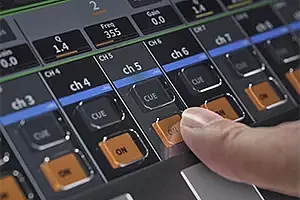
“ORF’s requirements were simple and straightforward: ‘We need coverage throughout the venue’”, recalled Schmitt. “We started with two Spectera DAD antennas positioned stage right and green room left for each Base Station, and that already provided full transmit and receive power across the venue. To further increase reliability, we added another two antennas per Base Station. In addition, a special firmware version developed for the event allowed us early access to future features required on site, such as a level recorder”. An RF control centre in the sound room continuously provided a complete overview of the status of the Spectera wireless microphones and in-ear systems using Spectera WebUI and the Sonoros app.
 |
 |
Jonas Næsby highlighted the simplicity Spectera brought to the venue’s cabling infrastructure: “We used a fibre connection from the sound room to FOH, converting back to copper via standard IT media converters. This allowed us to achieve maximum performance from the remote antennas, avoiding the usual compromises associated with RF-over-fibre systems used with conventional wireless solutions”.
Spectera DAD antennas were also installed behind the stage to guarantee seamless coverage when artists entered the stage from behind the video wall.
Rotation: key to ESC wireless operations
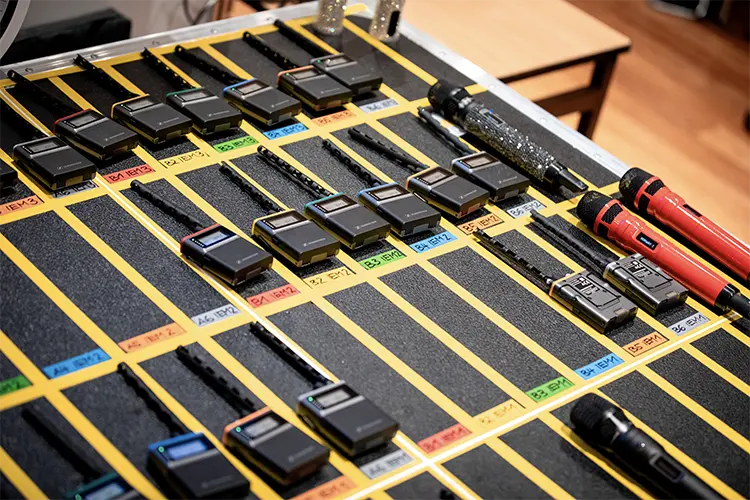
Eurovision performances last three minutes and, much like the many stagehands working swiftly outside camera view, the audio team had just 42 seconds to prepare the next act. With a maximum of six people on stage per performance, the team organised a rotation of six Spectera handheld microphones, a rotation of six Spectera SEK bodypacks used for in-ear monitoring, and an “all-in-one” rotation of six Spectera bodypacks with headset microphones and in-ear monitors.
For artists who opted for a hands-free solution, we used the bidirectional Spectera bodypack together with a cardioid Headmic 4. This microphone contributed significantly to the overall sound quality, delivering excellent performance in front of the PA system and wind machines. For those preferring a Spectera handheld microphone, we brought the upcoming Neumann KK 105 A capsules, which are still awaiting release. This supercardioid model was designed to minimise pickup from adjacent sound sources and the surrounding environment, explained Næsby.
 |
 |
Highlighting the scale of the production, Næsby pointed out that “no other television production incorporates as much redundancy as the Eurovision Song Contest. Virtually the entire system has a complete backup ready to take over at any moment. The only two elements where a duplicated setup simply doesn’t work are the artist and the microphone in their hand, making it the most important component in the signal chain. The Spectera SKM handheld microphone proved to be the perfect solution. The unprecedented RF stability of broadband transmission, combined with multi-antenna capabilities, immediately gave the production confidence that ORF had made the right decision in bringing these pre-production units to a show of this scale”.
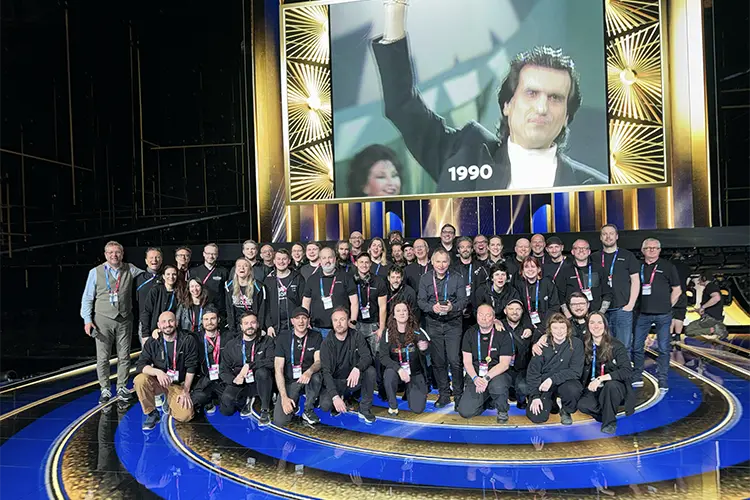
Amid the intense work at the Stadthalle, the sound room crews also found time to support a charitable cause: from load-in through to the grand final, donations were collected for Vienna’s St. Anna Children’s Hospital, with Sennheiser matching all contributions. ORF and the EBU also invited 16 young patients and their families to a special backstage visit guided by Victoria, where they met Austrian performer Cosmo and Cyprus entrant Antigoni, while also collecting autographs and selfies from other participants.
Broadband advantages
“Spectera made life easier for everyone”, continued Schmitt. “For the artists, who were impressed by the incredibly clear and spatial in-ear sound, and because they only had a single bodypack to conceal in their costumes when using a headset. For the wardrobe team, who appreciated having just one bodypack to fit into the outfit. And finally for us as well, because Spectera provides essential data about system health”.
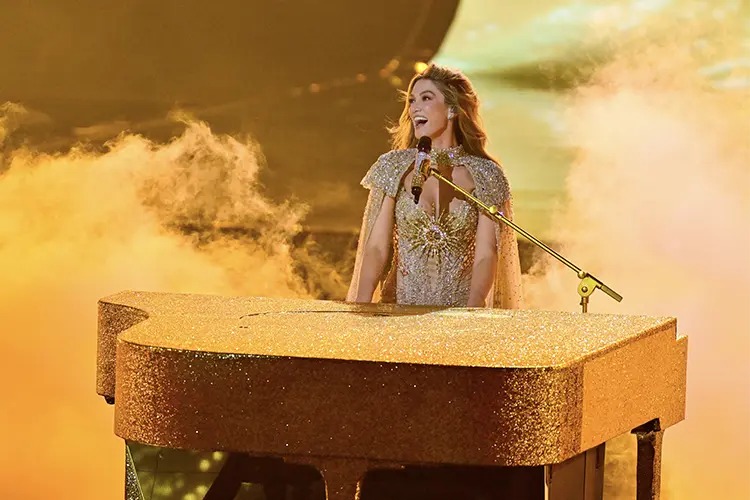
“During rehearsals we had a small incident where an artist on stage said: ‘I can’t hear myself’”, explained Schmitt. “In the past, that would have meant running out of the sound room and onto the stage to check what was happening with the device. Now we could immediately see the issue in the Spectera software, contact the liaison manager and ask her to reconnect the artist’s earphones correctly. Everything was resolved straight away. Nobody panicked, and that gave us a very positive feeling about this production”.
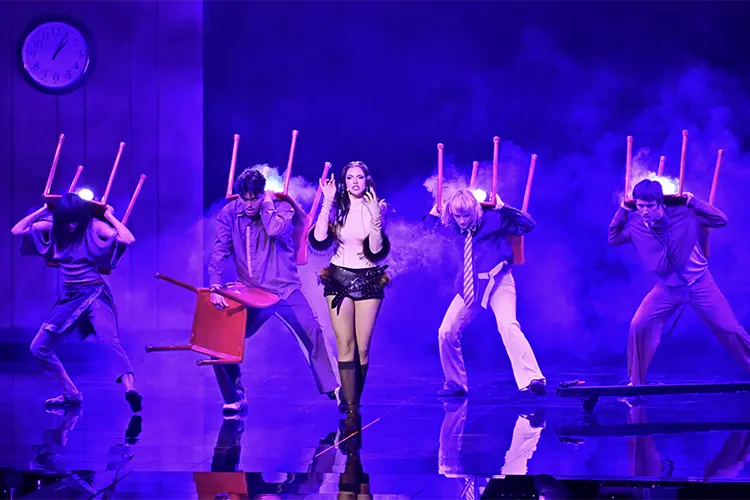
Schmitt also recalled a more complex situation involving a performance with three costume changes on stage, in an environment where any inconsistency can generate errors. “In the past, we received no feedback from the device about how the new costume affected performance, and in this case it was covered in metallic elements, something that made us especially nervous as wireless specialists. With Spectera we could immediately see when RF health started deteriorating and take action before the artists even realised something was wrong. Overall, Spectera earned praise from engineers, production teams and delegations alike thanks to its crystal-clear audio, flawless wireless performance and exceptional RF stability in one of the world’s most demanding and prestigious live music broadcasts”, concluded Schmitt.
Spectera comes full circle
Sennheiser WMAS developers Jan Watermann and Sebastian Georgi were excited to see Spectera arrive at the ESC. “It’s a unique event and we were incredibly excited to see the system used there for the first time”, said Georgi.
It was at the ESC in Copenhagen in 2014 when fading issues forced me to develop several software fixes for Digital 9000. The chosen venue was a former shipyard measuring 160 metres by 160 metres, built entirely from metal. No RF system worked there. No comms radios, no police radios, no public radio networks. We managed to get Digital 9000 working by using special filters and optimising antenna positions. You could say Eurovision was the birthplace of Spectera, because it was there and then that we decided to tackle fading issues from a completely new perspective. With conventional wireless systems you can add more antennas, but that doesn’t solve the root problem: signal dropouts and cancellations. We wanted to eliminate the issue at its source, recalled Watermann.
Georgi added: “That’s how we began developing broadband technology for professional audio. Working with an 8 MHz broadband channel, which is not affected by those fading issues, was the starting point. Since bandwidth cannot be wasted, this required multiplexing microphones differently, which led us to the concept of time slots, and from there everything started to take shape”.

Watermann and Georgi returned to the same Copenhagen venue with their WMAS demonstrator in January 2016. “We installed a single antenna and achieved coverage throughout the venue. It was the first time I saw Jonas Næsby close to tears”, Georgi recalled with a laugh. “That shipyard is like a Faraday cage, and yet we achieved perfect coverage immediately”.
Spectera puts an end to fading and phasing
Watermann highlighted another important aspect that often goes unnoticed: “The second issue we solved involved phase and clock synchronisation problems in digital systems; the fact that phases can cancel each other out when multiple signals converge”, explained Watermann. “Conventional digital microphones incorporate their own internal clock from the moment they begin transmitting. Even though they all operate at the same sample rate, they are not perfectly synchronised with one another. To reproduce all signals together, each one has to be processed individually, since it is impossible to adjust the transmission timing of each microphone; they simply send the signal and the system has to manage it as it arrives”.
“A typical example of phase issues occurs when a television presenter uses a headset microphone while simultaneously holding a handheld microphone to interview a guest. During the conversation, it’s common for the presenter to forget they are already miked up and also speak into the handheld. At that point, the sound engineer receives two separate signals of the same voice — one from the headset and one from the handheld microphone — which creates frequency cancellations when mixed together. The result is a strange sound with a phase-shift or ‘phasing’ effect. Normally, the engineer corrects the situation by lowering the level of one of the microphones, although for a few seconds the effect is clearly audible”.
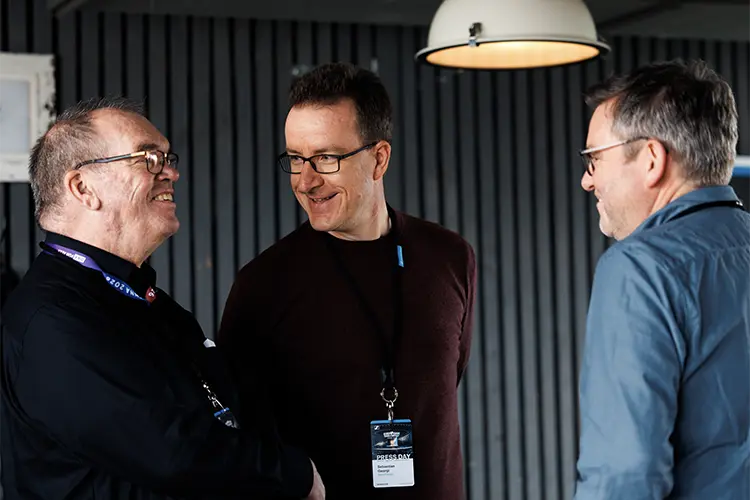
Georgi added: “In any case, Spectera required synchronisation for the TDMA technique we use, so we can now synchronise the microphones’ internal clocks as well. This means the sound engineer no longer has phase issues and can simply mix all microphones without complications. And this is not just theory; we built the demonstrator and ended up running five microphones open simultaneously. Several people listened to it and commented: ‘Wow, there’s no more phasing here’”.
This is where Spectera comes full circle. Development began as a solution to the fading challenges posed by Eurovision and, in its 2026 edition, Spectera has arrived at the ESC solving those issues, streamlining workflows and delivering exceptional audio for both artists and audiences alike, concluded the developers.
Næsby also expressed pride in once again seeing new Sennheiser technology at Eurovision: “Sennheiser made this show wireless back in the 1980s, digitised it in 2013 with the introduction of Digital 9000, and now uses Sennheiser’s cutting-edge WMAS technology with Spectera”.