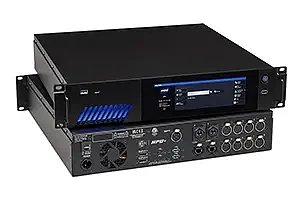
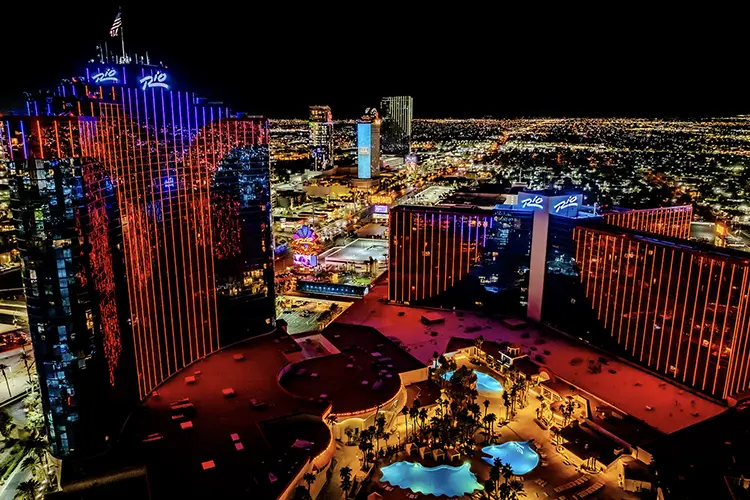
An Avolites Ai media server is at the heart of the stunning and spectacular new lighting installation that wraps both towers of the famous Las Vegas landmark, the Rio Hotel & Casino.
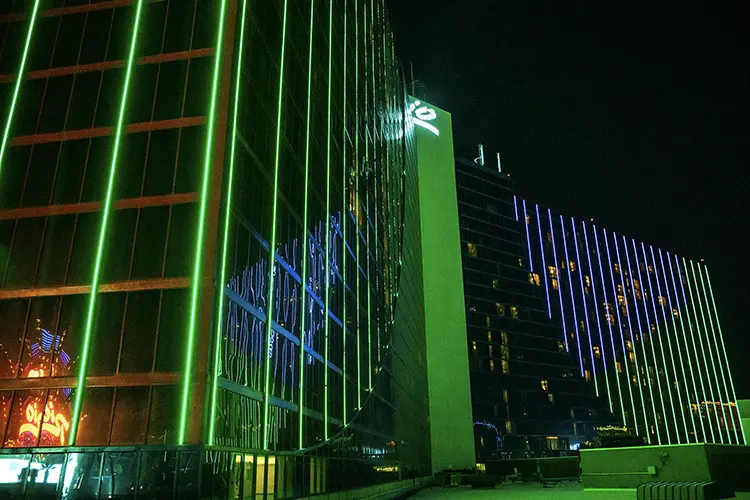
It is used to map, control, and schedule over 4.8 km of LED strips –with a total of 351,032 pixels–, designed by the creative lighting team of Chris Kuroda and Andrew ‘Gif’ Giffin, using Clear LED’s 25 mm X-Bar product, which wraps around the buildings in 360 degrees.
Well-known for their work as live music and entertainment lighting designers, Chris and Gif programmed a series of elegant cues, scenes, and sequences that run automatically, bringing a unique and organically designed lighting aesthetic to the architecture of this iconic Las Vegas hotel and casino. Chief Nerd Ruben Laine, from Australia and the US-based Creative Integration Studio, was invited to devise a control solution that treated video as lighting.
New look for Rio
This involved outputting lighting in a video-centric format, allowing micro-manageable levels of detail for each vertical LED strip, some of them over 4,000 pixels long.
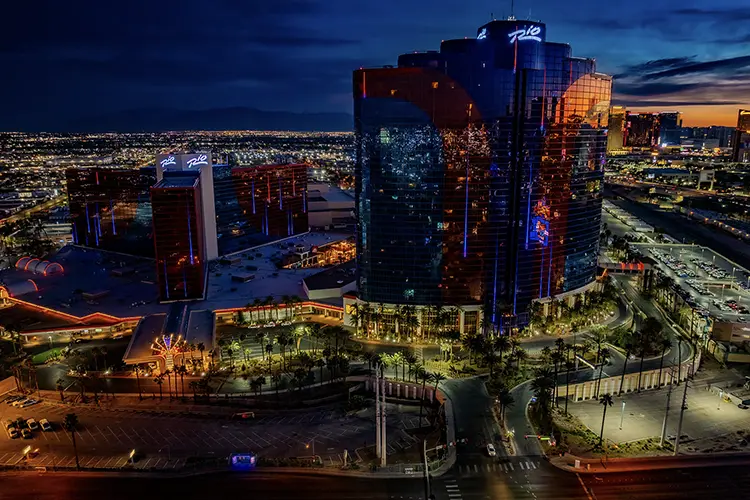
The Rio’s lighting scheme is part of an ongoing multimillion-dollar refurbishment of the resort, managed by Dreamscape Companies. The new LEDs replace 5.8 km of old neon that had been in use since the 1990s.
The overall project is the brainchild of Marty Millman, VP of Development and Construction at Dreamscape. He specifically did not want new lighting that resembled any generic or clinically pixel-mapped building installation fed with video content. He wanted something unique, different, and eye-catching.
A long-time Phish fan, Marty reached out to the band’s long-term lighting design team of Chris and Gif, challenging them to produce the specific look he envisioned for the Rio, inspired by their lighting designs for the band. Their work often uses linear stage/theater light sources –such as Robe Tetra2s and TetraXs– as a dynamic structural base for their familiar automated truss rigs, while adding another layer of kinetic movement.
Chris and Gif have programmed hundreds of thousands of lighting cues for Phish’s various tours and projects, using lighting consoles and effects engines that give animations a crisp and clearly defined appearance. This was exactly what Marty wanted, and a natural workflow for Chris and Gif.
Video control for lighting art
Chris and Gif were thrilled to take on the mission but soon realized that the enormous number of pixels involved made it impossible to use DMX directly from a lighting console. That’s where Ruben came in, immediately realizing they needed “video playback” – but without video content!
Using the Avolites media server and Ai was one of his first ideas. “I’ve always been an Ai guy”, he commented, quickly moving to select this product for the task, in combination with Notch’s powerful real-time graphics rendering engine.
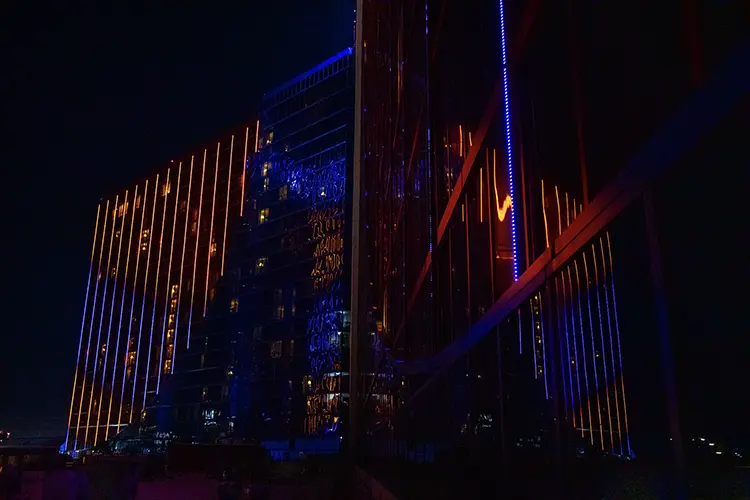
Ruben, who has used Avo AI media servers for over 10 years, collaborated with the Avolites team in the UK to add a new function to the AI server’s Follow-on actions, enabling a “specific randomness” mode as a custom playback option. This allowed him to manage all media, control, and scheduling through a Notch block he built himself, giving lighting control across the entire surface of the buildings.
The philosophy of randomness
This custom scheduling –which introduces randomization– allows a long base look to be played, followed by several randomly selected sequences, before returning to the base look again. The cycle repeats indefinitely, ensuring that the same combination of sequences never repeats or becomes predictable.
The programmed lighting scenes are divided into two categories: base looks, which are subtle animations, and shows, which are faster, bolder, and higher contrast. The system plays a base look for five minutes, then a one-minute show –both randomly chosen–, then another random base look, followed by another one-minute show, and so on.
Being able to assign a range of files to each clip and have the system randomly choose which one to play next was incredible, explained Chris.
The lighting programming did not follow a rigid timeline, since each clip had a different length. For this reason, it was impossible to use tools like Calendar or Macro Script, making this solution the only viable option.
Chris, Gif, and Ruben were very impressed with the input from Avolites and particularly with Ai developers Simone Donadini and Terry Clark.
They began lighting programming with the linear elements in Notch, treating each vertical line as its own layer or canvas, with dedicated intensity controls and a “form” that allowed solids, gradients, or patterns, plus full transformation controls like position and scale, as well as different color and alpha controls. This meant a single layer could handle complex gradients with just one element, and these layers were then stacked.
A second independently controlled layer allowed Gif to experiment with lighting programming, superimposing two-dimensional controls to create a set of 20 “super layers” that covered the entire installation. These rendered underneath the 200 existing linear layers, but with more complex controls and effects.
Additionally, by incorporating animatable masks, it was possible to highlight specific architectural segments and details of the buildings, preserving the Rio’s identity despite the magnitude of the lighting intervention.
We wanted the building to maintain its character without being lost under the glamour and brightness of its new technicolor veil. The genius of this control method was that it allowed us to continue using our familiar tools and the same lighting programming workflow during the creative process, explained Chris.
Lighting control for video art
The ideas were approached as if they were standard lighting cues, created and adjusted live with the console, making use of many of their usual concert tricks: color wipes across the entire canvas, narrow bands of white introducing a new color from the rocket tips, or shapes created with negative space that were then animated into different variations.
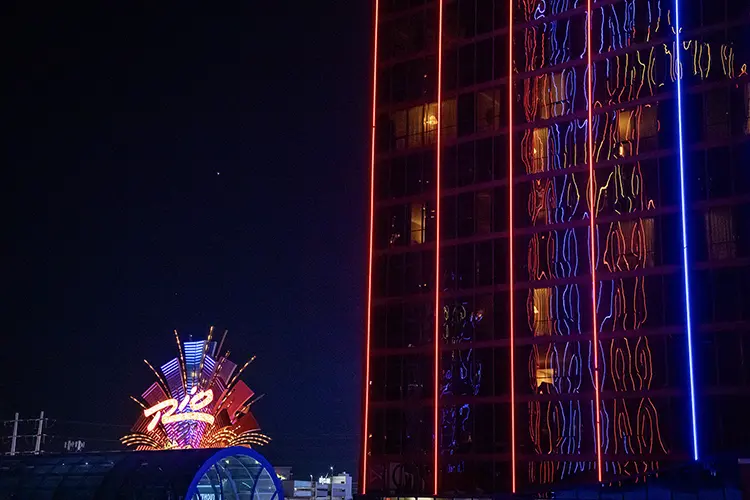
With around 50 or 60 slow-moving looks and another 50 or 60 fast-moving ones, they needed a server that would select them to play randomly throughout the year, ensuring nothing repeated regularly.
The combination of Notch and Q Series/Ai efficiently processes 2,000 universes of pixel data, condensing them into just 8 DMX universes of externally exposed ArtNet channels. Each sequence is played back from the console and ArtNet, recorded into Notch, and rendered at 60 frames per second, achieving the smoothest possible motion across every pixel on the Rio’s façade.
The Q Series media server outputs the rendered clips to CLEAR LED’s signal processors, which then transmit them through several kilometers of fiber optic cable. “Q Series/Ai was, without a doubt, a key part of this adventure. From the initial idea of running the show as live Notch blocks, through every creative, technical, and production challenge, to the final execution. Thanks to Q Series/Ai we were able to map the building in just a couple of hours”, commented Ruben, joking that they probably spent more time finding a good parking spot with a clear view than on the actual mapping itself.
The Rio’s new lighting scheme is revitalizing the energy and excitement around this classic Las Vegas destination. In addition to dazzling visitors with its hypnotic beauty, it showcases new technical possibilities in large-scale lighting and video integration, thanks to the dynamic combination of Avolites Q Series/Ai and Notch.
Chris, Gif, and Ruben are thrilled to have been part of such an innovative and eye-catching installation.
Photos: Eliska Sky and Ultra Vegas Drone Services