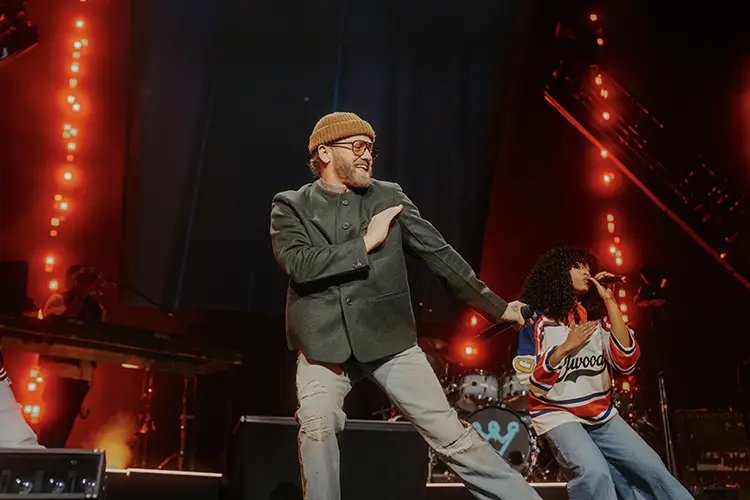
Keeping the music at the core of the design has been the foundation of Tony Fransen’s career for over two decades. The Emmy-winning designer says he lets each project be guided by the sound itself, a philosophy he has applied in work for artists such as Prince, One Republic, Brandon Lake, and Steven Curtis Chapman.
That central vision may remain unchanged, but the way a talented designer brings it to life evolves with technology, expectations, and styles. Adapting to this process is where a designer’s inspiration and talent truly shine.
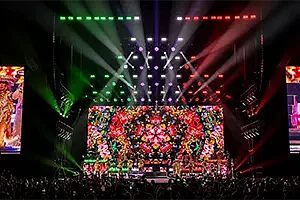
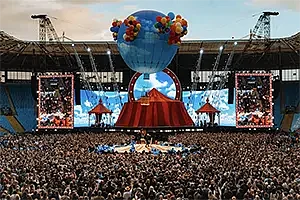
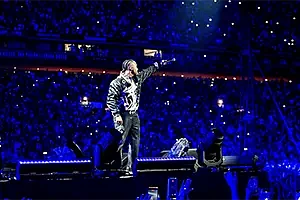
This was the case when Fransen designed the production for the 2026 edition of the seven-time Grammy winner TobyMac’s Hits Deep Tour. Supporting his client’s uplifting music note by note, Fransen’s bold design created a captivating visual narrative that flowed seamlessly from soft reflections to high-energy crescendos and moments of deep contemplation, never losing its connection to the music or the audience.
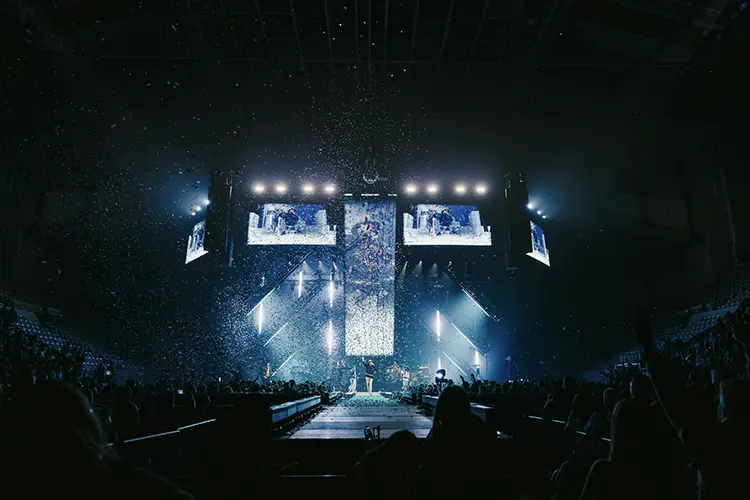
Fransen explored new approaches to show lighting when developing this design. For example, he reduced his reliance on more conventional moving fixtures in favor of more powerful linear configurations.
I see it as a way to get the most out of the investment. It allows us to be much more diverse in how we light the show than with more traditional methods, he commented.
Key to achieving this vision was a set of 100 CHAUVET Professional COLORado PXL Bar 16 motorized battens, which, along with the rest of the lighting and video system (including 32 Maverick Storm 2 Profiles), were supplied and installed by IPS of Franklin, Tennessee.
“We were really able to take full advantage of the PXL 16s”, Fransen explained. “They allowed us to create very impactful combinations, from subtle fragmented pixel effects to intense chases and hits synced to the beat”.
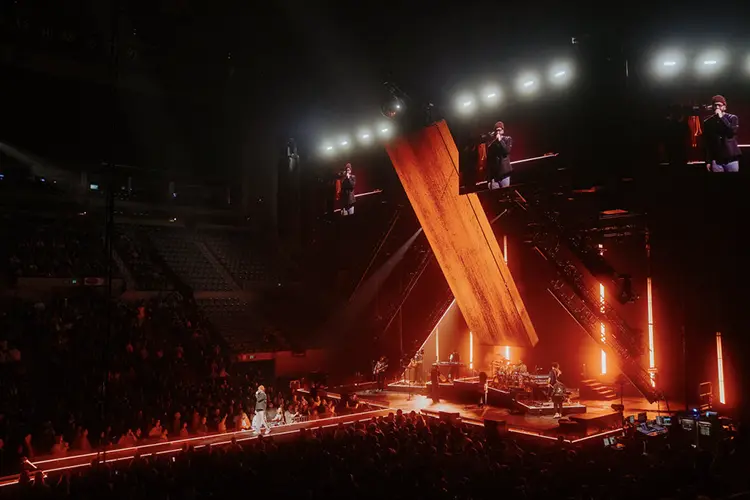
Continuing his interest in exploring new design options, Fransen also used these battens as blinders. “In recent years, we’ve moved away from relying on traditional blinders that only do one thing”, he explained. “Using a fixture like the PXL16 allows us to make the show much more musical, following the beat and creating far more visual interest”.
We love the output of the PXL 16, paired with the Storm 2 Profile—it helped us create a wide range of dynamic looks. Backlight and sidelight, as well as the upstage circular row, were done with Storm 2 Profiles. We were able to color-correct them to our standard backlight levels and then punch them through as beams when we needed that look, Fransen continued.
Fransen’s studio, Tony Fransen Productions, handled the production design, lighting and video programming, and creative services. He was supported by programmers Elijah Ekdahl (lighting) and Chris Herman (media servers), as well as the IPS team.
“You can’t bring a production like this to life without a strong team”, Fransen concluded, emphasizing that teamwork is essential and remains one of the fundamental pillars of design, regardless of how technology evolves.