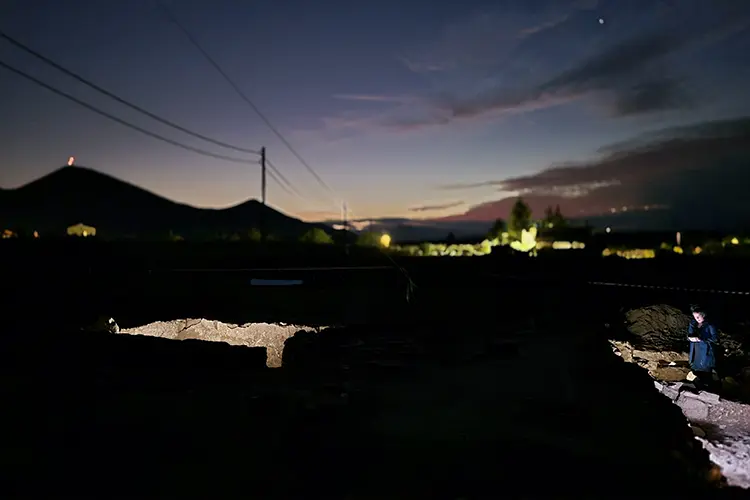
The ancient site of Tenea, near the modern village of Chiliomodi in Corinthia (southern Greece), has been the subject of an ongoing archaeological excavation since 2013.
Under the direction of Dr. Elena Korka of the Greek Ministry of Culture, the work takes place over five weeks each September and October, and has uncovered ritual structures, underground cisterns, rare coins, and workshop complexes spanning from the Archaic and Bronze Ages through to the Hellenistic and Roman periods.
This year, the site has taken on a new dimension thanks to a scenographic lighting installation made possible by GLP’s Nexus range.
 |
 |
The project took shape through the collaboration of two professionals with strong ties to both the site and the discipline of light. The first is Andreas Skourtis, an architect, performance designer, and cultural advisor, as well as Programme Leader for Performance Design at the Royal Central School of Speech and Drama, University of London. Skourtis was born in Chiliomodi and has been working with the excavation team from the Greek Ministry of Culture for several years. His long-time collaborator, Sofia Alexiadou, is a lighting designer and Programme Director for the BA (Hons) Creative Lighting Control and the MA Light in Performance at Rose Bruford College. Their brief was to bring the excavation areas to life during the transition from sunset into night, without compromising the archaeological integrity of the site.
Alexiadou was introduced to the Nexus range by Manuel Paulus, Head of Nexus Lights at GLP, at the company’s stand during Prolight+Sound Frankfurt 2025. The connection between the product and the project was immediate.
I was impressed from the outset by their flexibility. As a designer, I immediately began thinking about how to integrate them into different projects. When I was invited to the archaeological project, I thought: ‘I think I have a solution that fits perfectly in this space,’ says Alexiadou.
 |
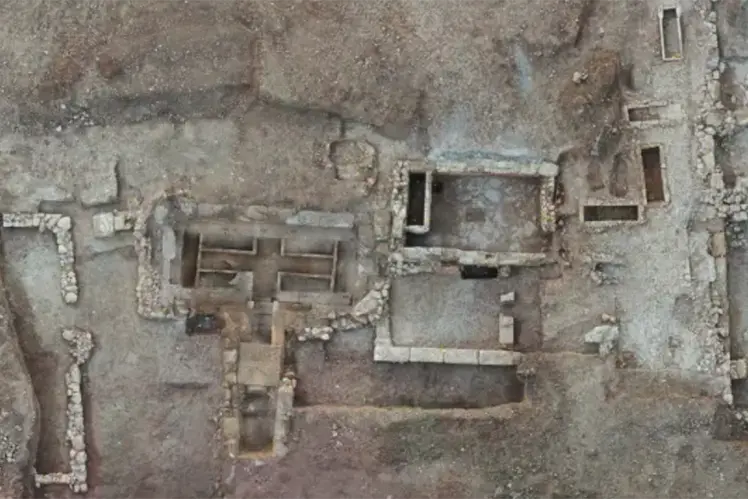 |
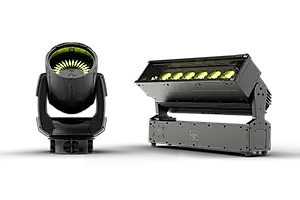
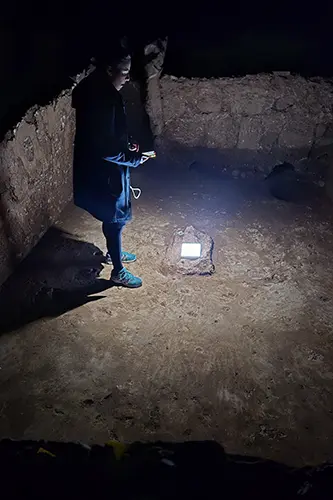
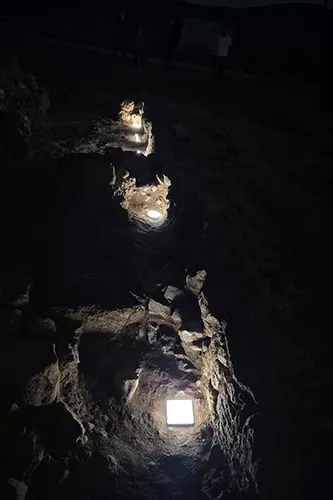
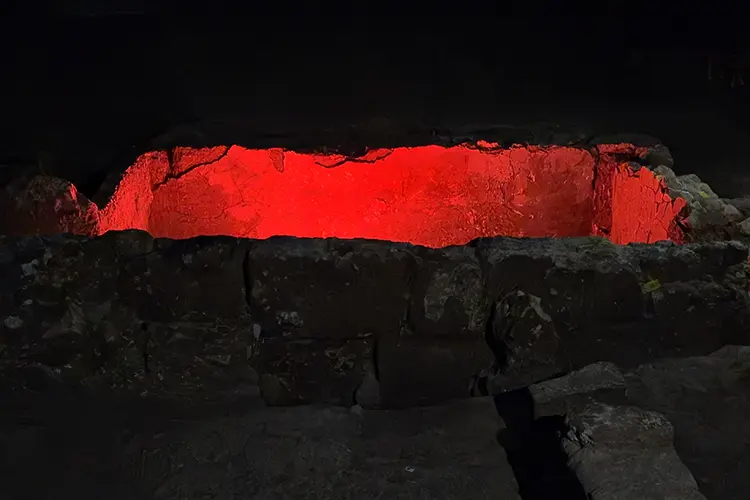
The installation used ten Nexus units, distributed across the excavation following the site’s architecture. Each unit features 48 RGBW LEDs, offers up to 24 hours of operation on a single charge, and is controlled wirelessly via an app, with no cabling required. With an IP65 rating and light enough for easy transport, the fixtures could be placed in alcoves, alongside ancient structures, and throughout the excavation without risk of damaging the heritage or disturbing the ground. “We started experimenting with the ten units, moving them around and trying different colours”, explains Alexiadou, “but the most important thing was to follow the architecture of the space”.
“We wanted to create a scenographic intervention in the space based on improvisation”, explains Skourtis. “Sofia and I used the Nexus luminaires to highlight the different elements of the site. In the end, we lit part of the excavation as if it were the heart of the space. We experimented with different colours and intensities, and one of the great advantages of these luminaires is how easy they are to install, handle, and experiment with”.
We were literally in the middle of nowhere, so being able to carry these luminaires and control them via the app was incredible. As they are battery-powered, the intervention was minimal. We could play with intensity, use the full range of colours, and create something new with light in an area that had remained buried. And because the Nexus units are so lightweight and flexible, we could place them in areas where we knew they would cause no damage, adds Alexiadou.
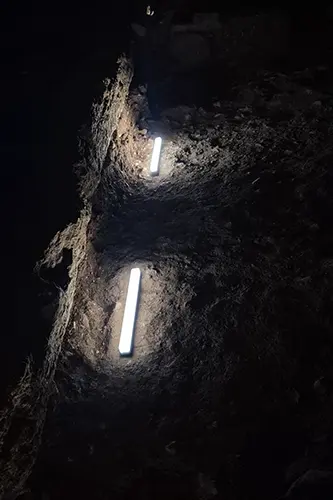 “For me, as a lighting designer, it was a very interesting experiment to test the quality of Nexus and explore the nuances and saturation levels we could achieve in combination with natural light”, explains Alexiadou. “It is a highly flexible system. In terms of colour, GLP has developed a solution that meets virtually any need. It is designed for the performing arts, and precisely for that reason I wanted to take it out of that context. The result was very positive and certainly gives us a vision for the future if we decide to pursue a permanent installation at the site”.
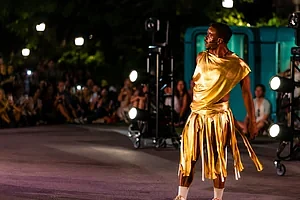
The work in Tenea was also integrated into Performing Ancient Tenea: Fragments, an annual site-specific performance and installation event curated by Skourtis each October since 2024, as part of his research project in collaboration with the archaeological team. “It was an opportunity to explore the space and develop a more improvisational intervention”, explains Skourtis, “which allowed us to understand how lighting can reinforce a narrative and create atmospheres within an active archaeological excavation. It’s something quite unusual”.
The Nexus range is available in Europe through Thomann and in North America via Full Compass Systems.
Photo credits: Aerial view – Greek Ministry of Culture | All other images – Andreas Skourtis