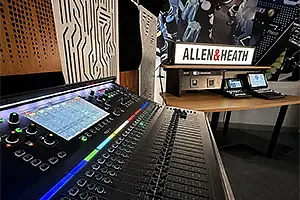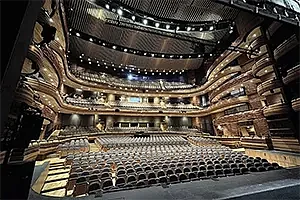
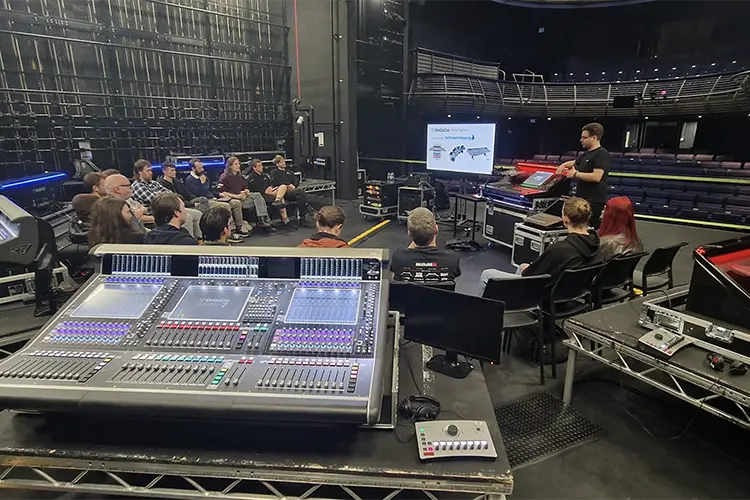
Stage Sound Services (SSS), a Cardiff-based sound rental company, has expanded its fleet of DiGiCo Quantum consoles to meet the demands of the theatre and musical productions it regularly supports.
Regardless of the console size, they all share one common element: DiGiCo’s Theatre (T) software. Company owner Phil Hurley explains why the software remains so popular among theatrical sound designers.
Our SD10T was a solid and stable console, and the Quantum 338T has been the perfect upgrade. The ability to work with multiple screens is a major advantage. Theatre designers quickly adopted the technology and it has now become an industry standard. It soon established itself as a reliable choice for medium- and large-scale musical theatre productions. In fact, the first Quantum 338T is currently being used on 'Stranger Things: First Shadow' in London’s West End,says Hurley.
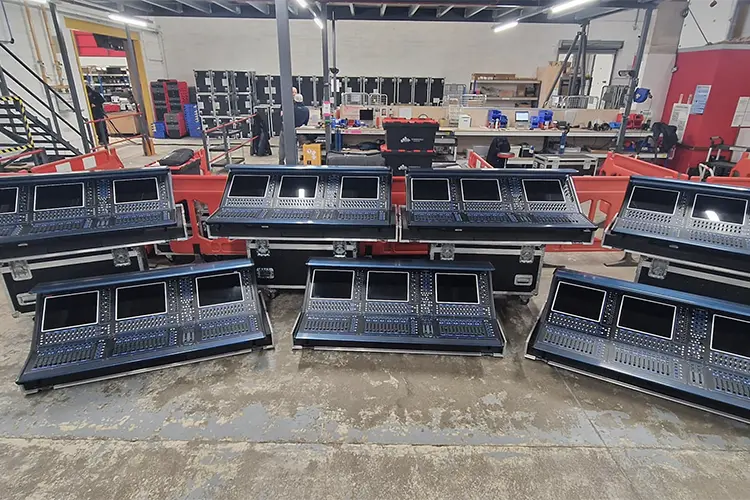
Hurley owns an extensive collection of DiGiCo consoles, including six Quantum 225s, nineteen Quantum 338s and four Quantum 326s, all equipped with the T software upgrade. He has also added Quantum 225 DS upgrades across the entire SSS Q225 fleet. Thanks to a strong return on investment, he continues to rely on DiGiCo products.
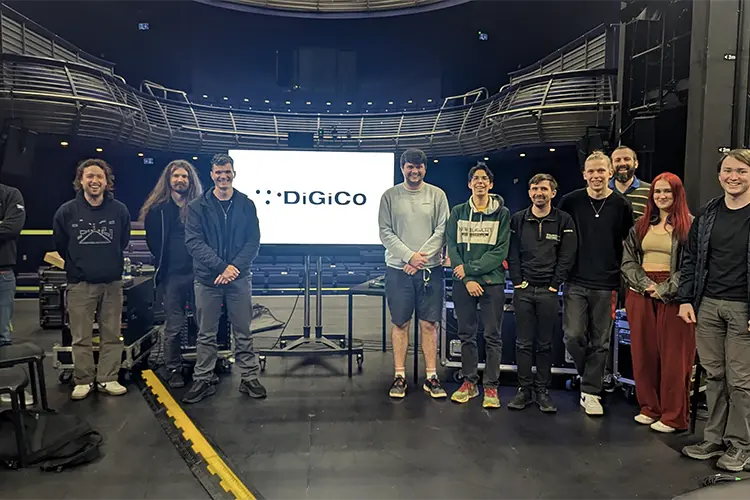
“As a rental company, it’s all about investing in the right tools at the right time”, he explains. “When the SD10 was introduced, we invested heavily from the outset. Those consoles have continued to work hard and have been used on countless productions. Our investment in the Quantum 338Ts is based on that experience and, with the available upgrades, we know we’ll get a great deal of use out of the new equipment”.
Sound designer Tom Marshall has relied on SSS equipment and technical support for more than ten years. The company has supplied equipment for many of his productions, including Bank of Dave, The Musical, which premiered in May at the Lowry Theatre in Salford. For Marshall, the Quantum Series and T software are the perfect combination.
This combination allows him to design the console architecture offline before production, incorporating contingency plans and then working alongside the head sound operator during rehearsals to programme the show.
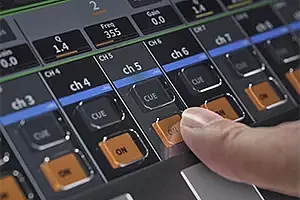
Thanks to the versatility of the T software, I use DiGiCo consoles on every show I work on, regardless of style. The smaller Q Series consoles, such as the Q338 and Q326, have allowed me to replace the SD10Ts, which were real workhorses, on every production I design. They are excellent FOH consoles for mid-scale touring theatre productions. The Quantum 338 has become one of my favourites and the offline editor is a fantastic tool; I can create a show file in a very short amount of time, says Marshall.
“Personally, I find it the easiest console software to use because it retains DiGiCo’s original Channel Strip graphical interface, which has long been recognised for its ergonomics and ease of use. The Mustard EQ and dynamics provide much greater flexibility and sound excellent. I also rely heavily on the onboard processing, such as the optical compressor emulations and Spice Rack. The Quantum features, T software, three screens and now the Fourier integration make the Q338 an outstanding console”.
Marshall uses Fourier transform.engine processors on many of his productions and says they have become an ideal tool for theatrical environments.
“I’ve been using transform.engine for some time now, either as a standalone device using MIDI program changes to switch reverb presets, or fully integrated into the console, as I did for the Olivier Awards”, he explains. “Fourier fits naturally within the DiGiCo ecosystem and provides an excellent interface”.
His comments reflect Hurley’s experience, who has observed an increasing number of sound designers choosing digital solutions for effects processing. For SSS, this has led to a shift in the type of outboard equipment it keeps in stock, replacing traditional hardware with software-based solutions such as Fourier transform.engine.
“We still send out some traditional effects units, but that’s becoming increasingly rare”, he adds. “Everything is now centred around digital plugins. Over the last five to ten years, people have explored many different options, and the Fourier range has become an essential tool for many engineers. There are many factors involved, but the processing range, ease of use and compatibility make it very straightforward to work with. Some users still prefer traditional effects, but transform.engine systems are clearly gaining ground”.
DiGiCo has long maintained a strong presence in the theatre sector. Since the development of the D5T in 2004 alongside leading theatrical sound designers such as Andrew Bruce, the company has responded to the needs of designers and engineers with tools that support creative workflows.
As Hurley concludes, that early commitment to digital consoles has helped establish long-term professional relationships that continue to deliver results.
I think DiGiCo’s position in the theatre market goes back to the development of the T software. In those early years, we invested in the D5Ts and the work on the T software has continued ever since. The older consoles served us very well, but the Quantum range, with its powerful processing, stability, clear displays and efficient workflow, remains extremely popular. DiGiCo consoles are increasingly recognised as some of the most stable systems in the mid- to high-end musical theatre market. The addition of Fourier has simply given DiGiCo another reason for users like us to continue investing in its products, he concludes.