

The spectacular Grease production by Secret Cinema, presented at Evolution London, showcased the revolutionary Spectera wideband wireless system from Sennheiser in one of its largest UK deployments.
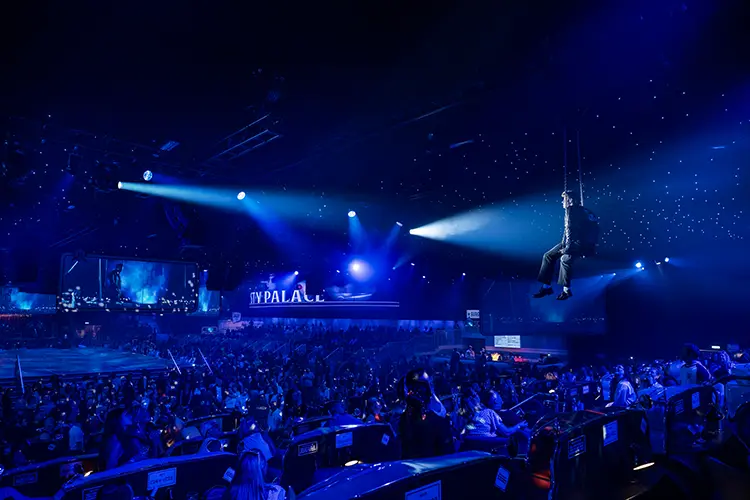
Running from early August through the second week of September at Battersea Park, this immersive theatrical experience transported audiences into the iconic world of Rydell High, where the line between screen and reality completely disappeared.
The production’s ambitious scale and unique requirements provided the perfect testing ground for Spectera’s advanced capabilities, which exceeded all expectations.
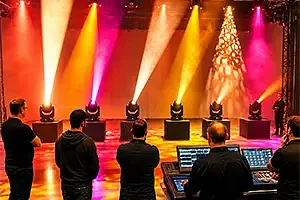
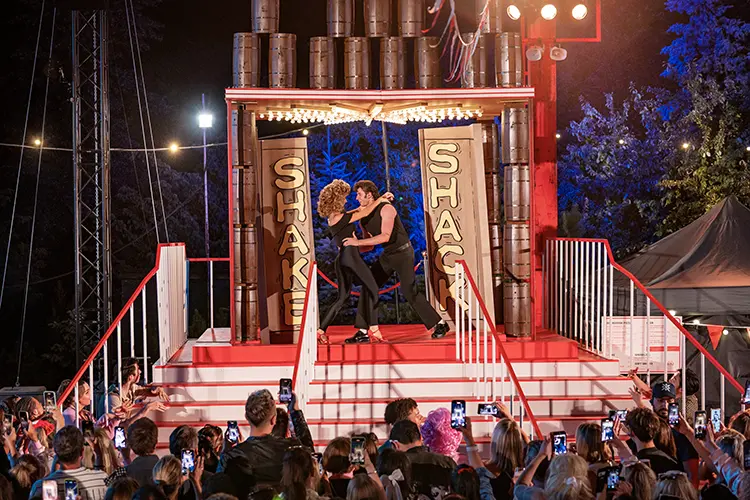
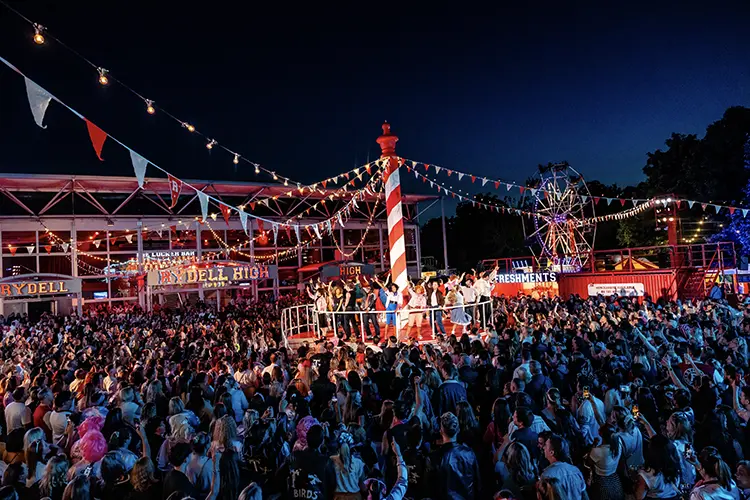
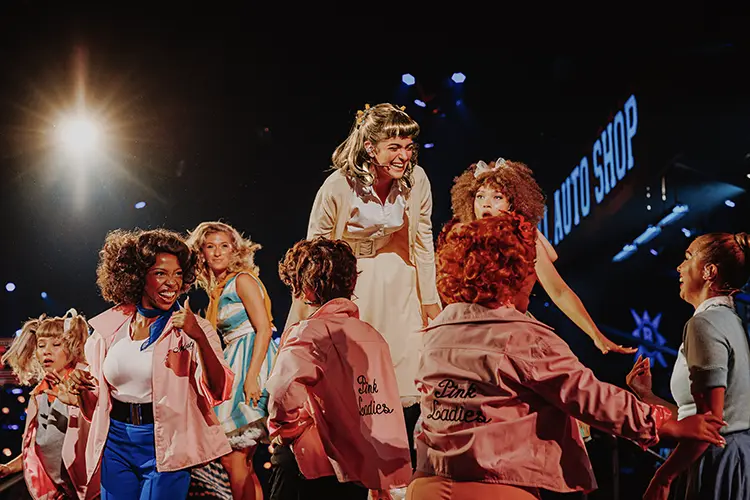
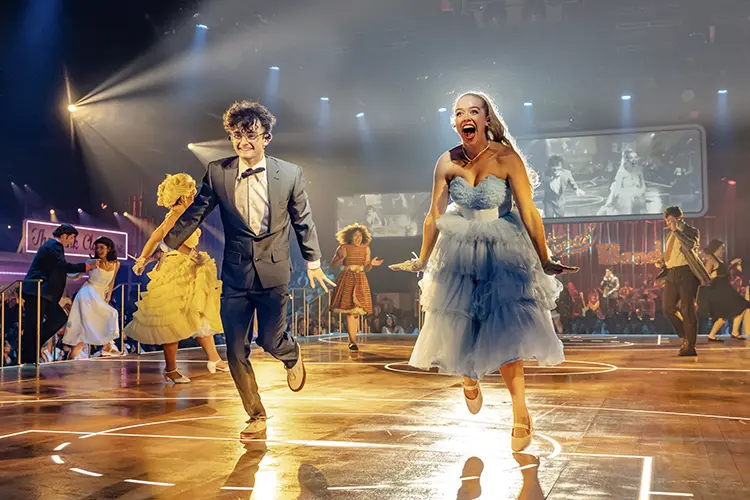
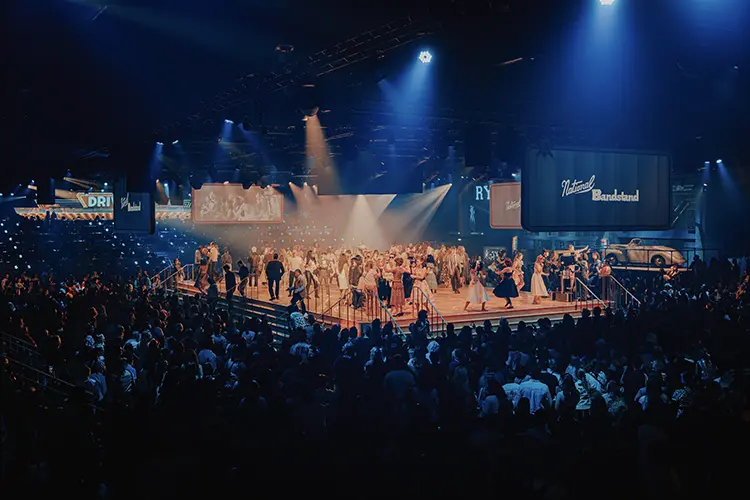
The event, spanning a large 75m x 50m indoor space and a 50m x 50m outdoor area, posed a remarkable challenge for wireless audio coverage. The production featured six indoor stages and five outdoor ones, including a full fairground complete with rides, a bar area with dancers, a Shake Shack, and a central stage. The performance culminated outdoors as the audience followed the cast through a funhouse, recreating the film’s famous finale.
 |
 |
Spectera is the world’s first bidirectional digital wideband wireless ecosystem, offering up to 64 channels in a single unit. The system provides unprecedented control over latency, audio quality, and range, while reducing the required equipment thanks to its innovative bidirectional bodypacks that handle both microphone and in-ear monitor (IEM) signals simultaneously. Sound designer Gareth Fry explains the unique demands of the production:
It’s a massive venue. Everywhere is a stage, everywhere is an audience space. Performers and spectators mingle with each other, and that was one of the key points of the show: to create that immersive effect and make the audience feel like they’re completely inside the world of Rydell High and the iconic scenes from 'Grease'.
The Spectera system provided full coverage for 30 cast members, delivering 40 microphone mixes and 10 IEM mixes across the venue, using just two base stations and eight DAD antennas operating on two TV channels. “This was Spectera’s ultimate test in its first major deployment”, says Fry. “With the entire cast using microphones simultaneously, achieving that kind of coverage with a traditional system would have been extremely difficult, costly, and time-consuming”.
The system’s bidirectional capabilities proved transformative for the production. Performers only needed a single beltpack that managed both microphone transmission and IEM reception. “When I told the cast they would only need one pack for both IEM and microphone, they burst into spontaneous applause”, recalls Fry.
Marcus Blight, Technical Application Engineer at Sennheiser, provided exceptional support during the deployment. His expertise was essential in pushing the limits of what was possible with wireless audio in such a complex environment.
Preparation was much faster, setup was 20 times easier and less complicated, and the robustness of the system is 10 times better. Additionally, the energy savings from not using large amplifiers is a major advantage. We’re not drawing as much current or keeping as many active devices powered on. In that sense, the system can also be considered more sustainable, notes Blight.
The production’s technical complexity went far beyond conventional theatre requirements. With performances precisely synchronized to the original film and a combination of live action and pre-recorded elements, the wireless system had to support cueing and provide seamless coverage across diverse performance spaces. “Because of the complexity of everything else—tracking, speakers everywhere—the radio deployment had to be simple, and Spectera allowed that”, explains Blight. “Doing a production like this with a narrowband system would have been extremely challenging”.
Stage Sound Services, the production’s rental partner, had long been preparing for this moment. General Manager James Lewis and Senior Account Manager Jonathan Everett pushed to acquire Spectera specifically for this show, recognizing its potential to transform their approach to large-scale wireless audio. Kevin Gwyther-Brown, Business Development Manager at Sennheiser, worked closely with Stage Sound Services throughout the process, building on extensive training sessions held earlier in the year.
“The Sennheiser 6000 series has been rock solid as a radio system, so with Spectera, it was clear that the build quality would be excellent”, says Lewis. “Earlier this year, Marcus and Kevin ran a session on the Spectera system as part of our Training Tuesdays program. It was both comprehensive and informative. While there was a lot to take in—since Spectera is a completely different technology from the RF systems we’re used to—it provided a valuable opportunity to get hands-on with the product and understand the theory behind it. It was also great to welcome students from a local university, giving them a chance to learn about the new technologies shaping our industry. The depth of technical knowledge Marcus brings in both RF and Spectera is impressive, and he has a real ability to communicate that knowledge in an accessible way”.
“Stage Sound Services has always been, and continues to be, committed to Sennheiser and embracing new technologies”, adds Gwyther-Brown. “This production perfectly exemplified that partnership, with a team whose expertise and forward-thinking approach made the Spectera deployment a resounding success”.
The system’s advanced monitoring capabilities provided complete control over the performers’ equipment status, as Fry explains: “It’s a two-way system that communicates with the control racks. With the IEMs, we could see from the control system if someone had accidentally turned down their headphone volume or unplugged their headset”.
Production Sound Engineer Tom Lishman highlighted the crucial role the system played in the show’s success:
We completely relied on the IEM technology to keep the cast in sync inside this huge building, and it worked on every stage. I don’t think we could have achieved that with any other technology. We knew we were doing things that hadn’t been done before, he says.
The deployment demonstrated Spectera’s flexibility in antenna connectivity: outdoor antennas were connected via fiber and indoor antennas via Cat5e cable, with the two Spectera Base Stations occupying only 2U of rack space. This versatility, combined with range extension functions and advanced audio quality control, proved essential for the show’s demanding requirements.
“The most impressive thing for us was the coverage area it enabled, its flexibility, and the excellent sound quality”, concludes Lishman. “And of course, the quick setup saved us a lot of time and effort”.
The production also used Sennheiser HM 200 headset microphones, completing a comprehensive wireless solution that successfully met the challenges of this ambitious theatrical experience.
“We’ve been doing eight or nine shows a week for a couple of months, and the system has been rock solid”, says Fry. “From a long-term reliability perspective, it feels excellent”.
Photo credits: Matt Crockett, Danny Kaan, Luke Dyson