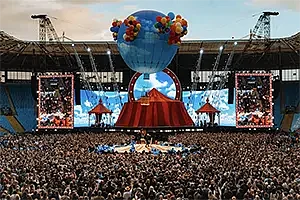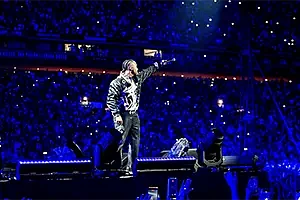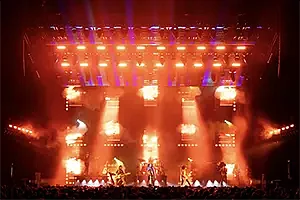
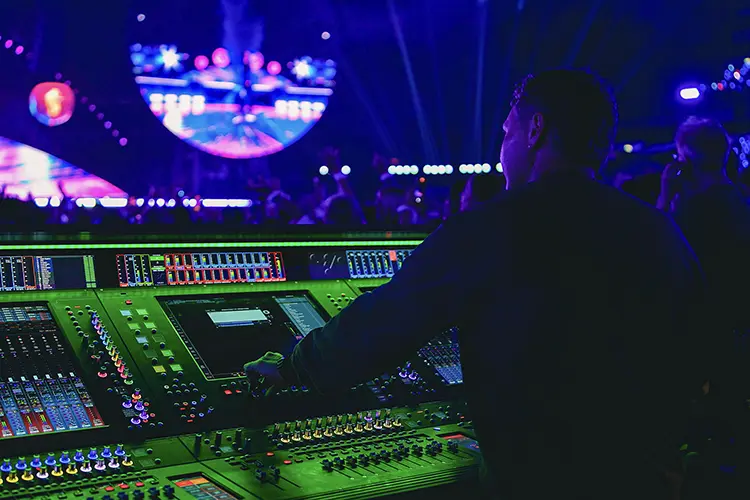
Coldplay’s Music of the Spheres world tour is an unprecedented concert journey. It began in San José, Costa Rica, on March 18, 2022, and after a pause that concluded on September 12, 2025, it now totals 225 shows across 80 cities in 43 countries.
Supported by the albums Music of the Spheres (2021) and Moon Music (2024), this stadium tour has also been notable for its remarkable sustainability initiatives, reducing CO₂ emissions by nearly 60% compared to the band’s previous tour. But it is still far from over: it is expected to resume in 2027 with another major leg, which the band has teased as “138 more shows to go”.
If the tour’s longevity is impressive, it is matched by the long-standing careers of several key crew members, including Dan Green, Coldplay’s FOH engineer and audio producer since 1998, and Tony Smith, head of audio system design and FOH tech, who has worked with Green for 23 of those years. Equally remarkable: for most of that time, both have worked with DiGiCo consoles.
I’ve been using DiGiCo since 2011, starting with the SD7, and I’ve continued with them ever since. DiGiCo is extremely versatile: it has so many inputs and outputs, and its matrixing is incredible. It’s a very versatile platform, says Green, who later moved to a Quantum7 with a new Quantum engine.
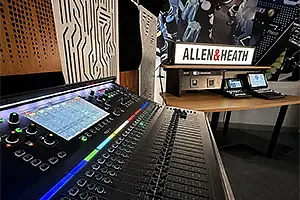
In November 2024, when the tour arrived in Australia, Green and Smith had the opportunity to switch the FOH mix to a new DiGiCo Quantum852 supplied by Solotech, and they didn’t hesitate to do so.
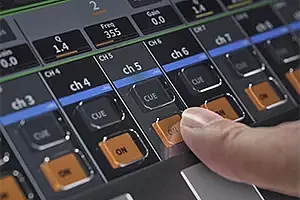
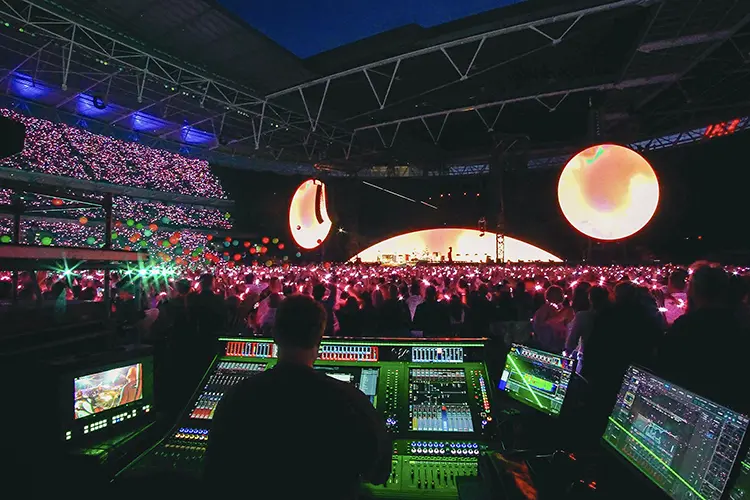
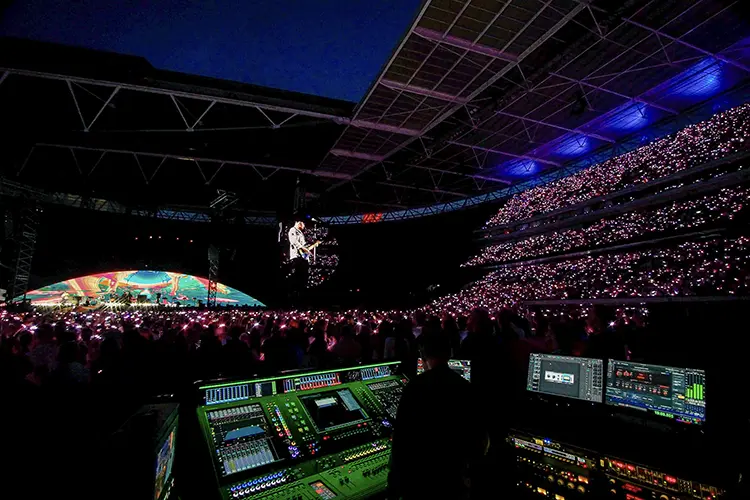
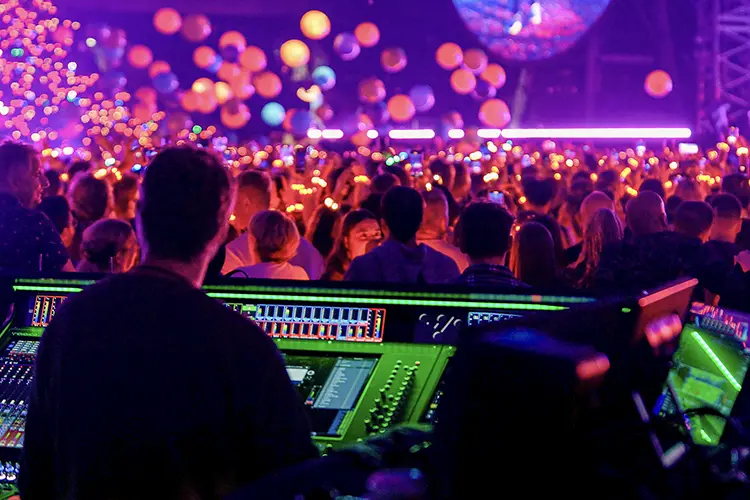
“The Q8 has been amazing: it offers much more workflow flexibility”, Green says enthusiastically. “It has taken everything that was great about the Quantum7 and expanded on it. The screens are incredible, and it allows me to have more layers and a lot more workspace on the console. The Q8 is the best of the DiGiCo line so far”.
 |
 |
Green notes that he appreciates the Quantum852’s onboard processing. “The expanded Spice Rack has allowed me to free up several plugin chains that previously depended on external processors, integrating everything into the console, which is far more practical. The internal filters are always the first thing I use on any channel: they let me quickly clean up the low or high end when needed, and the Q8’s filters work very well. I love how they sound; they have a very pleasant analog character”.
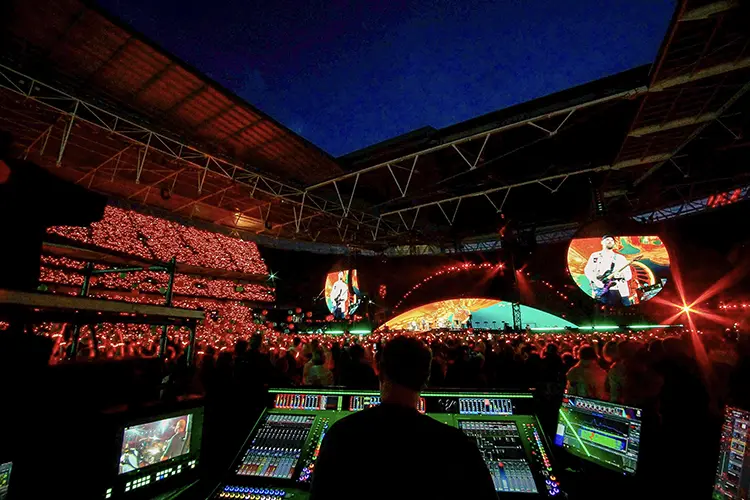
With the band performing on no fewer than three stages at each tour stop, a large number of inputs arrive at the FOH console. “I think it’s around 200, plus another 32 channels of ambient microphones because we record every show. The Q8 is amazing because, as far as I know, it’s the only console on the market capable of handling that number of inputs”.
Speaking of I/O, the Quantum852 has been invaluable for its ability to provide exceptional feeds to broadcasters.
 |
 |
The recordings have far too many channels to send to a broadcast engineer; there’s no way they could accept them, let alone mix them in a live situation. The Quantum8 has so many auxes that I can create submixes of all my individual elements and send 48 channels of stems to broadcasters so they already have a solid starting point. In fact, they can leave the faders at zero and that’s already a good place to begin. They can recreate my mix and then adjust it to suit their needs, Green explains.
“We’re very proud of the sound we’ve achieved on Coldplay’s shows and we always receive very positive feedback. No matter where you are in the venue, the sonic experience is excellent. Plus, the broadcasts and social media content sound fantastic thanks to the stem system. The BBC gave us incredible feedback after our Glastonbury performance, so we’re very pleased with how everything is sounding”.
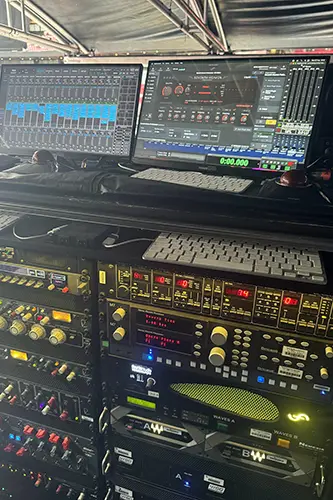 The tour’s strong commitment to going green is shared by all departments, including audio. “Sustainability has been a big part of what we’ve aimed to achieve on this tour”, Green shares. “In the audio department, we’ve tried to downsize our racks; previously I had lots of analog hardware, many analog preamps, lots of external effects. And I’m pleased that we’ve now been able to reduce the setup to the Quantum8 and a single rack thanks to the use of Fourier plugins and the console’s onboard effects and processing. It has made a big difference”.
Green and Smith started with the beta version of Fourier Audio’s transform.engine two and a half years ago, before its official release, and were able to road test it by integrating it gradually. “Fourier was very interesting to me because it allowed me to use the VST3 plugins that I rely on in the studio, and I wanted the opportunity to bring these into a live context”, Green says. “I was very excited to beta test it. And as soon as we got the full working version—the official release—we put it into our system and it’s been fantastic. I’ve uploaded all my effects to the Fourier and I’ve really enjoyed exploring VST3 plugins in ways I wasn’t able to before”.
“When mixing live audio, I’ve always enjoyed using plugins because they let me change things and try new options almost nightly, if I want”, he continues. “Hardware is amazing and I love it, but it’s restrictive: once you build a rack, you usually stick with it for the whole tour or campaign—in our case, four years! It’s hard to change things on the fly when everything is working. With the transform.engine, having access to these VST3 plugins lets me experiment with any idea I might have. Anything I think of, I can basically try it, not to mention stacking processes, which is much harder with hardware. For example, I might want a reverb followed by a compressor; if I want to try that, I now have the option. Fourier has been rock-solid—no complaints—and it’s been a joy to test it with DiGiCo products. I’m very excited about what they’ll bring in the future”.
For Smith, one of his main appreciations of the Quantum852 comes from a very practical standpoint related to the demanding environments of outdoor shows.
It’s getting hotter everywhere, and in some places on the tour, the temperature at FOH has reached 43 degrees, which presents challenges for the consoles, racks, and everything else. But it’s clear that a lot of thought went into how air and heat flow inside the Quantum8. It runs much cooler, which is amazing considering it has more processing power. Knowing that the shows will keep running even in the hottest conditions is a huge relief, he says.
 |
 |
Under the stage, in monitor world, Chris “Woodsy” Wood continues to rely on his trusted Quantum7, Smith notes. “Although he was tempted to switch to the Q8 when we did, Chris is more than happy with the Q7, so why change something that isn’t broken?” he says. “Apart from a Bricasti M7, no external hardware is used on monitors. The Q7’s Nodals are used, as well as the Spice Rack and onboard effects: everything is onboard”.
Great gear is only as good as its support, and DiGiCo’s support has reportedly been exceptional.
“DiGiCo has been incredible to us”, Green says. “They’ve been extremely supportive and the team is always there to answer a message or help us in any emergency situation. And if we have ideas on how to do something or any unusual request, Dave and the team are always willing to help and respond whenever we reach out”.
Smith agrees: “From my perspective, not being the mixer, one of my favorite things about DiGiCo is their amazing support, which you always need”, he says. “When you’re on the other side of the world, things can go wrong. But if you have the right support, you know you can get through it. And in the past, DiGiCo has done just that. They’ve performed miracles, which has been amazing”.
Related images:
- DiGiCo_Coldplay_1-5 – Dan Green, Coldplay’s FOH engineer and audio producer, mixing the Music of the Spheres World tour on a DiGiCo Quantum852 console.
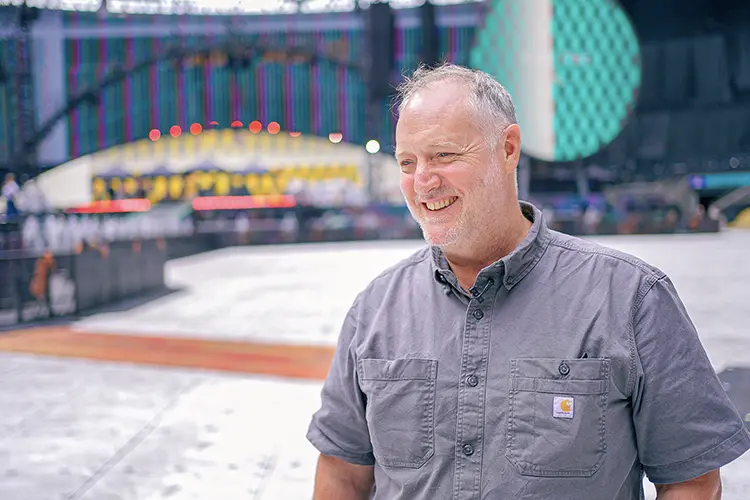
- DiGiCo_Coldplay_6 – Tony Smith, Coldplay’s head of audio system design and FOH tech.
- DiGiCo_Coldplay_7-8 – Fourier Audio’s transform.engine in Coldplay’s FOH outboard rack, running LiquidSonics’ Seventh Heaven Professional reverb plugin.
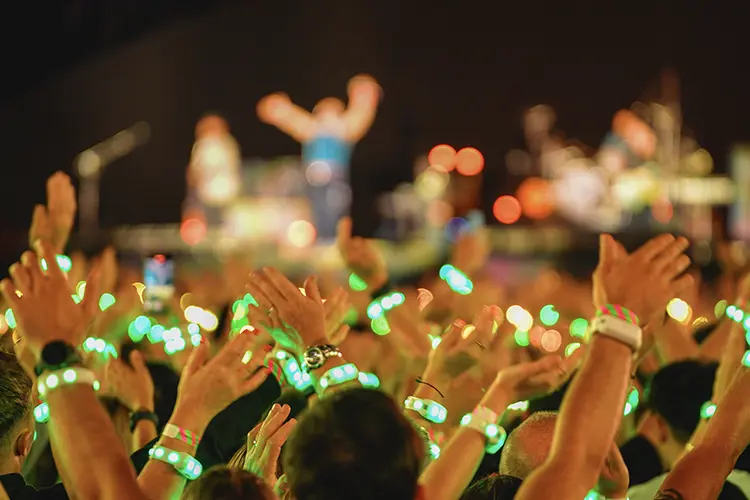
- DiGiCo_Coldplay_9 – After 225 shows in 80 cities across 43 countries, Coldplay’s Music of the Spheres World tour is expected to pick back up in 2027 with 138 more shows.