
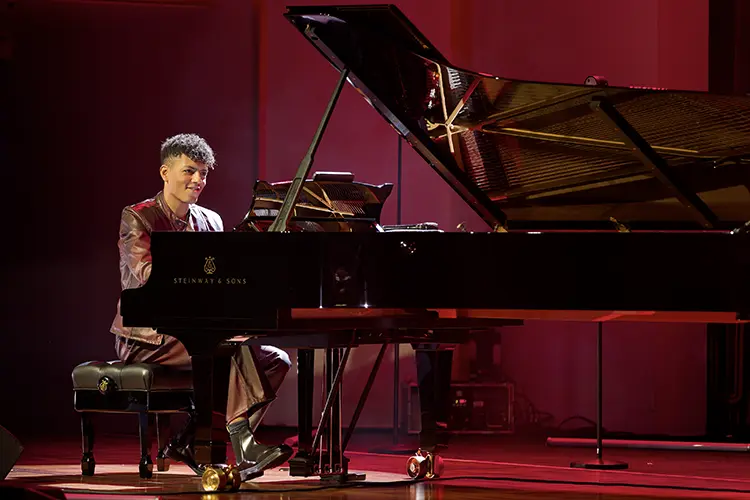
Louis Philippson, a classical pianist and exceptionally gifted musician with perfect pitch, first drew attention at just seven years old thanks to a YouTube video of his performance at a talent competition.
Born in 2003, Philippson, who has synaesthesia, has since become a social media phenomenon with more than 1.3 million followers and is regarded as one of the most successful classical music influencers.
With his charisma, wit and virtuosity, he captivates millions of fans, helping to spark a passion for piano playing (also) among Gen Z.
No compromises: signal transmission with Spectera in 'Raw Low Latency' mode
On Philippson’s current tour, Classical Music for Everyone 2025/26, Neumann Miniature Clip Mic MCM systems reproduce the performance of the artist and his ensemble with impressive detail, capturing even the most subtle sound nuances.
The microphone signals are transmitted wirelessly via the Sennheiser Spectera wideband ecosystem: a dream team for audio signal processing that meets the highest audiophile standards.
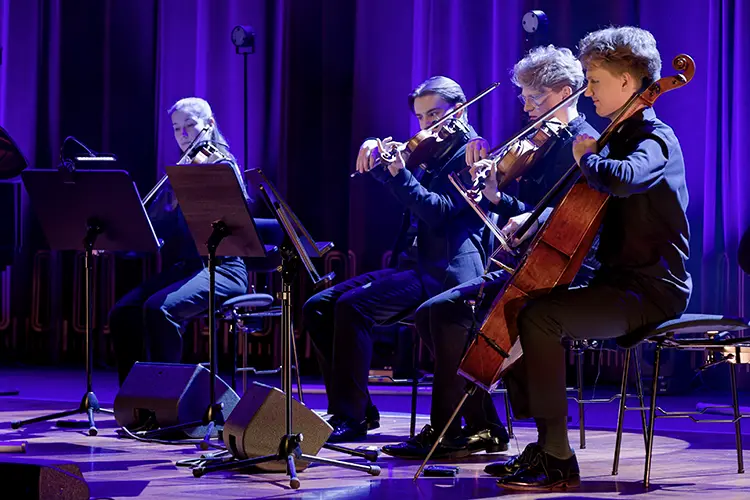
Six Spectera SEK bodypacks are used on Louis Philippson’s tour to transmit the microphone signals: FoH engineer Thorsten Seeliger places two packs on padded mats inside the grand piano, while four more are used by the Berlin Chamber Collective (first and second violins, viola and cello), who accompany the pianist. For wireless transmission to the Spectera Base Station, Seeliger has selected the Raw Low Latency audio mode, which ensures the best possible PCM audio quality with a 24-bit depth and a 96 kHz sampling rate, with latency of just 1 millisecond. The Base Station uses an 8 MHz-wide UHF channel. Seeliger keeps the second available 8 MHz channel free as part of his emergency backup concept.
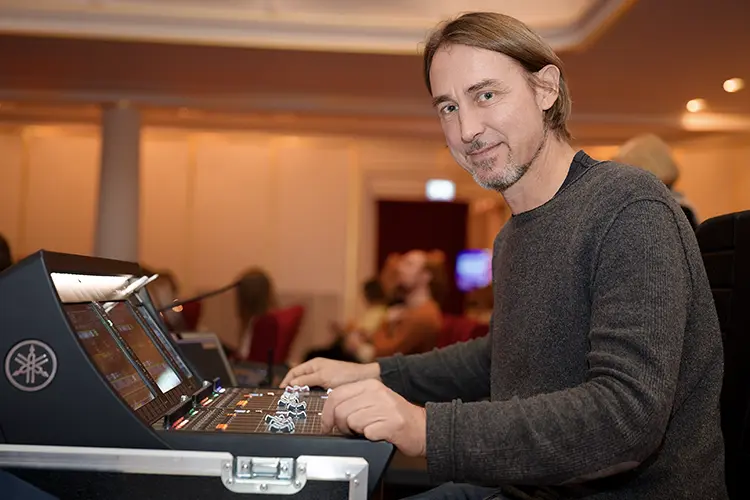
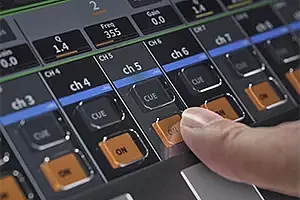
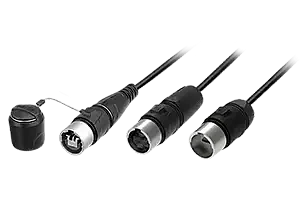
Two DAD antennas are connected to the Spectera Base Station via network cables. They are powered by PoE and positioned on stands to the right and left of the stage. The Base Station is connected to the digital mixing console via Dante. The Sennheiser Spectera WebUI, running on a laptop at the FoH position, provides a perfect overview and extensive remote control options. The BA 70 lithium-ion battery packs for the SEK bodypacks are recharged in a Sennheiser L 6000 charging station.
Neumann MCM 114 sets for grand piano, violins, viola and cello
The modular Neumann Miniature Clip Mic MCM system was developed for close miking acoustic instruments both on stage and in the studio. Special mounting clips (MC 1 to MC 9) and three goosenecks of different lengths ensure gentle, low-vibration mounting on all kinds of instruments, from strings and brass to pianos and drums.
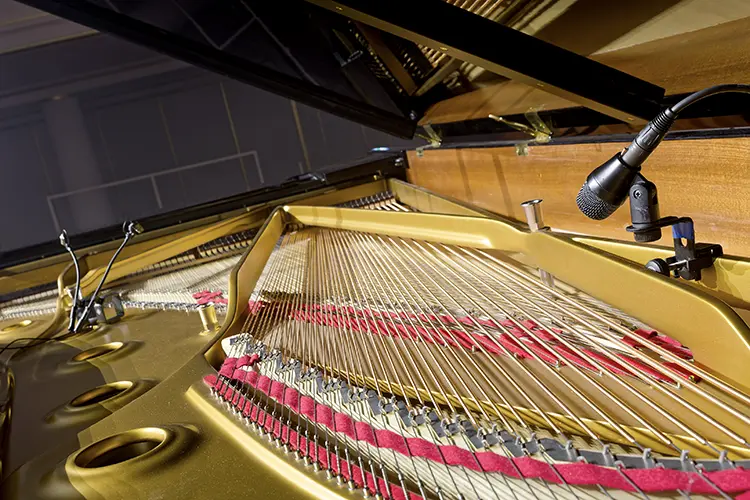
To mic the grand piano, Seeliger uses the Neumann MCM 114 Stereo Set Piano, with Neumann MC 8 magnetic piano clips to aim the capsules at the tenor and treble strings in an AB configuration. The Neumann microphones are complemented by a dynamic Sennheiser evolution e 904 instrument microphone mounted at the tip of the piano above the bass strings.
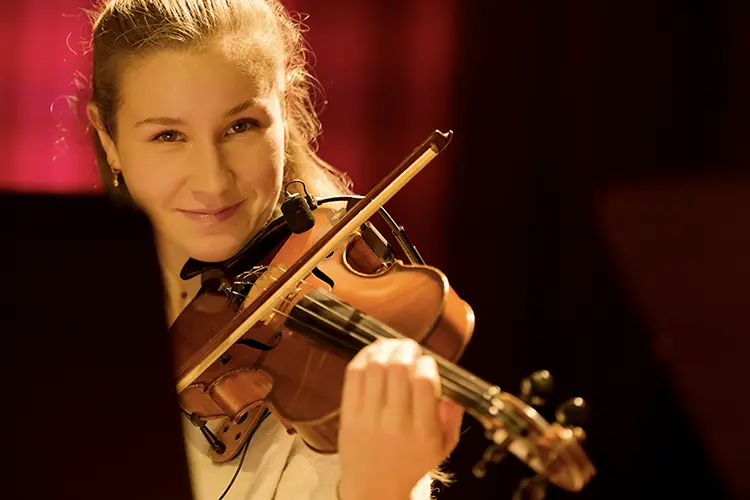
The first and second violins and the viola each use a Neumann MCM 114 Set High Strings (MC 1), while the cello is miked with a Neumann MCM 114 Set Cello (MC 2). The Miniature Clip Mic system elevates the electret principle to a new sound standard, ensuring impressively natural reproduction of the bass and mid ranges and transparent highs.
To address the audience, Philippson relies on a Sennheiser SKM 500 G4-S handheld transmitter with an MMK 965-1 capsule and an EM 300-500 G4 True Diversity receiver. Seeliger uses a second G4 handheld transmitter with an MMD 935-1 capsule as a talkback microphone. One of the responsibilities of this experienced audio professional at NORDLITE Event Solutions GmbH is distributing Spectera. He has accompanied Louis Philippson since autumn 2024, initially as tour manager and now, on the current Classical Music for Everyone tour, in his dual role as chief sound engineer and tour manager.

This combined use of Neumann MCM microphones and the Sennheiser Spectera wideband wireless system on the ‘Classical Music for Everyone’ tour is something new for me, although I’ve owned the MCM sets for quite some time and use them regularly. The SEK bodypacks are bidirectional, meaning they can transmit mic/line signals and receive IEM signals simultaneously. However, conventional wedge monitors are used on Louis Philippson’s tour, as the young ensemble does not yet have experience with in-ear systems. I’ve found that many classically trained musicians tend to view in-ear monitoring with some scepticism at first, as they are accustomed to purely acoustic listening environments. I understand that the ensemble did not want to start using IEMs in concerts straight away without having had time to get used to it, comments Seeliger.
The use of wedges on stage was the reason why Thorsten Seeliger chose KK 14 capsules with a cardioid pickup pattern instead of the omnidirectional Neumann KK 13 model. In doing so, he aimed to avoid crosstalk between microphones and prevent potential feedback. The ensemble had no objections to attaching the MCM clips to their instruments, and Louis Philippson also had no concerns about having microphones and bodypack transmitters placed inside his piano.
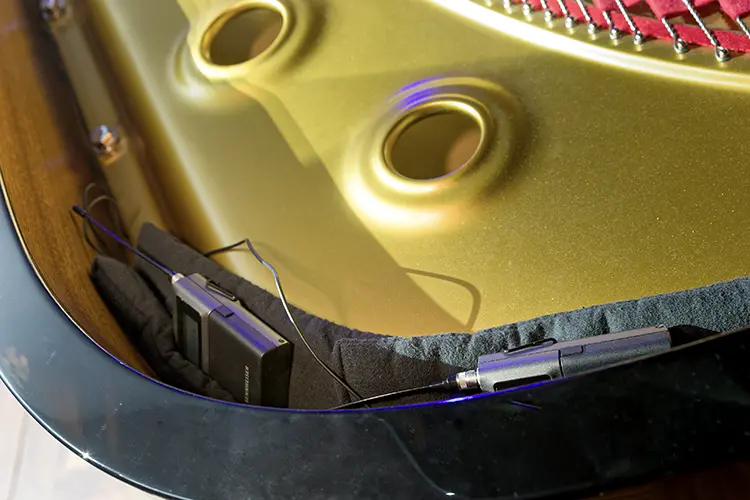
“For most of the concert, I only subtly blend the signal from the Sennheiser e 904 on the bass strings of the piano with the two Neumann MCM microphones”, reveals Seeliger. “However, the programme also includes an AC/DC piece, and for that I can use the e 904 to deliver the powerful low-end punch that’s needed”. In terms of overall sound, this somewhat unusual combination of three microphones delivered very good results during the concert.
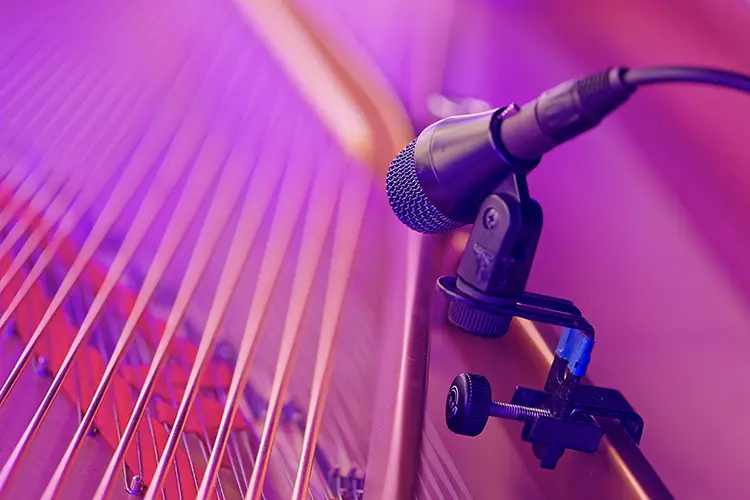
To achieve the cleanest and most transparent sound possible, Seeliger avoided typical classical music setups such as small- or large-diaphragm microphones placed at a distance from the instruments. “The MCM sets deliver a very rounded and soft sound even with close miking. And for us, having a clean, uncluttered stage is very important”, he commented. “It’s fantastic that we no longer need to run cables across the stage and still don’t have to compromise on sound quality”.
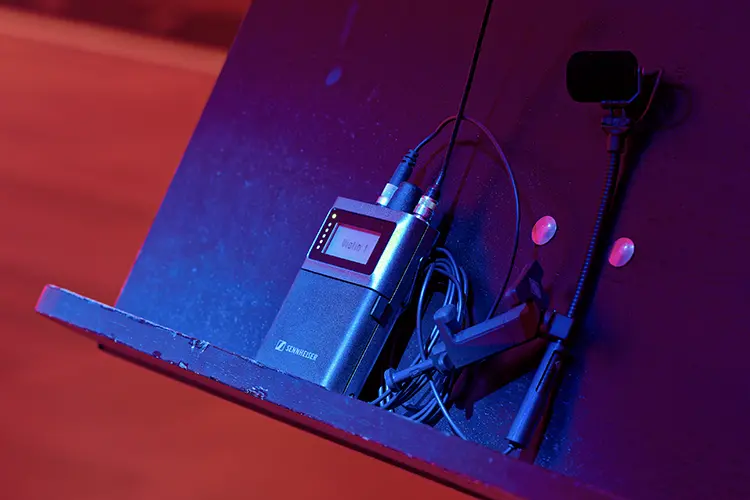
Frequency management, which used to be a complex process, is no longer an issue, much to Seeliger’s satisfaction: “It’s become easy. I run a scan once at the venue, select a free area, enter the values and, in a workflow that takes about 15 seconds, it’s ready. The bodypacks are automatically set to the correct frequency range without any input from me. That means the system is ready to go much faster than before. And I no longer have to worry about putting tape on the bodypacks to label the user’s name”.
Another advantage of Spectera that contributes to faster setup is its minimal space requirement: the Base Station occupies just 1 RU when installed in a 19” rack. Depending on the audio mode, it controls up to 64 audio links (32 inputs and 32 outputs) and uses up to two independent wideband RF channels instead of a large number of narrowband RF carriers.
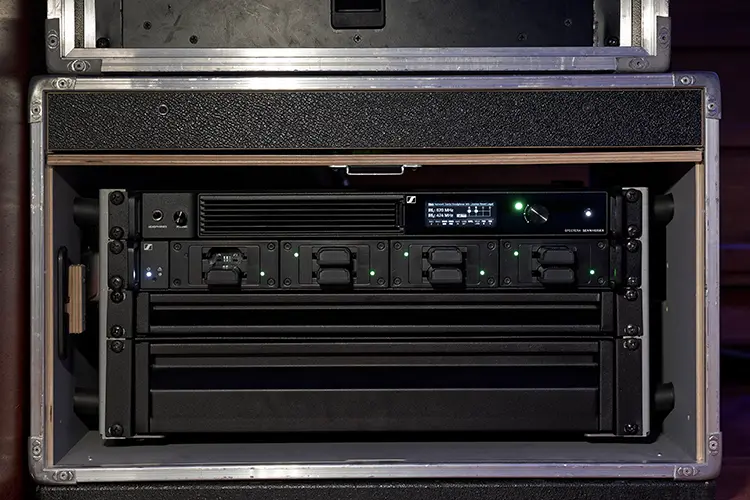
Spectera + MCM = a premium audiophile package
Thorsten Seeliger describes this combination of Neumann Miniature Clip Mic MCM systems and the Sennheiser Spectera wideband ecosystem as a “premium audiophile package”, but without demanding a premium price. “When used together, the components deliver outstanding sound quality that, in my opinion, similar products from other manufacturers cannot come close to achieving. The sound is excellent without major adjustments to the channel EQs, and the price-performance ratio is attractive”.
When it comes to providing sound for my concerts, I have complete confidence in Thorsten Seeliger. Although I always want to know and learn as much as possible, my knowledge of audio technology still has plenty of room for improvement. I’m currently making my first attempts at recording my piano at home. For now, I’m still using my smartphone or the built-in microphone on my digital camera, which is not an ideal solution, although it’s sufficient for short videos on social media. But for real concerts, of course, nothing is more important than sound quality, and I’m very pleased that we are using products from renowned companies such as Neumann and Sennheiser on my tour. I’m still a newbie when it comes to sound engineering, but of course I’m familiar with these famous names, states Philippson.
Jörg Langel (Business Development Manager - Touring & Rental Professional Audio), Thorsten Seeliger’s main contact at Sennheiser, comments: “The new Neumann MCM series can fully unleash its sonic potential when used together with the innovative Sennheiser Spectera ecosystem. The wireless transmission of uncompressed PCM signals with a 24-bit word length and a 96 kHz sampling rate ensures precise and natural reproduction, setting new standards in every respect”.
Classical, but modern
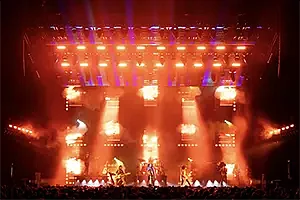
On his Classical Music for Everyone tour in 2025, Louis Philippson and his ensemble filled every venue and won over audiences. Compared to typical classical concerts, the audience was notably young and clearly enjoyed the performance in a relaxed and welcoming atmosphere. Due to this overwhelming success, the tour is scheduled to continue from the end of February 2026. In his two-hour concert, Philippson combines new arrangements of favourite works by Beethoven, Chopin and Brahms with popular film and television soundtracks, including compositions by Hans Zimmer. The repertoire even includes the AI-generated piece Beethoven Virus, generally considered unplayable.
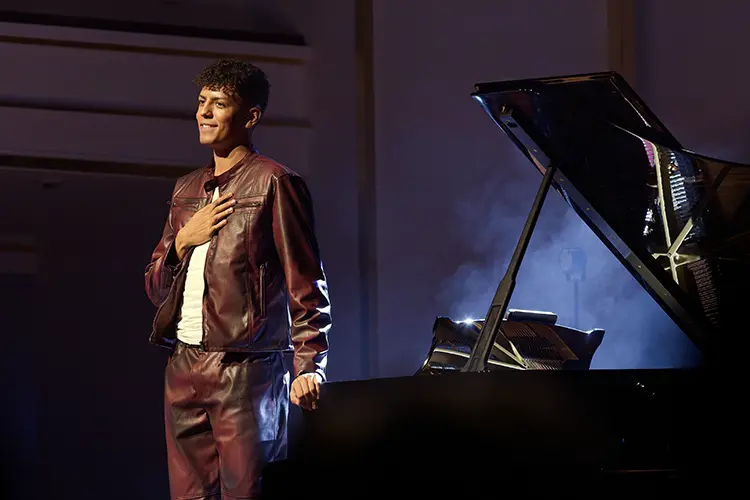
The sound quality on the Classical Music for Everyone tour, achieved with the Neumann Miniature Clip Mic MCM system and Sennheiser’s groundbreaking Spectera wideband system, is an acoustic delight that impresses even the most discerning listeners. Rarely has electroacoustically amplified classical music sounded so harmonious – and so modern – as when performed by Louis Philippson.