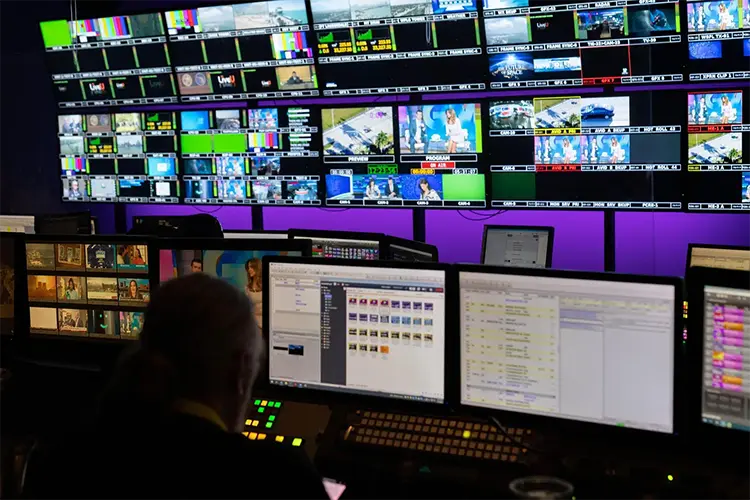
In live production, trust is not an abstract concept: it is an operational requirement. In news coverage, a sports event or a continuous broadcast environment, signal continuity, system stability and the ability to respond to incidents are all critical factors.
In the broadcast environment, every layer depends on the one before it: ingest, production, graphics, switching, distribution. When one of these elements fails, the impact is not only technical, but also editorial and operational. That is why the reliability of the overall ecosystem — including vendors — is so important.
The choice of a technology partner should not be based solely on features or cost. Factors such as system architecture (redundancy, failover), integration in SDI/IP environments, consistency of support and predictability in the evolution of the solution all have a direct impact on day-to-day operations.
In broadcast, trust translates into service continuity, operational stability and responsiveness. It depends not only on the product itself, but also on how the vendor responds when the system is under pressure.
From this perspective, a vendor’s integrity stops being an abstract concept and starts being measured in concrete terms: scope delivery, cost transparency, effective support and the ability to support the customer in demanding environments.
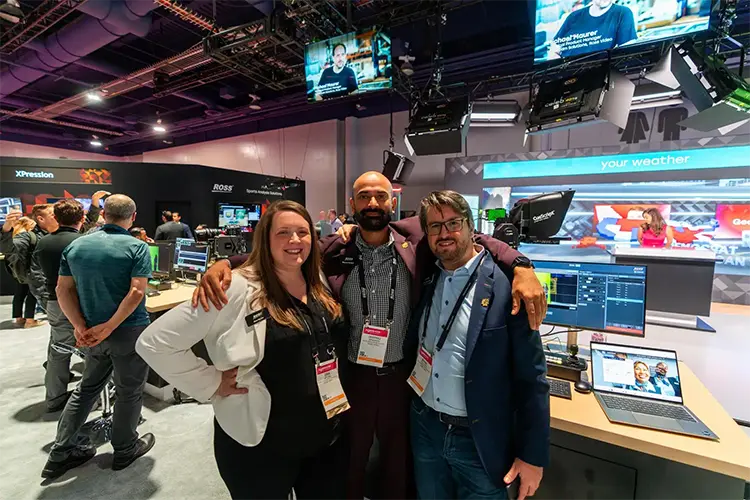
Vendor reliability as a critical factor
In live production, a technical incident rarely remains just a technical issue. It can affect the rundown, editorial continuity, team coordination and, ultimately, audience perception of the content.
Among the most common risks are:
- Operational disruptions. A failure anywhere in the chain — from a graphics system to a switcher or router — can compromise a broadcast. Robustness is essential, but so is the vendor’s ability to diagnose and respond in real time.
- Budget and planning overruns. Scope changes, poorly defined upgrades or unforeseen dependencies can generate additional costs and affect system deployment and operation.
- Reputational impact. In live broadcasting, failures are visible. And they usually fall on the technical teams responsible for operations.
In an environment where viewers can switch platforms in seconds, tolerance for error is minimal. Continuity and technical consistency are often the difference between retaining audience attention and losing it.
No system is infallible. The difference lies in how systems are designed to fail — redundancy, automatic switching, segmentation — and in how the vendor responds when an incident occurs.
For broadcast engineers, technical managers and integrators, the choice of vendor directly affects their ability to operate with confidence and defend decisions over the medium term.
What should be expected from a vendor today
Selection criteria have evolved. Today, the technology matters as much as the vendor’s ability to sustain it in operation.
- Technical and commercial transparency
Clear definition of scope, costs, limitations and future development scenarios. This helps avoid friction later on. - Performance validated in real production
Especially in live environments, multicamera operations, high-pressure events or continuous production workflows. - Effective operational support
Real availability, response times and escalation capability. Support is measured when there is an incident. - Continuity strategy
Compatibility, stability and progressive evolution without forcing constant replacements. - Sector experience
Real deployments, complex projects and sustained relationships with broadcasters and operators.
Ross Video as a case of operational continuity
In this context, Ross Video is one of the manufacturers with an established presence in broadcast environments, with deployments in broadcasters, sports leagues and production centres where service continuity is critical.
Its position is not explained solely by its product catalogue, but also by its recurring presence in installations that require operational stability and controlled long-term evolution.
Its references include organisations such as BBC, Sky and ESPN, in scenarios where pressure on continuity, workflow coordination and technical reliability is particularly high.
Some examples help put this approach into context:
Graham Media Group
The challenge was to reduce bottlenecks in graphics production and improve response times on air. Automating the graphics workflow helped shorten the cycle between creation, management and playout, improving the team’s ability to react to breaking news in real time.
Our experience working with Ross Video has been truly wonderful. I cannot say enough about their customer service. For me, it has simply been stellar and exceptional. Our programmes include a lot of graphics, and I do not know if we could achieve that with another graphics system. It would be very difficult. Ross Video makes it much easier for us, said Felicia Steiger, Design Director at Graham Media Group.
Sky Deutschland
In sports production, the goal was to increase visual dynamism without increasing operational complexity or taking up more studio space. Camera robotics made it possible to improve visual storytelling while maintaining control and precision in operation.
In live environments, technology only adds value if it improves the outcome without penalising operations. Added complexity usually works against that goal.
Thai PBS
The project required the infrastructure to be modernised towards 4K environments and SDI/IP workflows without compromising continuity. The key was to integrate capabilities into a more flexible architecture that could grow without interrupting day-to-day operations.
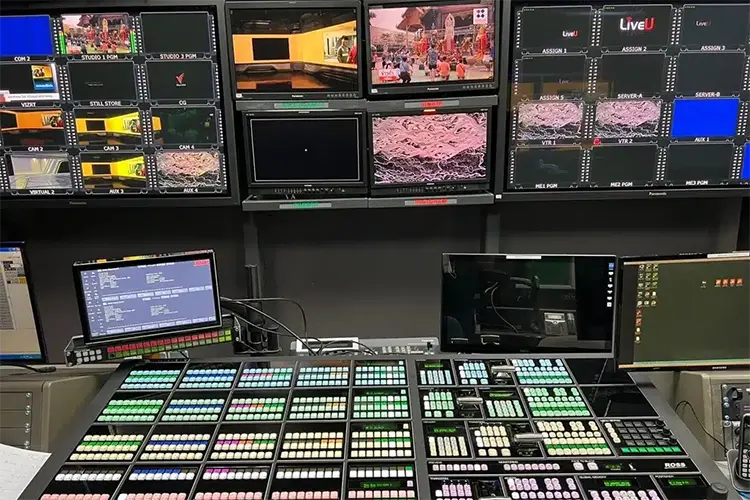
The three cases point to the same conclusion: in broadcast, a vendor’s value is measured by its ability to integrate into operations, sustain them under real conditions and evolve without creating uncertainty.
What the market really values
For professionals in the sector, concepts such as trust or integrity only matter when they translate into measurable results: service continuity, effective support, coherent integration and technology that performs under pressure.
In broadcast, working with proven vendors is not a matter of image, but of risk management. Reliability, responsiveness and operational continuity remain the factors that determine the success of an installation.