The broadcast industry is at a turning point where multiple technological vectors are converging to transform both production processes and the nature of the audiovisual experience.
The latest content published within the IBC365 environment points to a scenario in which the adoption of artificial intelligence, infrastructure virtualization, and the emergence of new interaction models are definitively leaving behind legacy paradigms.
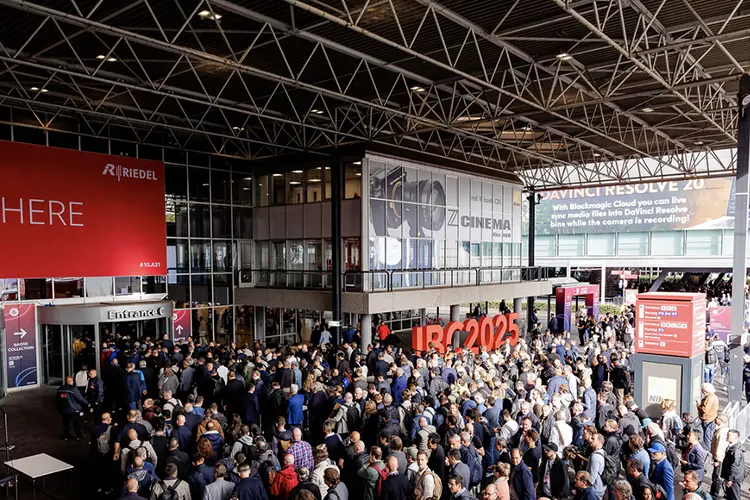
With IBC2026 in sight, taking place from September 11–14 at the RAI Amsterdam, the sector is beginning to outline a clear transition: from rigid, hardware-centric workflows to dynamic ecosystems orchestrated by software and driven by data.
From linear content to immersive experience
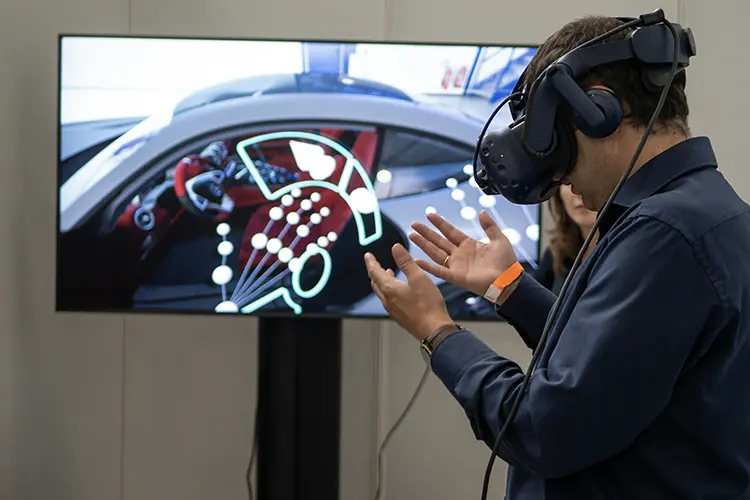
One of the most significant changes is taking place at the consumption layer. So-called spatial computing introduces an approach in which storytelling is no longer simply observed but experienced from within. By combining generative AI, computer vision, and data captured from real environments, hybrid experiences are created that integrate the physical and digital worlds.
This paradigm, partly driven by the evolution of the metaverse concept, has direct implications for broadcast. It is not just about new formats, but a redefinition of traditional roles: the viewer becomes a participant, while production requires the integration of real-time data layers and advanced rendering capabilities. As a result, workflows must adapt to manage non-linear, personalized, and contextual content.
Innovation in capture: resolution, format and data flow
In the field of image acquisition, innovation continues to push the boundaries between cinematic and broadcast. The case of the feature film Bedlam, shot with a modified Blackmagic URSA Cine 17K 65, exemplifies a trend toward the use of large-format sensors combined with next-generation digital pipelines.
This type of production raises significant technical challenges: from managing massive volumes of data to the need for storage and processing infrastructures capable of operating at extreme resolutions. At the same time, it opens up opportunities in terms of image quality and post-production flexibility—key factors increasingly demanded by premium content and OTT platforms.
Toward open infrastructures and intelligent orchestration
Beyond the creative layer, the most structural transformation is taking place in infrastructure. The introduction of Catena (SMPTE ST 2138) as an open standard for device and service control addresses a critical need: enabling interoperability in hybrid environments that combine cloud and on-premise systems.
Catena proposes a decoupled control plane that allows resources to be managed in a scalable and secure way, regardless of vendor or location. This approach facilitates the transition to distributed architectures, where production, playout, and distribution can be executed flexibly across different environments.
At the same time, the adoption of service-oriented technology stacks is driving more agile operating models. The priority is no longer just technical capability, but the speed at which services can be deployed, modified, and scaled according to demand.

Ecosystem reconfiguration: from hardware to MediaTech
The paradigm shift is also reflected in the sector’s institutional evolution. The transformation of IABM into IAMT (International Association of MediaTech) symbolizes the move from a device-centric industry to an ecosystem defined by software, data, and artificial intelligence.
This repositioning is accompanied by the launch of discovery platforms based on agentic AI, capable of analyzing needs and proposing technological solutions automatically. In a market characterized by fragmentation and rapid innovation, these tools aim to optimize decision-making and accelerate technology adoption.
A new operational framework for broadcast
The set of trends described defines a new operational framework in which broadcast is no longer a linear chain but becomes an interconnected network of services. AI-assisted production, ultra-low latency distribution, and multi-vendor integration are now structural elements rather than experimental ones.
In this context, the main challenge for operators will not be adopting technologies in isolation, but integrating them into coherent architectures that can scale and adapt quickly. Operational efficiency, interoperability, and continuous innovation capacity are emerging as key differentiators.
IBC2026 thus emerges as a key convergence point to assess how these transformations translate into real-world solutions. Beyond technological showcase, the focus will be on implementation: how organizations are reconfiguring their processes, infrastructures, and ultimately their business models to respond to an ever-evolving environment.