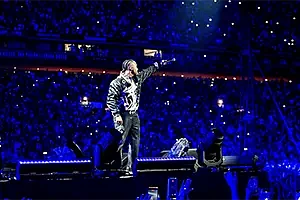



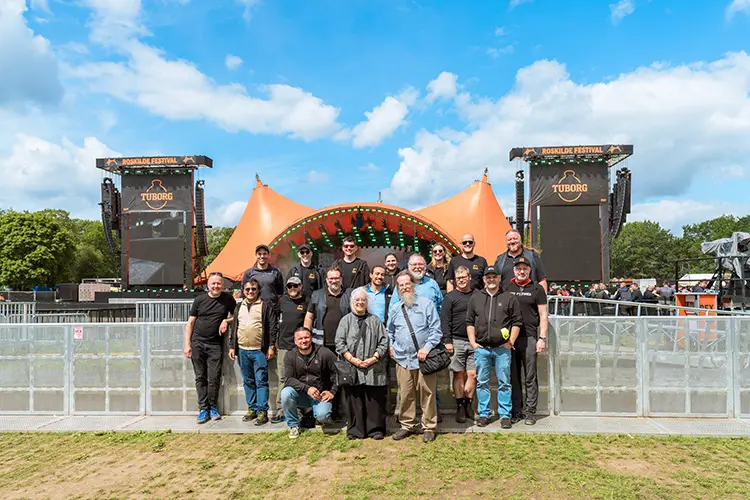
Held from June 29th to July 6th, this year’s Roskilde showcased 200 performances on seven stages, all powered by high-quality systems. The artists included headliners like Foo Fighters, Doja Cat, 21 Savage, SZA, and Skrillex, along with emerging artists from around the world.
Roskilde is immense in scale: for one week, the festival transforms into the fourth-largest city in Denmark and a haven for over 130,000 attendees. The week-long event fuses art, culture, and activism, offering more than 100 events that inspire action on topics ranging from human rights to climate change. To date, the Roskilde Festival Charity Society has donated over 59 million dollars to social causes worldwide.
Now in its seventh year, the partnership between Roskilde and sound experts aims to drive innovation in sound for large-scale festivals. This year-round collaboration focuses on scientific research and educational initiatives, culminating in the annual event, which showcases cutting-edge sound advancements and serves as a hands-on laboratory.
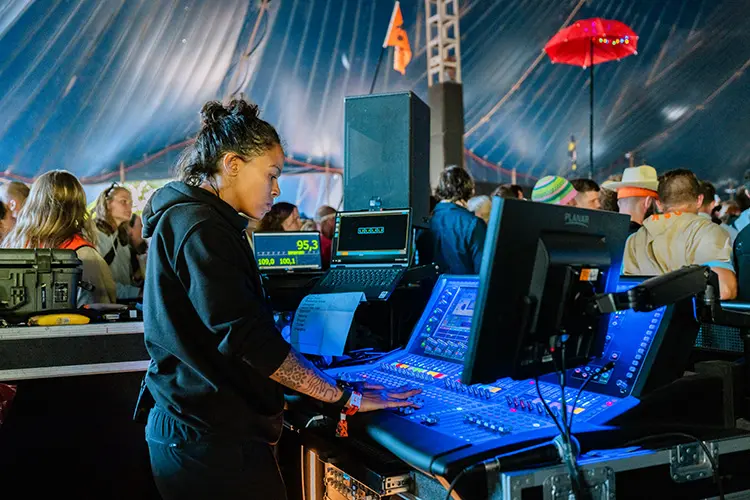
Bringing in a manufacturer gives you direct access to R&D and technical support. Being able to look at your stages with the necessary knowledge to design the ideal system has been a key thing for us. When you accept someone as a partner, you learn something about your event that you didn’t know before because they come with a different perspective. So things just work because we share an open mindset with the chosen provider, says Lars Liliengren, Head of Production at Roskilde Festival.
The 2024 Roskilde Festival featured more than 750 high-quality speakers provided by Denmark-based integrator Victory Event, Stage & Tour ApS.
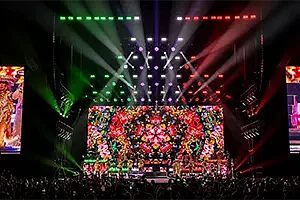
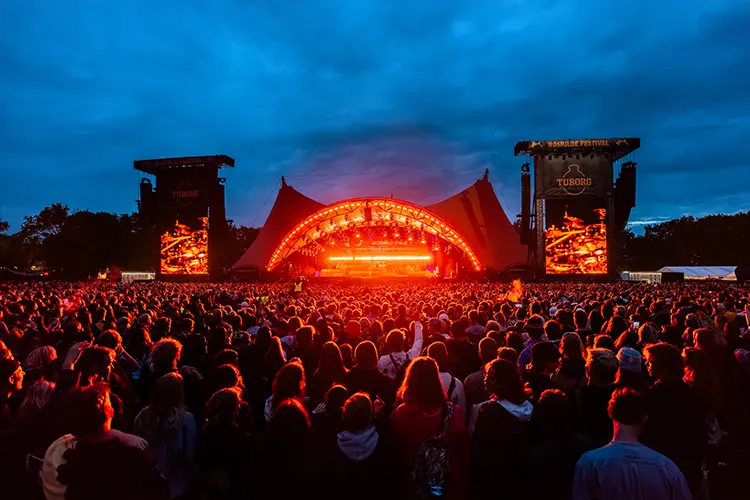
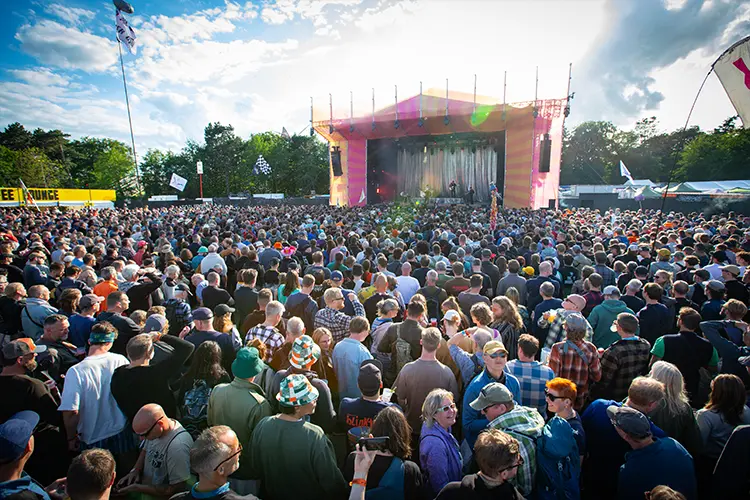
A complement of 276 speakers was deployed on the massive Orange Stage. The system was anchored with 78 large-format line array speakers, supported by compact line array speakers and additional compact speakers. Fifty-four low-frequency control elements and 24 additional low-frequency control elements provided deep bass energy. Sixty-three additional speakers and 29 low-frequency control speakers served as delays.
 |
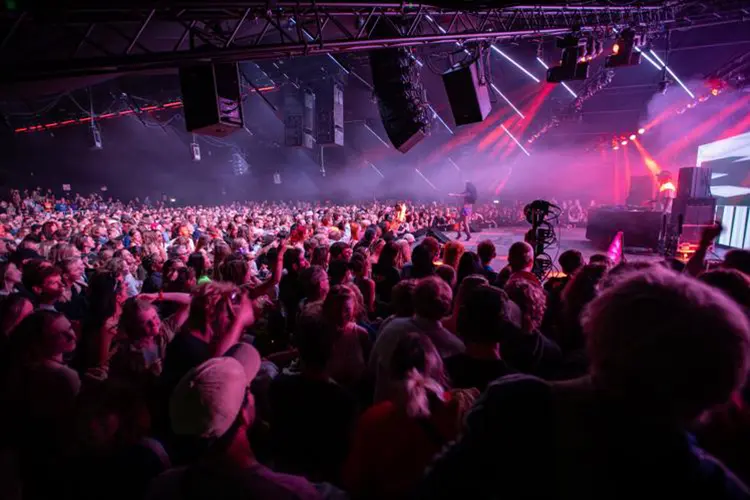 |
“The clarity of the speakers was excellent”, says Migui Maloles, who mixed sound for Doja Cat on the Orange Stage. “I loved it. The stereo image was wide and very pleasing. I really enjoyed mixing at the festival. The system at Roskilde adapted well to Doja Cat’s hip-hop/rock/pop music”, he continues. “Her music requires a lot of bass, and the system had no problem reproducing what our source material required”. The systems also powered the Arena, Apollo, and Avalon stages; other high-quality systems supported the Gaia, Gloria, and EOS stages.
I was very impressed with the sound. It was very easy to get started. We arrived about four hours before the set and immediately noticed how even the sound was at the mixing position. The sound is amazing!, agrees Jade Payne, FOH engineer for Khruangbin, who mixed the band on the Arena Stage.
The year 2024 marked the debut at the Roskilde Festival of the new low-frequency control element, which was deployed alongside the speakers on the Arena, Apollo, and Avalon stages. “These systems are made for each other”, says Murphy Khulusi. “We are very excited to be able to see how they work together in a festival of this size and scale”.
While Max Jacomb, FOH engineer for Better Lovers, mixed on the Gaia Stage with a high-quality system, he had the opportunity to experience the new low-frequency control during the festival and only has good things to say. “This low-frequency control is a musical subwoofer; it’s not just a bunch of low-frequency information hitting you”, he comments. “It sounds like what is happening on stage, and that’s what it’s about, making things louder and more real”.
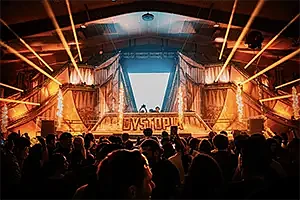
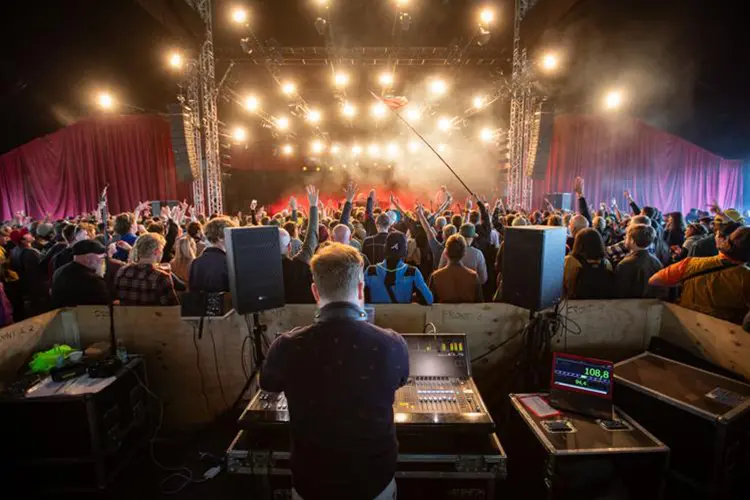
With more than 2,500,000 square meters, Roskilde Festival presents sonic challenges, one of which is managing spill between seven stages. The biggest acoustic challenge is the Arena tent, a massive structure measuring 84 meters wide and 80 meters deep, with FOH located at the back end of the tent.
The tent’s undulating shape and hard plastic surface add acoustic complexity, says Liliengren. “It gives the tent a reverb, which can be nice, but you also need to tame the beast that is the tent. We’ve worked on some new solutions that we implemented this year; essentially, adding some panels over the main array”.
 |
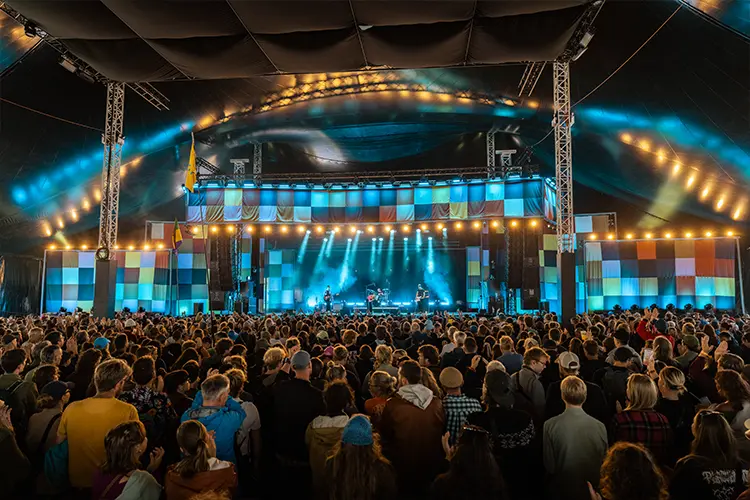 |
The installation of absorbent drapes broke up cross waves and tamed reflections at FOH, while the strategic orientation of the array provided consistent coverage to the back of the tent before moving to the exterior delays.
This venue holds 17,000 people, but there will be 10 or 15,000 outside the tent. The low frequencies have a long extension because of the tent; you walk out, and the low frequencies sound small because you’re suddenly in a reverb-free environment. So we added a subwoofer to each delay so it sounds full-range out there, says McCarthy, who designs Roskilde’s systems using design and prediction tools.
In 2025, Roskilde Festival will inaugurate a new, larger version of the Orange Stage with a greater load capacity to accommodate more complex stage productions and larger sound systems. “Since 2018, Roskilde Festival and sound experts have constantly elevated the sound experience at the festival. I am very eager to see what we will do in 2025 and beyond”, says Liliengren. “We are like a family”, he continues. “I stand on the shoulders of giants who started the festival in ‘71, and they come from the same place as Helen and John and the Summer of Love, and all that is still part of us”.