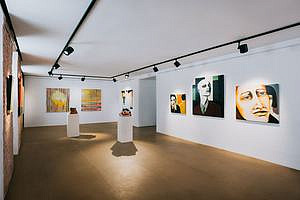





The Royal Academy of Arts' audiovisual department, led by Benji Fox, consists of a small and efficient team responsible for technical services across all historical galleries and contemporary spaces.
The Royal Academy is based at Burlington House, a 17th-century mansion located in central Piccadilly, London, and is connected to an 19th-century university building, Burlington Gardens.
Customer profile
Benji Fox has been involved in various roles related to audio and video technologies for over 24 years, specifically in live sound production, covering everything from theater and sound design to live sound engineering and audiovisual production. Benji is passionate about what technology can offer, its ability to bring creative visions to life, enhance the live experience, and support and improve learning.
Challenge
The main 17th-century building is a Grade II listed structure, which limits the audiovisual department's ability to install permanent fixtures and meeting rooms. The Royal Academy needs modular and expandable solutions to accommodate requests for both small and large meeting rooms.
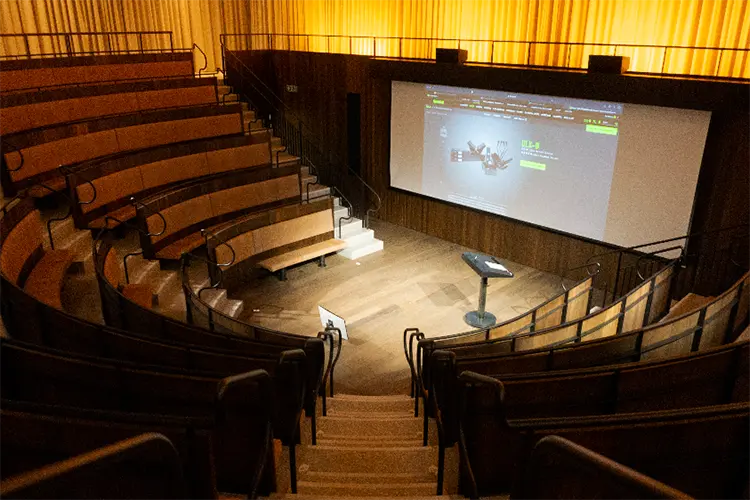
After the COVID pandemic, the department faced an unusual challenge. For the General Assembly meeting, a hybrid solution was needed. Historically, the Royal Academy comprises 80 active artists selected by a vote of the Royal Academy General Assembly. These artists, known as Royal Academicians (RA), collectively govern the Royal Academy. After COVID, General Assembly meetings could no longer be held in person, and a hybrid solution was needed to allow all participants to contribute equally, whether online or in person.
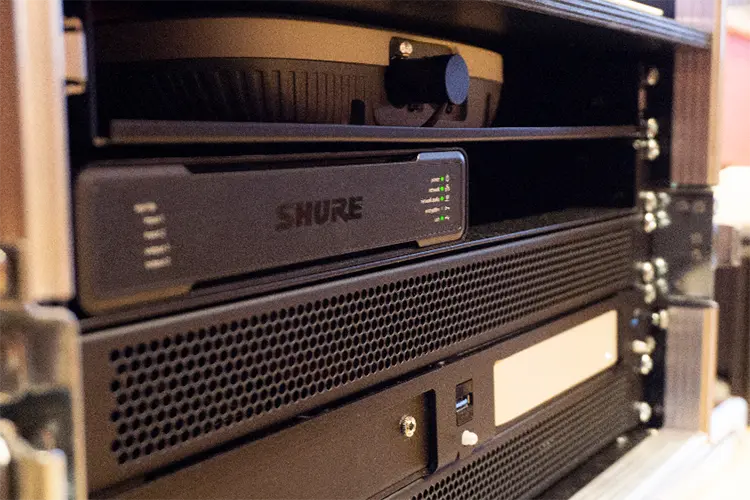
The Royal Academy uses a wide range of Shure products for all needs, from fixed integrated installations to flexible portable units. ULX-D and QLX-D systems are used in fixed integrated installations and with mobile PA systems, all equipped with several belt-pack and handheld microphones.
 |
 |
Using Shure systems provides a higher level of confidence knowing that any microphone system used will work perfectly throughout the building, sound great, and withstand even the longest events. Our Shure batteries, after 5 years of regular use, still last between 9 and 11 hours, which is really good, adds Benji Fox.
In the Benjamin West Lecture Theatre, eight ULX-D channels are used. The number of channels depends on the stage size, as round tables can comfortably accommodate no more than six chairs. For the channels, a combination of lapel and headset microphones with belt-pack transmitters is typically used along with a lectern, plus some handheld microphones for audience Q&A. Sometimes the audiovisual department adds QLX lapel microphones for larger conferences, although this setup suits most events. Royal Academy events are often live-streamed or recorded with multiple cameras. With all Shure receivers on the Dante network, it’s possible to have multiple independent mixes for both the live audience in the room and the online audience. Occasionally, a mix is also sent for ISO audio and video recordings.
 |
 |
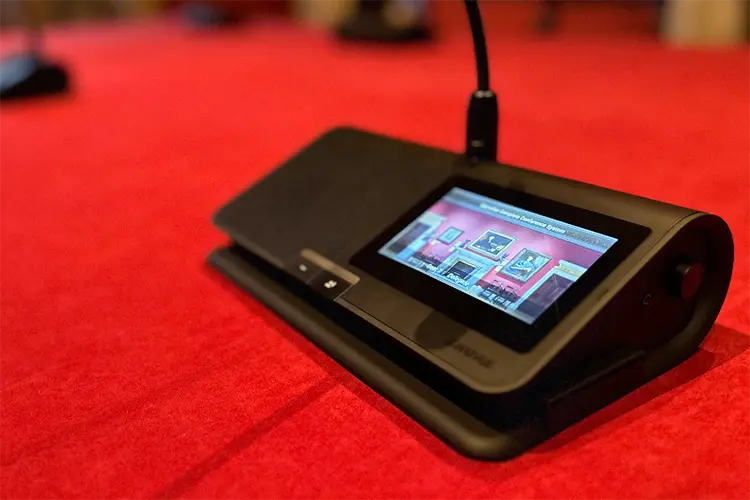
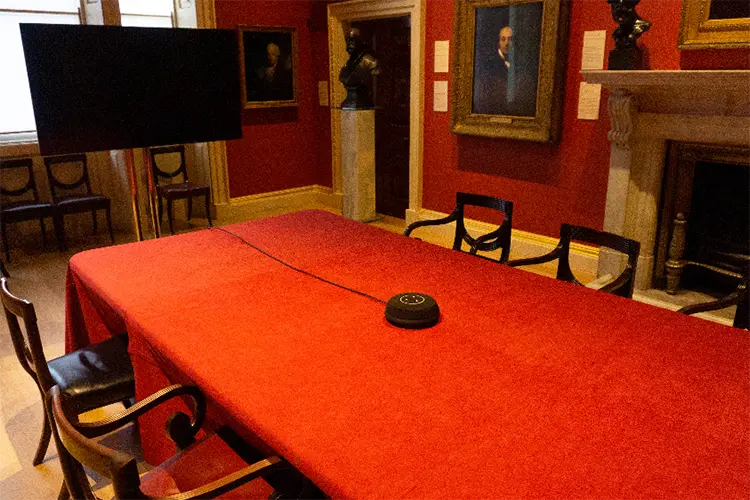
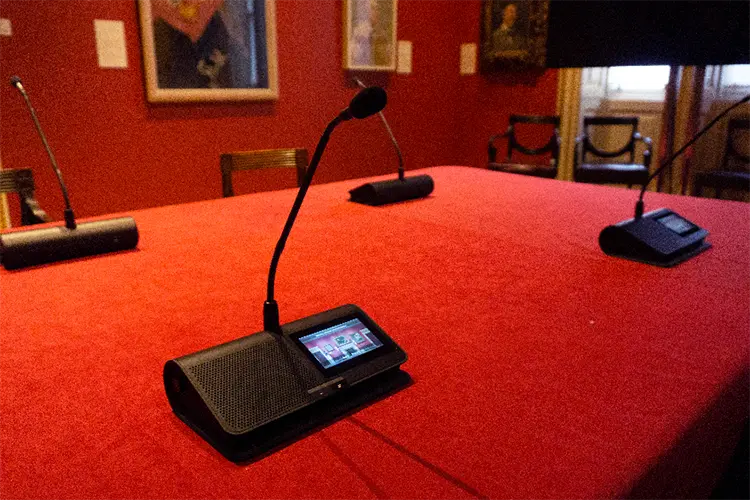
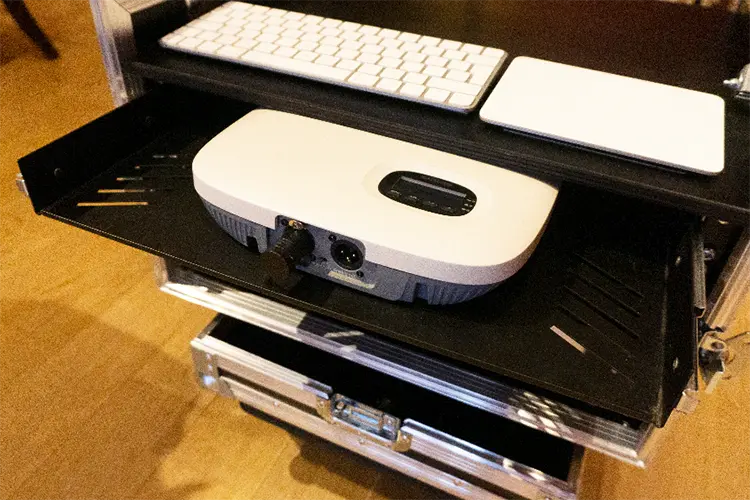
In hybrid meeting rooms, a more modular range of MXCW and Stem Ecosystem products is used to provide greater versatility.
Both systems are robust and quick to deploy. Once we had to urgently set up a round table with MXCW units for a meeting with 12 in-person attendees, all within 10 minutes of receiving the request. It’s not something I recommend or want to repeat, but you can quickly turn an empty room into a fully functional hybrid meeting space. When I used to walk around the building, I would say any space is an event space, but now I might say any space is a potential hybrid meeting space, says Benji Fox.
 |
 |
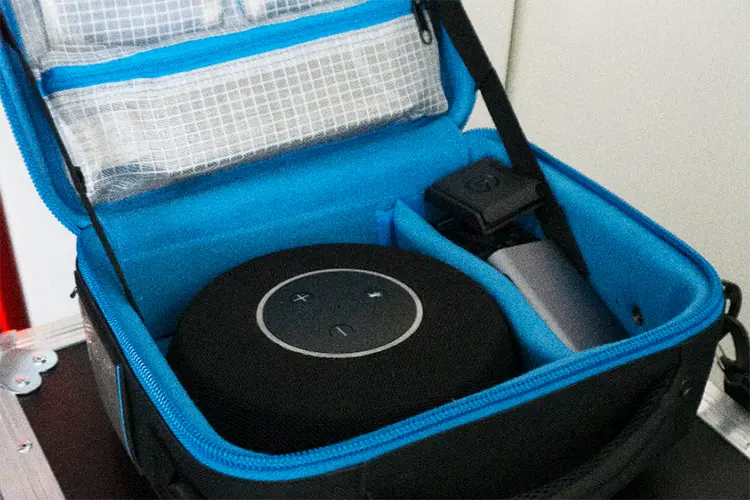
At the Royal Academy, a Shure Stem Table device is used for smaller meeting rooms. The Stem Table is their preferred choice for any space where bidirectional online communication is needed. It is typically requested at the last minute to set up anything from a large round table in spacious areas to small meeting spaces.
The Royal Academy's AV department has a well-established relationship with Shure, which has greatly supported us throughout our growth and development, both of the department and the Royal Academy itself. We know that if any issues arise, we can count on the almost immediate help of a familiar and friendly voice. It’s not the only manufacturer-end user relationship I know, though it is rare. Thank you, Shure, concludes Benji Fox.