Hortus Audio has completed an ambitious sound project in a radio, television, and audiovisual production studio, deploying over 40 Q5 mini-monitors to achieve high-level clarity and sonic uniformity.
This installation showcases the company’s ability to deliver immersive, precise, and reliable sound in highly demanding environments.
Background and client needs
The broadcast and studio market increasingly demands compact solutions without compromising sound quality. The client was undergoing a full renovation of its facilities: the voice-over booths required crystal-clear intelligibility for live and recorded sessions; the audio post-production rooms needed nearfield monitors with flat response; and the video control rooms needed accurate sound reproduction to ensure that the final mix would translate faithfully on air.
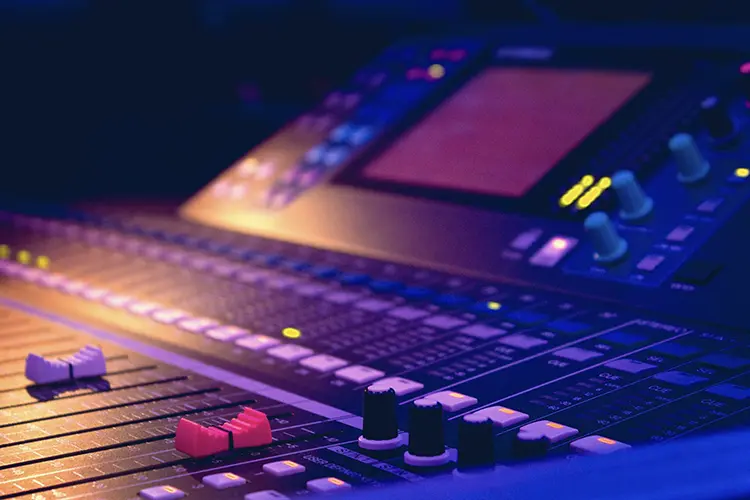
With these requirements, the client reached out to Hortus Audio to design an installation covering more than ten spaces with widely varying acoustic characteristics — from small, low-ceiling rooms to large-volume areas with glass and metal finishes — and that could be easily replicated in future expansions.
Choosing the Q5 mini-monitor
After evaluating several alternatives, the Q5 stood out thanks to its technical specifications:
- Power and dynamics: 100 W AES (200 W program) with integrated class D amplifier.
- Frequency response: 70 Hz–18 kHz, covering the critical vocal range and most post-production effects.
- 120 × 120° directivity: ideal for nearfield monitoring, minimizing room reflections in highly reverberant environments.
- 12 mm birch plywood cabinet: robust and acoustically neutral, with rear aluminum reinforcements to protect components.
- Professional connectivity: Phoenix terminals for balanced audio and remote control, compatible with Dante AV networks.
The combination of compact size and high-performance specs makes the Q5 an ideal nearfield monitor for booths and rooms where space is limited but sonic demand is high.
Thorough planning: from modeling to final project
Hortus Audio’s technical team first conducted an acoustic study of each room, measuring RT60 reverberation times, room mode maps, and material absorption coefficients. Using this data, they created 3D models in specialized software (EASE Focus and Room EQ Wizard) to determine the optimal positioning of 2 to 4 Q5 monitors per room, balancing coverage, SPL levels, and control of primary reflections.
- Voice-over booths: Articulated desktop mounts were installed, allowing height and angle adjustment on the control desk, adapting to speakers of different heights and microphone setups.
- Video editing rooms: Q5 units were embedded into the workstations, integrated into plywood panels to maintain line of sight with screens and avoid visual obstructions.
All mounting was done using anti-vibration hardware to ensure stability and reduce mechanical vibration transfer to the floor and furniture.
Each Q5 was connected via Phoenix terminals to a central rack equipped with DSP-based dynamic processors and equalizers, managed through a Dante AV digital network. Thanks to the power damping and the efficiency of the class D amplification, the client achieved a 20% energy savings by eliminating conventional rack amplifiers and benefited from a cleaner and more modular cable layout, with fewer heat points in the rack cabinet.
Our mission was to deliver accurate sonic reference at every listening point, regardless of room size or configuration. The Q5 made a fast setup and linear tonal performance possible from day one, explains the project engineer at Hortus Audio.
Calibration, testing, and measurable results
In the two weeks following installation, the team carried out:
- STI intelligibility tests: improving vocal clarity by 30% over the previous system, especially in the 1–4 kHz range critical for speech and dialogue.
- Spectral measurements: reducing level variation between listening positions (delta Lp) to under ±1 dB across a 3 × 4 m area.
- Phase and time alignment analysis: ensuring perfect temporal alignment between twin monitors in stereo and multi-monitor configurations.
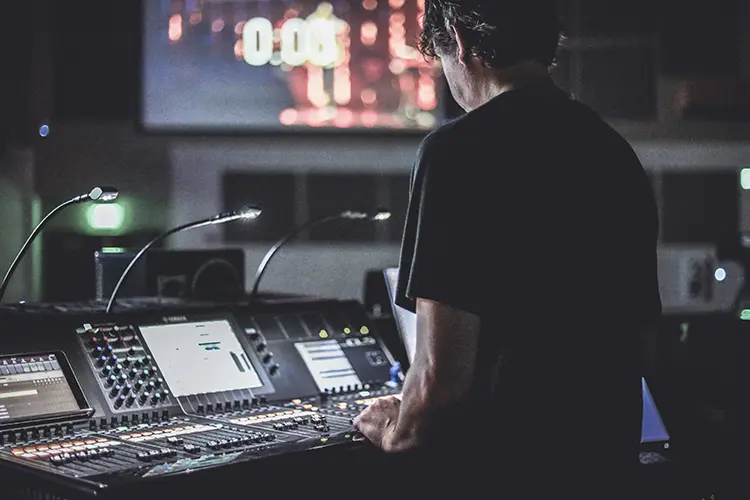
To streamline these processes, the team used portable SPL meters, pink noise generators, and remote control software, enabling precise adjustments from the control console without technicians needing to move between rooms.
“With the Q5s, every word sounds sharper and more defined. We can EQ instantly with no background noise, offering the audience a richer, more detailed sonic experience”, said the live broadcast engineer. “Dynamics are fully preserved. The transition between music, effects, and voice is flawless, saving us hours of correction in the final mix”, added the video editor and audio post-producer.
These comments reflect the satisfaction of the team behind the scenes, where sound quality directly impacts productivity and creative outcomes.
Scalability and simplified maintenance
One of the greatest achievements of this deployment is its replicability. Thanks to the consistency of the Q5 units and the use of cloud-stored configuration templates, new rooms can be added or the entire installation replicated at other locations in 50% less time compared to conventional systems. Additionally, the birch cabinet and aluminum reinforcements ensure durability and resilience in demanding environments, while over-the-network firmware updates allow for improvements and new EQ profiles without opening the boxes or interrupting service.
This approach reduces operational costs and minimizes maintenance tasks in the long term.
A turning point in broadcast and studio audio
The versatility of the Q5 mini-monitor, combined with a workflow based on acoustic analysis, engineering-grade installation, and ongoing support, opens the door to even more ambitious projects:
- Film post-production studios, where bass precision and high-end clarity are essential.
- Streaming and e-sports sets, which require flexible setups and minimal latency.
- Training centers and university radio stations, where scalability and easy maintenance are key.
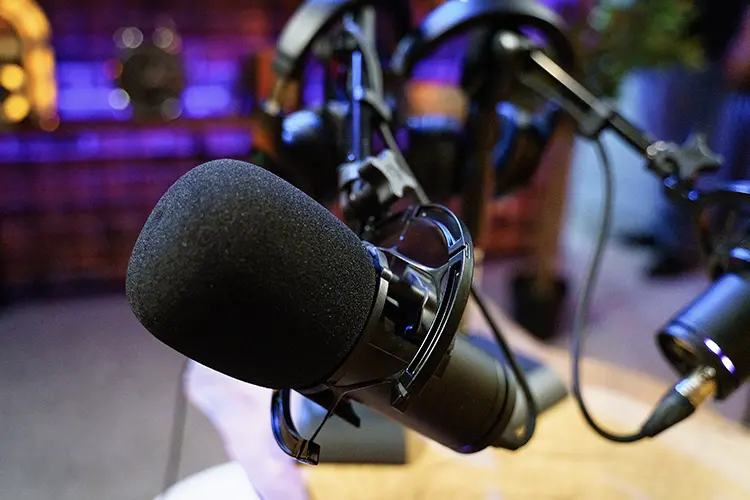
Our added value goes beyond hardware: we provide acoustic consulting, project design, calibration, and permanent technical support. With the right technology and expert service, any installation can sound like a top-tier production studio, concludes the Broadcast and Studios lead at Hortus Audio.
Thanks to confidential installations deployed across multiple regions, Hortus Audio proves that combining advanced engineering with compact monitoring blocks makes a real difference in environments where sound quality is non-negotiable.