

Geese tour Getting Killed with two DiGiCo Quantum225 DS Pulse consoles
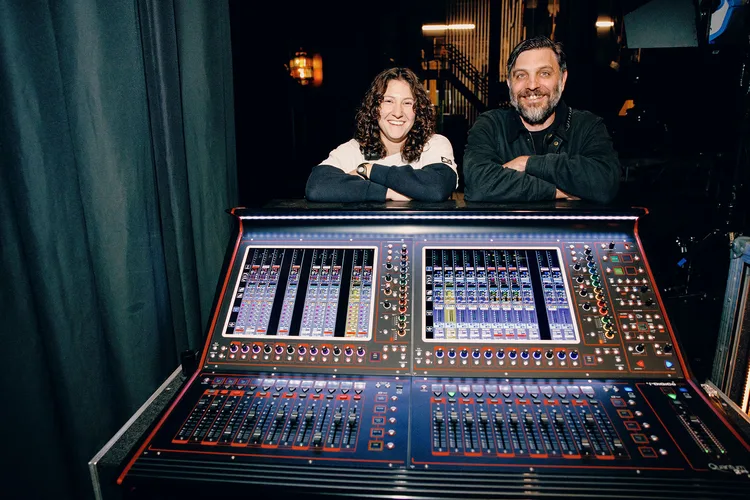
New York band Geese, nominated for five 2027 Grammy Awards, are touring clubs and festivals with two DiGiCo Quantum225 DS Pulse consoles at FOH and monitors, supplied by Worley Sound. The compact format and onboard processing also keep fly dates simple.
Formed in New York City in 2016, when its members were still in high school, Geese — frontman Cameron Winter, guitarist Emily Green, bassist Dominic DiGesu and drummer Max Bassin — are on their third headlining tour, the Getting Killed World Tour, in support of their fourth studio album. It set off a year ago in Vermont and will end 13 months later in Washington, D.C.
Two DiGiCo Quantum225 DS Pulse consoles, one at FOH and one at monitors, plus two SD-Racks, supplied by Nashville-based Worley Sound and linked via an analogue split.
The desks are operated by Ross Harris (FOH) and Talia Krause (monitors), who joined the band for this leg of the tour in May and chose the consoles. Krause knows the brand well: she also mixes broadcast award shows, and says DiGiCo is the only console she uses for those performances.
Two screens to keep eyes on the band
For Krause, the dual-screen (DS) option has made her monitor workflow much easier, giving a full overview of the session while keeping the small footprint. On a couple of fly dates she had to use a standard Quantum225 and noticed the difference: on the DS she can patch, tweak EQ or adjust compression without spilling faders to the main screen, which stays free for auxes or snapshots.
My goal, especially during the show, is to keep my head up and focus on the band, rather than being buried in the console, and this setup lets me do exactly that, says Talia Krause.
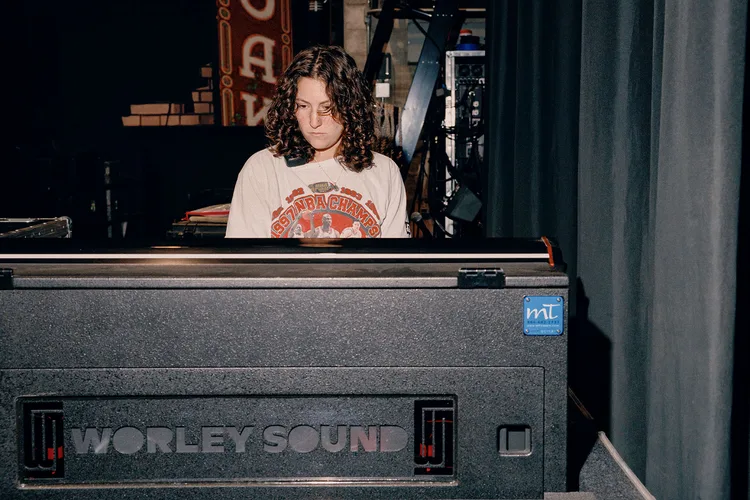
At monitors, “the simpler, the better”, and that includes keeping all the processing onboard: with Mustard, Spice Rack and Nodal Processing, she rarely looks to outboard gear. Cameron Winter’s vocals are very dynamic — whispering one minute and screaming, almost clipping, the next — which is where the multi-band compressor comes in. According to Krause, it does not squash his voice but smooths down only the harshest frequencies at that moment. She adds a classic plate reverb to the vocals in the IEMs and a room reverb for the drums, always sparingly.
Footprint matters too. Rolling up to a festival, she knows exactly how much space she needs, and the I/O rack provided by Worley Sound is very compact. They are working with 32 inputs and, as she puts it, “it is a rock band, after all”.
Reliability and power in a small space at FOH
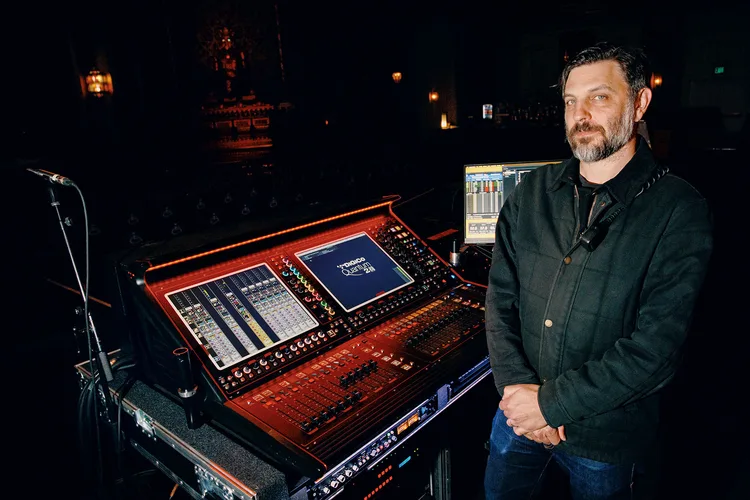
Ross Harris agrees. This year has brought many quick throw-and-go festivals, in-and-out dates with limited space at front of house, and he finds the Q225 a great size for a band like this: “It’s not too big, it’s not too small.”
I’ve put that thing through the wringer and it’s withstood intense heat, downpouring rain, and everything in between, plus extreme movements all across the country, says Ross Harris.
Some of that power comes from the Spice Rack processing. Harris singles out the Naga 6 dynamic EQ, which he uses mostly on vocals to catch the parts of the spectrum that poke out at moments and soften them while keeping clarity, and also on guitars to bring down potentially hard-sounding mid-range frequencies.
His configuration is traditional — inputs on the left, outputs on the right — emulating the analogue consoles he learned on. On most gigs he adds outboard gear: an Overstayer Saturator on drums, an Empirical Labs EL-9 Mike-E channel strip and an API 2500 compressor. But as one-off fly dates multiply, the console’s onboard processing takes on more of that load and lets him travel with far less kit. “There’s a lot of power in that little desk.”
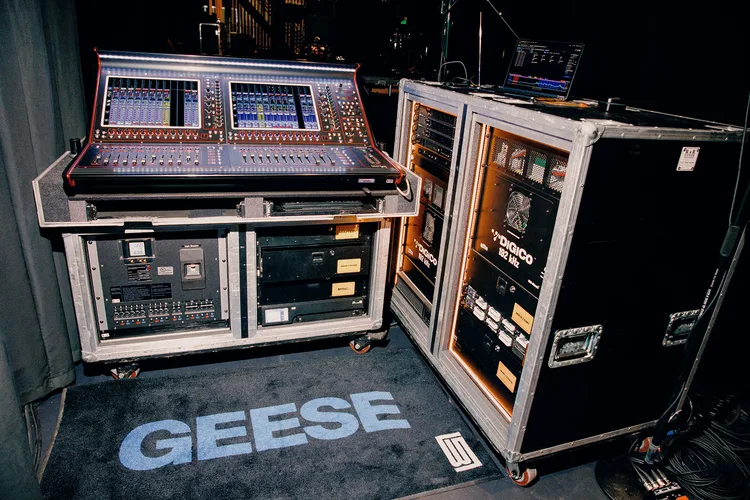
Products used: DiGiCo Quantum225 DS Pulse (2), DiGiCo SD-Rack (2).
 LinkedIn
 Instagram
Latest
Home →
Kingston City Hall ups the ambience with Anolis
TAQA Theater De Vest moves its main hall to Robe T1 Profiles
PIXERA maps 175 megapixels onto a 1896 market hall floor in Prague
L-Acoustics proves that a single system can meet the demands of any type of performance
A stage with no visible loudspeakers: how TiMax works its magic in 'Grease'
A native 21:9 5K LED wall for Düsseldorf’s media students


500 GLP X-PAR 12Z light Reggae Land’s main stage in broad daylight
Rally Flåklypa: 21 projectors, trackless vehicles and HIVE in perfect sync
AUDAC's Audette showroom stops in Spain on its European tour